Trenton, N.J. (July 14, 2021) – The New Jersey Economic Development Authority (NJEDA) Board today approved proposed amendments to the state’s Angel Investor Tax Credit Program rules that will help fuel investments into early-stage New Jersey technology companies and bolster New Jersey’s innovation economy. The amendments were based on expansions and revisions made to the program by both the Economic Recovery Act of 2020, which was enacted in January 2021, and legislation signed into law by Governor Phil Murphy in 2019. Concurrently, the NJEDA Board also approved publishing the proposed amendments in the New Jersey Register for a 60-day public comment period.

The New Jersey Angel Investor Tax Credit Program, which is open to both in-state and out-of-state investors, was created in 2013 to incentivize investment into emerging New Jersey technology businesses. An investor can receive a refundable tax credit equal to a percentage of their qualified investment made in a New Jersey early-stage company. This company’s primary business must be an eligible technology which are advanced computing, advanced materials, biotechnology, carbon footprint reduction technology, electronic device technology, information technology, life sciences, medical device technology, mobile communications technology, or renewable energy technology. In addition to commercializing one of these eligible technologies, the business receiving the investment must employ fewer than 225 employees, at least 75 percent of whom work in New Jersey. An investment in a New Jersey emerging technology business holding company may also meet the requirements for a qualified investment.

Since the program’s inception, the NJEDA has approved 1,671 applications totaling more than $616 million invested in 102 eligible New Jersey businesses. In the first quarter of 2021 alone, 207 Angel Tax Credit Program applications were approved for a total of $5.2 million in tax credits, representing the injection of nearly $33 million into 17 emerging companies.

“Under Governor Murphy’s leadership, we have prioritized recapturing New Jersey’s role as a leader in innovation in an equitable and inclusive manner,” said NJEDA Chief Executive Officer Tim Sullivan. “The amendments approved today will ensure that we continue to help early-stage companies attract the capital they need to further their research and development or to manufacture or commercialize their technology. This, in turn, will lead to the creation of highly-skilled jobs that are necessary to support new business growth.”

Examples of proposed rule amendments approved today stemming from the Economic Recovery Act include:

  • Increasing the amount of tax credits available annually under the program from $25 million to $35 million.
  • Expanding the definition of a qualified investment to include investment commitments made into qualified venture funds. “Venture fund” means a partnership, corporation, trust, or limited liability company that invests cash in a business during the early or expansion stages of a business in exchange for an equity stake in the business in which the investment is made. “Venture fund” may include a venture capital fund, a family office fund, or a corporate investor fund, provided that a professional manager administers the venture fund.
    • For an investment commitment to a venture fund be eligible as a qualified investment, the venture fund must be a “qualified venture fund” investing a minimum of 50 percent of the venture fund’s committed capital in New Jersey based businesses. In addition, a five percent bonus is available if the fund invests 50 percent of its funds in New Jersey diverse entrepreneurs.

The following additions were also made to the Angel Investor Tax Credit Program rules. These updates are associated to legislative actions from 2019 which have already been implemented into the current Program:

  • Increasing the amount of tax credits available per qualified investment in an emerging New Jersey technology business from 10 percent to 20 percent.
  • Adding a five percent bonus credit for qualified investments made in a New Jersey certified minority-or women-owned technology business or a technology business that is located in a qualified Opportunity Zone or New Markets Tax Credit Census Tract.

These amendments approved today will be published in the New Jersey Register on September 7 for a 60-day public comment period.

In addition to the expanded Angel Investor Tax Credit program, the Economic Recovery Act creates and/or enhances a suite of programs that includes tax credits to incentivize job creation, new construction, and revitalization of brownfields and historic properties; financial resources for small businesses; support for new supermarkets and healthy food retailers in food desert communities; new funding opportunities for early-stage companies in New Jersey; and support for the growing film and digital media industry. More information about these programs is available at https://www.njeda.gov/economicrecoveryact.

About the New Jersey Economic Development Authority

The New Jersey Economic Development Authority (NJEDA) serves as the State’s principal agency for driving economic growth. The NJEDA is committed to making New Jersey a national model for inclusive and sustainable economic development by focusing on key strategies to help build strong and dynamic communities, create good jobs for New Jersey residents, and provide pathways to a stronger and fairer economy. Through partnerships with a diverse range of stakeholders, the NJEDA creates and implements initiatives to enhance the economic vitality and quality of life in the State and strengthen New Jersey’s long-term economic competitiveness.

To learn more about NJEDA resources for businesses call NJEDA Customer Care at 609-858-6767 or visit https://www.njeda.gov and follow @NewJerseyEDA on FacebookTwitterInstagram, and LinkedIn.

###

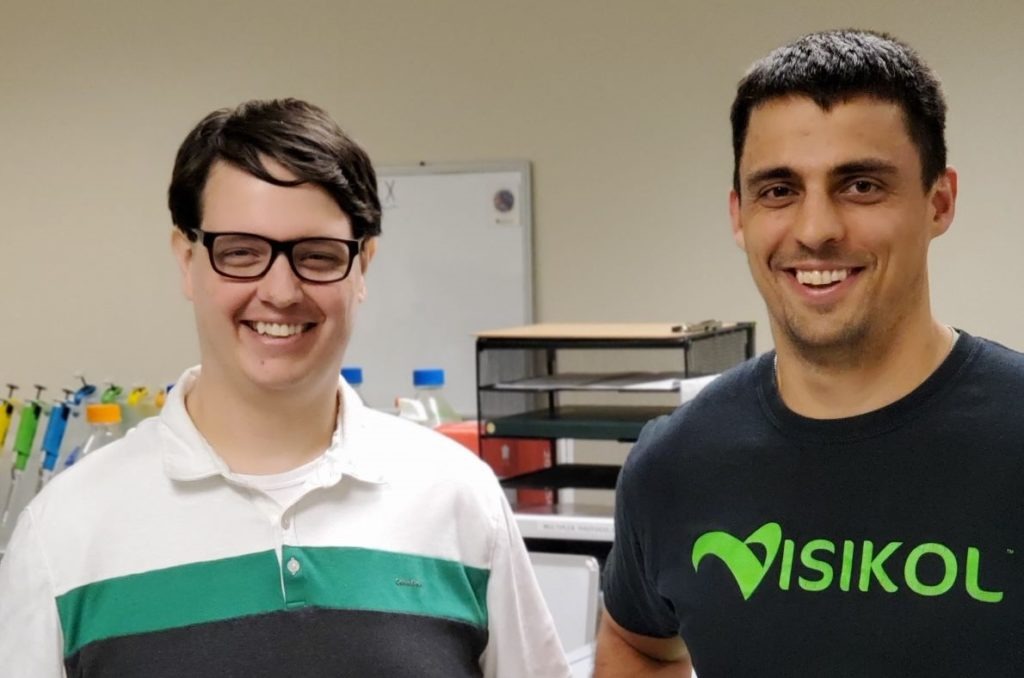
Visikol Co-Founders Dr. Thomas Villani (left) and Dr. Michael Johnson grew their Rutgers University spinout into a globally-recognized company that was acquired by CELLINK for up to $19.5 million.

TRENTON, N.J. (June 10, 2021) – Hunterdon County-based Visikol made national headlines late last month when it was acquired by CELLINK for up to $19.5 million. The news came just weeks after the Rutgers University spinout received a $1.6 million grant from the National Institutes of Health (NIH) to improve the diagnosis of metastatic melanoma. Both of these accomplishments mark the latest milestones for the contract research services company that provides over half of the world’s top 20 pharmaceutical companies with tools necessary to discover and develop lifesaving and life-enhancing therapeutics.

Visikol offers its pharmaceutical and biotechnology customers an extensive portfolio of advanced imaging, digital pathology, and cell culture tools. Its proprietary versatile biological clearing agent, known as Visikol® HISTO, helps researchers in the fields of toxicology, pre-clinical drug development, clinical diagnostics, basic research and plant biology. The agent penetrates tissue and renders it transparent for optical analysis, greatly reducing problems with light scattering and enabling high-resolution images to be captured from biological tissues in 3D.

Visikol announced its acquisition by Sweden-based CELLINK, a global leader in bio-convergence, on May 20. The move will both expand Visikol’s visibility on the international stage and open a new market segment for CELLINK. Visikol Co-Founders Dr. Michael Johnson and Dr. Thomas Villani, who formed Visikol during their time as PhD candidates at Rutgers University, will remain at Visikol’s helm following the acquisition. Dr. Johnson noted that his company remains committed to expanding its footprint in the Garden State following the acquisition.

Started as a three-person operation in a lab at Rutgers University, Visikol has grown into a globally recognized company that currently employs 20 people at its 10,000-square-foot headquarters in Hampton.

“The meteoric success we have experienced in the worldwide marketplace would not have been possible without the support we received as a result of locating in the Garden State,” Dr. Johnson said. “From our very first days collaborating with Rutgers University professors to develop our technology up to our multi-million dollar acquisition by CELLINK, we have been impressed by the hand-on approach the State has taken to foster a robust innovation ecosystem.”

Visikol has leveraged resources from the New Jersey Economic Development Authority (NJEDA) and the Commission on Science, Innovation and Technology (CSIT) throughout its entire lifecycle.

Shortly after spinning out of Rutgers, Visikol moved to the New Jersey Bioscience Center – Incubator at North Brunswick, where it benefited from educational programs and a host of supporting resources, including help to identify funding sources and access to small business development resources, networking opportunities, and administrative support. The Incubator offers 27 wet labs, the most of any incubator in the Garden State, and provided discounted first-year rent for university drug-discovery spinouts. Startups moving to the Incubator can also apply for rent support through the NJEDA’s NJ Ignite program.

Visikol also benefited from a $50,000 bridge grant through CSIT’s Small Business Innovation Research (SBIR)/Small Business Technology Transfer (STTR) Direct Financial Assistance Program last year. In 2018, Visikol received a $225,000 Phase I SBIR grant from the NIH to develop a platform that improves diagnostic tests for research studying breast cancer. The funding provided from CSIT helped Visikol bridge the funding gap while it applied for Phase II of the federal program to expand into melanoma evaluation. Visikol received approval for the Phase II funding in late April 2021, which will enable to company to continue developing its tissue imaging platform.  The state SBIR/STTR Direct Financial Support program supports New Jersey companies vying for, or participating in, the federal SBIR/STTR program. It also enhances the state’s innovation economy by strengthening the competitiveness of Garden State businesses participating in the federal programs. To date, 29 early-stage New Jersey companies have received a combined $825,000 in funding through the program leveraging over $12 million in federal funding.

Visikol was also supported in 2016 by a $500,000 investment from Foundation Venture Capital Group, LLC, an affiliate of New Jersey Health Foundation. The funding helped Visikol scale up its operations in its earliest days. Located in New Brunswick, Foundation Venture Capital Group makes equity investments to participate in establishing and managing New Jersey biomedical startup companies headed toward commercialization.

“From the beginning, Visikol has leveraged many of New Jersey’s greatest assets to fuel its success and we could not be more thrilled for Michael, Tom, and the entire team,” said Kathleen Coviello, NJEDA Executive Vice President of Technology, Life Sciences and Entrepreneurship. “This is a true New Jersey success story and we are proud that Visikol continues to call the Garden State ‘home.’ We can’t wait to see what’s in store for them as they begin this newest chapter in their growth.”

Visikol and its co-founders have been nationally recognized for their accomplishments. Dr. Johnson was named to the Forbes 30 under 30 List in 2017 and again in 2019 when he was selected among all previous year’s honorees as one of the top three all-star alumni. Earlier this year, Visikol was named as one of Pharma Tech Outlook’s Top Emerging Pharma Outsourcing Companies of 2021.

About the New Jersey Economic Development Authority

The New Jersey Economic Development Authority (NJEDA) serves as the State’s principal agency for driving economic growth. The NJEDA is committed to making New Jersey a national model for inclusive and sustainable economic development by focusing on key strategies to help build strong and dynamic communities, create good jobs for New Jersey residents, and provide pathways to a stronger and fairer economy. Through partnerships with a diverse range of stakeholders, the NJEDA creates and implements initiatives to enhance the economic vitality and quality of life in the State and strengthen New Jersey’s long-term economic competitiveness.

About the Commission on Science, Innovation and Technology

In August 2018, Governor Murphy signed legislation re-establishing the former New Jersey Commission on Science and Technology as the CSIT. Comprised of representatives from the public and private sectors, as well as academia, the Commission is tasked with leading the way in promoting the state as a home for academic and technological research, development, and commercialization.

To learn more about resources for businesses within New Jersey’s innovation ecosystem call NJEDA Customer Care at 609-858-6767 or visit https://www.njeda.gov and follow @NewJerseyEDA on FacebookTwitter, Instagram, and LinkedIn.

###

Rule Changes Enable Greater Access to Industry Opportunities

TRENTON, N.J. (June 9, 2021) – The New Jersey Economic Development Authority (NJEDA) Board today approved a series of amendments to the Offshore Wind Economic Development Tax Credit Program rules to reflect changes to the program enabled by the New Jersey Economic Recovery Act (ERA) of 2020, signed by Governor Phil Murphy on January 7, 2021. The primary changes enacted by the ERA include: modifying the period over which tax credits are paid out from 10 years to five years; revising the minimum number of new full-time jobs required to be eligible for the program from 300 to 150, and allowing for a project to ramp-up jobs over time; and expanding the eligible geography for the program from the seven southern counties to the entire state.

Offshore wind is one of the high-growth, high-wage sectors the State identified in Governor Murphy’s Economic Development Plan. The Offshore Wind Economic Development Tax Credit Program provides tax credits for capital investment in a qualified wind energy facility located in New Jersey, as it is designed to spur employment growth and offshore wind supply chain development as a result of capital investment in land-based offshore wind industry projects.

“As a result of Governor Murphy’s vision for New Jersey as a national hub for offshore wind, the state is well-positioned to lead this rapidly-growing sector. The changes to the Offshore Wind Tax Credit approved by our Board today will enable greater flexibility for businesses creating new jobs in New Jersey,” said NJEDA Chief Executive Officer Tim Sullivan. “Companies up and down the offshore wind supply chain will find that New Jersey offers a vast pool of skilled talent, a firm commitment to investment in first-rate offshore wind infrastructure, and an innovation ecosystem that offers resources to prepare companies for this vast opportunity.”

By adjusting the period over which tax credits are paid out, a business can now receive the tax credits over the course of five years at a rate of one-fifth of the total amount of the business’s award.  This shorter pay-out timeframe is better suited for an industry this is rapidly scaling up brand new operations to support wind farm projects across the U.S. East Coast.

The changes adopted today also create a pathway for additional projects to participate in the program. Previously a project needed at least 300 new full-time jobs to be eligible for tax credits. Now, projects that projects creating between 150-300 new full-time jobs can apply for tax credits, however awards will be sized using a pro-rated award formula. In recognition of offshore wind being a new industry in the State, the rules also now allow a project to ramp-up job creation over the first four years of a project.

Another change ​made by the ​ERA of 2020, expands the eligible geography for the program from the seven counties to the entire state. In addition, to provide clarity on the above statutory changes, the approved amendments also include policy updates on eligible costs, calculating net benefits test parameters, and fees.

To receive tax credits through the Offshore Wind Economic Development Tax Credit Program, a business must:

  • Make or acquire capital investments totaling at least $50 million in a qualified wind energy facility. If the business is a tenant, the business must lease an area of the qualified wind energy facility that represents at least a $17.5 million capital investment in the facility.
  • Create a minimum of 150 new full-time jobs over the four-year commitment period. A tenant may meet the employment requirements with other tenants at the qualified wind energy facility. A project that creates between 150 and 300 new full-time jobs will receive a prorated award compared to those that create 300 or more jobs.
  • Demonstrate a net positive economic benefit to the State.

Limited by a net positive economic benefits test, the tax credits can equal up to 100 percent of the business’s qualified capital investments. The credits can be used against corporation business or insurance premiums tax. The calculation of new full-time employees may include select positions resulting from equipment supply coordination agreements with equipment manufacturers, suppliers, installers, and operators associated with the supply chain required to support the qualified wind energy facility.

Tenants in qualified wind energy facilities may also receive tax credits, if they occupy space in a qualified wind energy facility that proportionally represents at least $17.5 million of the capital investment in the facility, and, employ at least the minimum number of new, full-time employees in that facility.

Businesses must apply for the tax credits by July 1, 2025 and satisfy the capital investment and employment conditions for award of the credits by July 1, 2028.

Offshore Wind Tax Credit Program application

About the New Jersey Economic Development Authority

The New Jersey Economic Development Authority (NJEDA) serves as the State’s principal agency for driving economic growth. The NJEDA is committed to making New Jersey a national model for inclusive and sustainable economic development by focusing on key strategies to help build strong and dynamic communities, create good jobs for New Jersey residents, and provide pathways to a stronger and fairer economy. Through partnerships with a diverse range of stakeholders, the NJEDA creates and implements initiatives to enhance the economic vitality and quality of life in the State and strengthen New Jersey’s long-term economic competitiveness.

To learn more about NJEDA resources for businesses call NJEDA Customer Care at 609-858-6767 or visit https://www.njeda.gov and follow @NewJerseyEDA on FacebookTwitterInstagram, and LinkedIn.

###

Se Exhorta a los Encuestados a Enviarnos Comentarios Sobre el Nuevo Centro para Abordar las Disparidades Raciales y las Desigualdades en la Atención y los Desenlaces para Madres y Bebés

TRENTON, N.J. (1 de Junio de 2021) – La Autoridad para el Desarrollo Económico de New Jersey (NJEDA), junto a la Primera Dama Tammy Murphy, anunciaron hoy que se extendió la Solicitud De Información (RFI, por sus siglas en inglés) para recopilar datos a fin de informar el establecimiento de un Centro dedicado a la salud materno infantil, que estará dedicado a la innovación e investigación, haciendo hincapié en el tratamiento de las desigualdades raciales y garantizando la equidad en la atención y los desenlaces para madres y bebés. El Centro para la salud materno infantil es una recomendación clave del recientemente lanzado Plan estratégico de salud materno infantil Nurture NJ por la Primera Dama Tammy Murphy. La RFI se puede encontrar en https://www.njeda.gov/bidding/#OET. Las respuestas a la RFI ahora deben proporcionarse antes de las 11:59 p.m. del miércoles, 25 de junio de 2021.

La RFI, que se emitió a finales de abril junto con las oficinas del Gobernador Phil Murphy y de la Primera Dama Tammy Murphy, la campaña Nurture NJ y los socios de la agencia estatal NJEDA en el Departamento de Salud, el Departamento de Servicios Humanos y la Oficina del Secretario de Educación Secundaria (OSHE), es el último de una serie de medidas que el estado de New Jersey está tomando para reducir la mortalidad materno infantil, especialmente entre madres y bebés de color.

En 2019, la Primera Dama Murphy lanzó Nurture NJ, una campaña multiagencia en todo el estado dirigida a reducir tanto la mortalidad como la morbilidad materno infantil y a garantizar una atención equitativa entre las mujeres y los niños de todas las razas y todos los orígenes étnicos. En enero de 2021, la Primera Dama dio a conocer el Plan estratégico para la salud materno infantil Nurture NJ, con el objetivo de hacer de New Jersey el lugar más seguro y equitativo del país donde dar a luz y criar un bebé a través de más de 70 recomendaciones específicas y aplicables. Entre esas recomendaciones se encuentra la de establecer un Centro en la capital del Estado que se “centre en la innovación y la investigación en salud materno infantil mediante asociaciones con las comunidades académica, inversionista, empresarial y religiosa del estado”.

Actualmente, New Jersey ocupa el puesto 47 en el país en cuanto a muertes maternas, y tiene una de las desigualdades raciales más grande en cuanto a la mortalidad tanto materna como infantil. Una madre negra en New Jersey tiene siete veces más probabilidades que una madre blanca de morir a causa de complicaciones relacionadas con la maternidad, y un bebé negro tiene tres veces más probabilidades de morir antes de su primer cumpleaños que un bebé blanco.

Esta RFI tiene como fin aprovechar la enorme base de conocimiento de Nurture NJ y el proceso de participación de la comunidad al recopilar información específica sobre el desarrollo y la implementación del Centro en Trenton. Se recomienda a quienes respondan que proporcionen información relativa al desarrollo de la misión, la visión y la estructura del Centro; potenciales modelos operativos y ubicaciones; propuestas de servicios y programas; estrategias y mejores prácticas para fomentar la investigación, innovación y comercialización en salud materno infantil; y consideraciones para la Autoridad y sus agencias asociadas en la creación de iniciativas ancladas en el Centro y dentro de la comunidad de Trenton, enfocadas en lograr igualdad en los desenlaces de salud materno infantil.

La NJEDA busca respuestas de entidades calificadas que incluyen, entre otras: madres y cuidadores, miembros de las comunidades más afectadas por las desigualdades en desenlaces clínicos en la salud materno infantil, proveedores de atención de salud, hospitales y sistemas hospitalarios, parteras y doulas, organizaciones de salud, universidades, organizaciones de defensa, proveedores de servicios sociales, municipios, agencias del gobierno y distritos escolares, partes interesadas de la comunidad, investigadores de políticas y académicos, desarrolladores de bienes raíces, líderes empresariales, empleadores y emprendedores; proveedores de asistencia técnica y fundaciones e iniciativas filantrópicas que abordan la salud materno infantil. La NJEDA está interesada en recibir respuestas de entidades de New Jersey como así también de entidades ubicadas fuera del estado.
  

Todas las respuestas de la RFI deben enviarse por escrito a más tardar a las 11:59 p. m. hora del este del miércoles 25 de junio de 2021, por correo electrónico a: MaternalHealthRFI@njeda.com

La línea del asunto del correo electrónico debe decir: “RFI Response-2021-RFI-127”.

Acerca de la NJEDA

La Autoridad para el desarrollo económico de New Jersey (NJEDA) es la agencia principal del Estado para impulsar el desarrollo económico. La NJEDA tiene el compromiso de hacer del Estado de New Jersey un modelo nacional para el desarrollo económico inclusivo y sostenible al centrarse en estrategias claves para ayudar a construir comunidades fuertes y dinámicas, crear buenos trabajos para los residentes de New Jersey y ofrecer oportunidades para una economía más sólida y justa. Mediante asociaciones con diversas partes interesadas, la NJEDA crea e implementa iniciativas para mejorar la vitalidad económica y la calidad de vida en el Estado y para fortalecer la competitividad económica a largo plazo de New Jersey.

Para obtener más información acerca de los recursos de la NJEDA para empresas, llame a la línea de atención al cliente de NJEDA al 609-858-6767 https://www.njeda.gov y siga a @NewJerseyEDA en Facebook, Twitter, Instagram y LinkedIn.

Acerca de Nurture NJ

Para obtener más información sobre Nurture NJ, visite NurtureNJ.nj.gov.

Siga a Nurture NJ y a la Primera Dama Tammy Murphy en Twitter (@FirstLadyNJ), Facebook (@FirstLadyNJ) e Instagram (@firstladynewjersey).

###

Respondents Encouraged to Submit Feedback About New Center to Address Racial Disparities
and Inequities in Care & Outcomes for Mothers and Infants

TRENTON, N.J. (June 1, 2021) – The New Jersey Economic Development Authority (NJEDA) and First Lady Tammy Snyder Murphy today announced that they have extended the deadline for their Request for Information (RFI) seeking input to inform the establishment of a Center for Maternal and Infant Health in Trenton. The Center will be dedicated to innovation and research, with an emphasis on addressing racial disparities and ensuring equity in care and outcomes for mothers and infants. The creation of the Center is a key recommendation from First Lady Murphy’s recently released Nurture NJ’s Maternal and Infant Health Strategic Plan. The RFI can be found at https://www.njeda.gov/bidding/#OET. Responses to the RFI are now due no later than 11:59 p.m. on Wednesday, June 25, 2021.

The RFI, which was issued in late April in conjunction with Governor Phil Murphy and First Lady Tammy Murphy’s offices, the Nurture NJ campaign, and NJEDA’s state agency partners at the Department of Health, Department of Human Services, and Office of the Secretary of Higher Education (OSHE), is the latest in a series of steps the State of New Jersey is taking to reduce maternal and infant mortality, particularly among mothers and infants of color.

In 2019, First Lady Murphy launched Nurture NJ, a statewide, multi-agency campaign committed to both reducing maternal and infant mortality and morbidity and ensuring equitable care among women and children of all races and ethnicities. In January 2021, the First Lady unveiled the Nurture NJ Maternal and Infant Health Strategic Plan, which aims to make New Jersey the safest and most equitable place in the nation to deliver and raise a baby through more than 70 specific, actionable recommendations. The establishment of a Center in the state capital that “focuses on innovation and research in maternal and infant health through partnerships with the state’s academic, funder, business, and faith communities” is among those recommendations.

New Jersey currently ranks 47th in the nation for maternal deaths and has one of the widest racial disparities for both maternal and infant mortality. A Black mother in New Jersey is seven times more likely than a white mother to die from maternity-related complications, and a Black baby is over three times more likely than a white baby to die before his or her first birthday.

This RFI aims to build on Nurture NJ’s tremendous knowledge base and community engagement process by gathering targeted input on the development and implementation of the Trenton-based Center. Respondents are encouraged to offer input regarding the development of the Center’s mission, vision and structure; potential operating models and locations; services and program offerings; strategies and best practices to foster research, innovation, and commercialization in maternal and infant health; potential partners within Trenton and throughout the United States; and considerations for the Authority and its partner agencies in creating initiatives anchored at the Center and within the Trenton community focused on achieving equity in maternal and infant health outcomes.

The NJEDA is seeking responses from qualified entities  including, but not limited to: mothers and caregivers; members of communities most affected by disparities in maternal and infant health outcomes; healthcare providers; hospitals and hospital systems; midwives and doulas; health organizations; universities; advocacy organizations; social services providers; municipalities, government agencies and school districts; community stakeholders; policy and academic researchers; real estate developers; business leaders, employers and entrepreneurs; technical assistance providers; and foundations and philanthropic organizations that address infant and maternal health. The NJEDA is seeking responses from entities based within New Jersey as well as those located outside of the state.

All RFI responses must be submitted in writing no later than 11:59 PM EST on Wednesday June 25, 2021, via e-mail to: MaternalHealthRFI@njeda.com

The subject line of the e-mail should state: “RFI Response-2021-RFI-127”.

About NJEDA

The New Jersey Economic Development Authority (NJEDA) serves as the State’s principal agency for driving economic growth. The NJEDA is committed to making New Jersey a national model for inclusive and sustainable economic development by focusing on key strategies to help build strong and dynamic communities, create good jobs for New Jersey residents, and provide pathways to a stronger and fairer economy. Through partnerships with a diverse range of stakeholders, the NJEDA creates and implements initiatives to enhance the economic vitality and quality of life in the State and strengthen New Jersey’s long-term economic competitiveness.

To learn more about NJEDA resources for businesses call NJEDA Customer Care at 609-858-6767 or visit https://www.njeda.gov and follow @NewJerseyEDA on Facebook, Twitter, Instagram and LinkedIn.

About Nurture NJ

To learn more about Nurture NJ, visit NurtureNJ.nj.gov.

Follow Nurture NJ and First Lady Tammy Murphy on Twitter (@FirstLadyNJ), Facebook (@FirstLadyNJ), and Instagram (@firstladynewjersey).

###

TRENTON, N.J. (May 14, 2021) – The New Jersey Economic Development Authority (NJEDA) Board recently approved a memorandum of understanding (MOU) with New Jersey City University (NJCU) in Jersey City that will help advance New Jersey’s leadership in the online sports wagering technology and financial technology (fintech) sectors. The MOU with NJCU will support the creation of a Sports Wagering and Financial Technology Workforce Development and Innovation Center.

This MOU is part of a broader NJEDA strategic initiative to support Governor Phil Murphy’s vision for a stronger, fairer New Jersey economy by establishing innovation centers throughout the state that bring together academic, industry, and government stakeholders to grow key industry sectors.

“The agreement with NJCU will build on New Jersey’s existing value proposition for the online sports wagering and fintech sector to position the state as an industry hub,” said NJEDA Chief Executive Officer Tim Sullivan. “New Jersey offers a highly educated and talented technical workforce with proximity and connectivity to New York City and Philadelphia. We also have world-class technical infrastructure such as broadband and fiber-optic connectivity, and the regulatory leadership of the New Jersey Division of Gaming Enforcement that recognizes the importance of innovation, collaboration, and competition for a healthy and sustainably-growing industry.”

The emergence of legalized and regulated sports wagering in New Jersey represents a unique opportunity to position the state as the epicenter of this growing, rapidly-innovating industry. In the three years since legalizing sports betting, New Jersey has become one of the largest sports wagering markets in the United States, routinely surpassing Nevada in monthly handle, with nearly $1 billion per month wagered toward the end of 2020.

Moreover, New Jersey leads the country in customer adoption of mobile and online sports wagering. And with over 90 percent of wagers in the state placed online or via mobile platforms, New Jersey has positioned itself as the optimal jurisdiction for scaling tech-centric product innovations within this industry.

Under the terms of the MOU approved today, the NJEDA will provide $200,000 in funding and staff resources to support technological and product innovation as well as workforce development in sports wagering and fintech at the Sports Wagering and Financial Technology Workforce Development and Innovation Center at NJCU. This support will bolster the Center’s goals of providing an incubator for the sports wagering and fintech industries and acting as a connector between industry, academia, and relevant State agencies to grow and support innovation in sports wagering technology and fintech.

“We are so excited and honored to partner with NJEDA to establish this new center for sports wagering and financial technology,” said NJCU President Sue Henderson. “NJCU has long been an academic innovator for launching new programs in emerging fields. This is a wonderful opportunity to build upon our expertise in sports management, financial technology, and data analytics to put our students and our state at the forefront of this exciting new field.”

With the NJEDA’s backing, NJCU believes the Center will cement New Jersey’s position as a leader in the sports wagering and fintech industries, positioning the Garden State as not just a top consumer market for these innovative products but also a productive engineof leading industry innovations and workforce development programs. 

Supporting the Sports Wagering and Financial Technology Workforce Development and Innovation Center is part of a wider NJEDA strategic effort to grow New Jersey’s innovation, sports wagering, and fintech ecosystems. In addition to the MOU with New Jersey City University, the NJEDA concurrently approved a separate agreement with Stockton University to support the establishment of an esports Innovation Center at the university’s Atlantic City Campus, which is expected to contribute to establishing Atlantic City as a hub for the rapidly growing esports industry.

More information about NJCU is available here.

About the New Jersey Economic Development Authority

The New Jersey Economic Development Authority (NJEDA) serves as the State’s principal agency for driving economic growth. The NJEDA is committed to making New Jersey a national model for inclusive and sustainable economic development by focusing on key strategies to help build strong and dynamic communities, create good jobs for New Jersey residents, and provide pathways to a stronger and fairer economy. Through partnerships with a diverse range of stakeholders, the NJEDA creates and implements initiatives to enhance the economic vitality and quality of life in the State and strengthen New Jersey’s long-term economic competitiveness.

To learn more about NJEDA resources for businesses call NJEDA Customer Care at 609-858-6767 or visit https://www.njeda.gov and follow @NewJerseyEDA on FacebookTwitter, and LinkedIn.

###

NJ Tech & Life Sciences Companies Can Now Apply to Sell Their Net Operating Losses
& Unused Research & Development Tax Credits for Cash

TRENTON, N.J. (May 6, 2021) – The New Jersey Economic Development Authority (NJEDA) today announced that it is currently accepting applications for its 2021 Net Operating Loss (NOL) Program, which was recently expanded as part of the New Jersey Economic Recovery Act of 2020. The NOL Program enables early-stage technology and life sciences companies in the Garden State to sell their New Jersey net operating losses and unused research and development (R&D) tax credits to unrelated profitable corporations for cash. The NJEDA is accepting applications online through June 30, 2021 at https://www.njeda.gov/nol.

Hailed as a lifeline for companies that have not yet reached profitability, the capital raised through this program can be used for costs including, but not limited to, the expenses of fixed assets, such as the construction, acquisition and development of real estate; materials; start-up; tenant fit-out; working capital; salaries; and R&D expenditures. The NJEDA and the New Jersey Department of Treasury’s Division of Taxation jointly administer the program.

The NJEDA will host an informational webinar about the NOL Program on Tuesday, May 18, at noon to review eligibility requirements with potential applicants. Webinar registration information can be found at https://www.njeda.gov/event/2021-nol-program-launch/. A recorded version of the webinar will be made available on the NJEDA’s webpage following the event at https://www.njeda.gov/nol.

To date, more than $1.07 billion in funding has been distributed to over 550 technology and life sciences companies since the program’s inception in the late 1990s. The average award for companies approved to sell their net operating losses through the program in 2020 was $1.1 million.

The NOL Program was expanded in January 2021, when Governor Phil Murphy signed the New Jersey Economic Recovery Act of 2020. Part of the Act increased the program’s annual cap from $60 million to $75 million. It also increased the lifetime cap for an individual applicant from $15 million to $20 million.

“Governor Murphy is committed to making New Jersey the State of Innovation with the most diverse and inclusive innovation ecosystem the nation.” said NJEDA Chief Executive Officer Tim Sullivan. “The NOL program plays an important role in achieving these goals by providing resources early-stage companies need to become profitable and prepare for long-term growth. The expanded program, which is now available, will support more companies that will contribute to New Jersey’s leadership in technology and life sciences innovation.”

In addition to being vital to emerging companies, the NOL Program also provides enormous benefits to the profitable companies that are buying the net operating losses and unused R&D tax credits. A profitable company can purchase tax credits at a discount, based on the market price at the time. These tax credits have traditionally traded somewhere between 88 and 94 cents on the dollar. Once purchased, the tax credits can then be applied to reduce the buyer’s state tax obligation. For example: a purchase of $1,000,000 of tax credit at 92 cents on the dollar would enable a buyer to decrease their New Jersey taxes payable by $1,000,000 for the price of $920,000, representing a savings of $80,000. The names of the buyers who chose to be publicly listed are on the NOL Program’s website. Entities interested in becoming a buyer through the NOL Program can visit the website https://www.njeda.gov/nol or reach out via email nol@njeda.com for more information.

About the New Jersey Economic Development Authority

The New Jersey Economic Development Authority (NJEDA) serves as the State’s principal agency for driving economic growth. The NJEDA is committed to making New Jersey a national model for inclusive and sustainable economic development by focusing on key strategies to help build strong and dynamic communities, create good jobs for New Jersey residents, and provide pathways to a stronger and fairer economy. Through partnerships with a diverse range of stakeholders, the NJEDA creates and implements initiatives to enhance the economic vitality and quality of life in the State and strengthen New Jersey’s long-term economic competitiveness.

To learn more about NJEDA resources for businesses call NJEDA Customer Care at 609-858-6767 or visit https://www.njeda.gov and follow @NewJerseyEDA on FacebookTwitter, Instagram and LinkedIn.

###

Respondents Encouraged to Submit Ideas About New Center to Address Racial Disparities and Inequities in Care & Outcome of Mothers and Infants

TRENTON, N.J. (April 30, 2021) – The New Jersey Economic Development Authority (NJEDA), in partnership with Nurture NJ and First Lady Tammy Murphy, issued a Request for Information (RFI) today seeking input to inform the establishment of a Center for Maternal and Infant Health in Trenton which will be dedicated to innovation and research, with an emphasis on addressing racial disparities and ensuring equity in care and outcomes for mothers and infants. The Center for Maternal and Infant Health is a key recommendation from First Lady Tammy Murphy’s recently released Nurture NJ Maternal and Infant Health Strategic Plan. The RFI can be found at https://www.njeda.gov/bidding/#OET. Responses to the RFI are due by June 1, 2021.

The RFI, which was issued in conjunction with Governor Phil Murphy and First Lady Tammy Murphy’s offices, the Nurture NJ campaign, and NJEDA’s state agency partners at the Department of Health, Department of Human Services, and Office of the Secretary of Higher Education (OSHE), is the latest in a series of steps the State of New Jersey is taking to reduce maternal and infant mortality, particularly among mothers and infants of color.

In 2019, First Lady Murphy launched Nurture NJ, a statewide, multi-agency campaign committed to both reducing maternal and infant mortality and morbidity and ensuring equitable care among women and children of all races and ethnicities. In January 2021, the First Lady unveiled the Nurture NJ Maternal and Infant Health Strategic Plan, which aims to make New Jersey the safest and most equitable place in the nation to deliver and raise a baby through more than 70 specific, actionable recommendations. The establishment of a Center in the state capital that “focuses on innovation and research in maternal and infant health through partnerships with the state’s academic, funder, business, and faith communities” is among those recommendations.

“Our Nurture NJ Maternal and Infant Health Strategic Plan was developed in partnership with New Jersey moms and families along with hundreds of experts across our state, both in government and the private sector,” said First Lady Murphy. “We are now actively engaged in implementing the first phase of these recommendations, including the creation of this one-of-a-kind center, which will be dedicated to innovative research, clinical care, and more to eliminate the inequities at the heart of our maternal health crisis. We are determined to ensure a healthy start for every mother and her baby, and the Center for Maternal Health will play an essential role in continuing our ground-breaking and lifesaving work for decades to come.”  

New Jersey currently ranks 47th in the nation for maternal deaths and has one of the widest racial disparities for both maternal and infant mortality. A Black mother in New Jersey is seven times more likely than a white mother to die from maternity-related complications, and a Black baby is over three times more likely than a white baby to die before his or her first birthday.

“Under Governor Murphy and First Lady Murphy’s leadership, New Jersey has taken a comprehensive approach to dismantling systemic inequities that exist within our state, and that includes ensuring that women of color get the care they need during their pregnancies and in the months following childbirth,” said New Jersey Department of Health Commissioner Judith Persichilli. “One of the most vital ways to achieve this goal is by maintaining an ongoing dialogue with knowledgeable stakeholders who can offer key insights into how the Center can catalyze innovation to tackle this critical issue. The RFI announced today does exactly that.”

This RFI aims to build on Nurture NJ’s tremendous knowledge base and community engagement process by gathering targeted input on the development and implementation of the Trenton-based Center. Respondents are encouraged to offer input regarding the development of the Center’s mission, vision and structure; potential operating models and locations; services and program offerings; strategies and best practices to foster research, innovation, and commercialization in maternal and infant health; potential partners within Trenton and throughout the United States; and considerations for the Authority and its partner agencies in creating initiatives anchored at the Center and within the Trenton community focused on achieving equity in maternal and infant health outcomes.

“The creation of this Center will help eliminate the unacceptable racial disparities that exist in maternal and infant health while also fostering innovation and community revitalization within the state’s capital,” said NJEDA Chief Executive Officer Tim Sullivan. “This RFI will enable Governor Murphy and First Lady Tammy Murphy and a team across state government to draw on the expertise of individuals familiar with issues surrounding access to infant and maternal healthcare and develop an informed approach to overcoming this pervasive issue.”

The NJEDA is seeking responses from qualified entities  including, but not limited to: mothers and caregivers; members of communities most affected by disparities in maternal and infant health outcomes; healthcare providers; hospitals and hospital systems; midwives and doulas; health organizations; universities; advocacy organizations; social services providers; municipalities, government agencies and school districts; community stakeholders; policy and academic researchers; real estate developers; business leaders, employers and entrepreneurs; technical assistance providers; and foundations and philanthropic organizations that address infant and maternal health. The NJEDA is seeking responses from entities based within New Jersey as well as those located outside of the state.

“Through our work in promoting safe and inclusive learning environments, we are expanding equitable opportunities for women of color and women of child-bearing age through programs such as the Community College Opportunity Grant (CCOG) and other affordability initiatives,” said New Jersey Secretary of Higher Education Dr. Brian Bridges. “The Center for maternal and infant health aligns with our goal of ensuring healthy postsecondary outcomes for mothers and their infants.”

“Establishing this Center and investing in research and innovation here in our Capital City are pivotal steps forward in our Administration’s commitment to combat disparities in care for mothers and babies of color and make New Jersey a safer place to give birth,” said NJ Human Services Acting Commissioner Sarah Adelman.  “NJ Human Services looks forward to working with our partners in the First Lady’s Nurture NJ campaign to make these plans the reality, improve outcomes, and save lives.”

“Nationally and in NJ, maternal and infant mortality are among the worst disparities that Black women experience. The work done by the First Lady to lift up the disparities between our Black and white mothers in our state has been instrumental for this critical conversation needed to save lives. Opening a Center focused on this issue, right in the hub of our government, proves the importance this work has for our state as we work towards health equality for all mothers, infants and families and making New Jersey the best place in the country to raise a family,” said Congresswoman Bonnie Watson Coleman.

“I am grateful to see us moving closer to establishing a maternal and infant health center in the city of Trenton. The accessibility of doctors is a major barrier that prevents many young women from seeking out the follow up care they need,” said Senator Shirley Turner. “Coupled with efforts to reduce racial biases within the healthcare field, bringing resources directly to underserved communities is the best thing we can do to reduce maternal mortality rates, especially among Black mothers.”

“New Jersey has the third-largest disparity between survival rates among white and Black mothers in the United States. To significantly improve maternal health outcomes for Black mothers and their children, we’re going to need people on the ground and in our communities gathering information and offering necessary services to help expecting mothers. We applaud the joint effort between First Lady Tammy Murphy and the New Jersey Economic Development Authority and welcome the idea of a Trenton-based center dedicated to improving health equity for Black women,” said Assemblymembers Verlina Reynolds-Jackson and Anthony Verrelli.

“I’m excited that the state has selected the Capital City for its innovation center focusing on racial disparities related to maternal and infant health,” said Trenton Mayor W. Reed Gusciora. “Not only do Trenton mothers receive late or no prenatal care at twice the rate of the rest of the state, Trenton’s infant mortality rate in the last few years has also been as high as double the state rate, particular among Black residents. Trenton babies also have higher rates than both the state and county of low birthweights and preterm births. Our state partnerships are essential to overcoming this disparity, including this RFI that will help bring critical expertise and innovation to a place where it’s needed the most.”

“Combining public sector resources and industry expertise will position New Jersey to ensure equitable access to health care for mothers and infants throughout the state,” said Tara Colton, NJEDA’s Executive Vice President of Special Projects. “We are proud to work with our partners on such an important initiative and look forward to developing a world-class Center based with input we receive through this RFI.”

All questions concerning this RFI must be submitted in writing no later than 11:59 PM EST, on Monday, May 17, 2021 via e-mail to:  MaternalHealthRFI@njeda.com

The subject line of the e-mail should state: “QUESTIONS-2021-RFI-127”.

Answers to questions submitted will be publicly posted on the Authority’s website on or about Monday, May 24, 2021 at: https://www.njeda.gov/bidding/#OET as Addendum.

All RFI responses must be submitted in writing no later than 11:59 PM EST on Tuesday June 1, 2021, via e-mail to: MaternalHealthRFI@njeda.com

The subject line of the e-mail should state: “RFI Response-2021-RFI-127”.

About NJEDA

The New Jersey Economic Development Authority (NJEDA) serves as the State’s principal agency for driving economic growth. The NJEDA is committed to making New Jersey a national model for inclusive and sustainable economic development by focusing on key strategies to help build strong and dynamic communities, create good jobs for New Jersey residents, and provide pathways to a stronger and fairer economy. Through partnerships with a diverse range of stakeholders, the NJEDA creates and implements initiatives to enhance the economic vitality and quality of life in the State and strengthen New Jersey’s long-term economic competitiveness.

To learn more about NJEDA resources for businesses call NJEDA Customer Care at 609-858-6767 or visit https://www.njeda.gov and follow @NewJerseyEDA on Facebook, Twitter, Instagram and LinkedIn.

About Nurture NJ

To learn more about Nurture NJ, visit NurtureNJ.nj.gov.

Follow Nurture NJ and First Lady Tammy Murphy on Twitter (@FirstLadyNJ), Facebook (@FirstLadyNJ), and Instagram (@firstladynewjersey).

###

Cleantech Open Northeast Becomes Second Accelerator Approved Through the Program

TRENTON, N.J. (April 23, 2021) – The New Jersey Economic Development Authority (NJEDA) announced today that it has approved Cleantech Open Northeast to participate in its NJ Accelerate program. NJ Accelerate is designed to grow New Jersey’s innovation ecosystem by promoting greater participation by New Jersey entrepreneurs in qualified accelerator programs. It is also seen as a tool to showcase the talent in New Jersey to accelerators on a national stage and encourages newly forming accelerators to launch in the Garden State. Cleantech Open Northeast is the second accelerator approved for the program, following the approval of Morgan Stanley Multicultural Innovation Lab in December 2020. More information about NJ Accelerate can be found at https://www.njeda.gov/njaccelerate.

An accelerator is a fixed-term, cohort-based “boot camp” for startups that offers educational and mentorship programs and facilitates connections to venture capitalists, angel investors, mentors, and corporate executives who can help early-stage companies grow. Many accelerators also provide investment capital and office space.

NJ Accelerate, which launched in 2020, incentivizes accelerators from around the country to recruit participants in New Jersey. It also incentivizes the startups to locate in the Garden State after graduating from approved accelerators. Through NJ Accelerate, the NJEDA will match investment provided by approved accelerators with up to $250,000 in direct loans for startups that locate in New Jersey within six months after graduating from the approved programs. A five-percent bonus is available for companies that are certified as women-or minority-owned. The NJEDA will also provide rent support for up to six months if a company locates in an approved NJ Ignite collaborative workspace.

Cleantech Open Northeast is part of Cleantech Open, the world’s oldest and largest cleantech accelerator, and is managed by the Boston-based Northeast Clean Energy Council (NECEC) as the on-the-ground affiliate. Cleantech Open finds, funds and fosters entrepreneurs with big ideas that address urgent energy, environmental, and economic challenges. Cleantech Open provides the infrastructure, expertise and strategic relationships that turn ideas into successful global cleantech companies.

“Connecting New Jersey entrepreneurs with capital and mentorship they need to succeed not only strengthens the individual startups, but also bolsters our state’s innovation ecosystem as a whole,” said NJEDA Chief Executive Officer Tim Sullivan. “Governor Phil Murphy has long emphasized the critical role that New Jersey startups play in creating a green economy as we work toward his goal of 100% clean energy by 2050. Welcoming Cleantech Open Northeast into our NJ Accelerate program will enable the state’s clean energy-focused companies to leverage the knowledge of an established leader in their sector while maintaining their presence in the Garden State and benefitting from New Jersey’s many assets and resources.”

Since 2005, Cleantech Open Northeast has trained more than 450 startups through its annual accelerator program. Combined, these alumni have generated over $280 million in revenue and raised over $650 million in funds and employ more than 3,300 people. Cleantech Open Northeast, which has a network of more than 1,000 volunteers, unites the public and private sectors in its vision for making the nation’s cleantech sector a thriving economic engine. In Cleantech Open Northeast’s 2020 accelerator program, six of the 40 companies that completed the program—and two of the four companies that were awarded grants in the competition that was held following completion of the curriculum—were New Jersey based.

“Cleantech Open Northeast has been at the forefront of creating opportunities for early-stage, innovative companies in the cleantech space for more than 15 years,” said Cleantech Open Northeast Director Beth Zonis. “Our participation in NJ Accelerate will help us attract and welcome more startups from New Jersey’s growing clean energy innovation ecosystem.”

In addition to benefiting New Jersey startups, the NJ Accelerate program also provides exposure and funding for the approved accelerators. The NJEDA will disseminate information about Cleantech Open Northeast and encourage well-qualified companies to participate. In addition, the NJEDA will provide up to $25,000 per event capped at $100,000 in total sponsorship funding for accelerator-led events, such as Accelerator Demo-Days, cohort road shows, in-person classes, pitch competitions, and networking events held in New Jersey.

Accelerators and entrepreneurs interested in participating in the NJ Accelerate program are encouraged to contact the NJEDA at NJAccelerate@njeda.com. Additional information and detailed eligibility criteria for both accelerator programs and entrepreneurs are available at https://www.njeda.gov/njaccelerate.

About the New Jersey Economic Development Authority

The New Jersey Economic Development Authority (NJEDA) serves as the State’s principal agency for driving economic growth. The NJEDA is committed to making New Jersey a national model for inclusive and sustainable economic development by focusing on key strategies to help build strong and dynamic communities, create good jobs for New Jersey residents, and provide pathways to a stronger and fairer economy. Through partnerships with a diverse range of stakeholders, the NJEDA creates and implements initiatives to enhance the economic vitality and quality of life in the State and strengthen New Jersey’s long-term economic competitiveness.

To learn more about NJEDA resources for businesses call NJEDA Customer Care at 609-858-6767 or visit https://www.njeda.gov and follow @NewJerseyEDA on FacebookInstagram, Twitter, and LinkedIn.

###

Phase 4 provides short-term, immediate payroll and working capital support to NJ small and medium businesses and non-profits

TRENTON, N.J. (April 14, 2021) – The New Jersey Economic Development Authority (NJEDA) today announced Phase 4 of the Authority’s Small Business Emergency Assistance Grant Program, adding $85 million in funds from the Coronavirus Aid, Relief, and Economic Security (CARES) Act. Phase 4 will provide short-term operating support to a broad group of New Jersey small and medium sized businesses and non-profits that have been negatively impacted during the declared state of emergency. More information is available here.

Interested business owners will need to pre-register here to access the application. Pre-registration will begin on Monday, April 19, 2021 at 9:00 a.m. and will close on April 29, 2021 at 5:00 p.m.  The application will be available via a phased approach following the end of the pre-registration period, as detailed below. Applicants must complete the full application to be considered for grant funding.

In line with Governor Murphy’s commitment to a stronger, fairer recovery, Phase 4 funding will be allocated to support the most adversely affected businesses, including restaurants, micro-businesses, and child care providers, as well as other small businesses. To ensure grants reach businesses in the hardest hit communities, including communities of color, one-third of funding will be targeted to businesses with a primary business location within the 715 census tracts designated as eligible to be selected as an Opportunity Zone. 

“The economic impact this pandemic has wreaked in New Jersey is still being felt one year after it started, and it has disproportionally affected woman- and minority-owned businesses. The $85 million in additional funds committed to Phase 4 of the Small Business Emergency Assistance Grant Program will directly and expeditiously help these businesses stabilize their operations and minimize potential furlough or layoffs,” said NJEDA Chief Executive Officer Tim Sullivan. “Businesses that are still struggling cannot wait for assistance and we are working uninterruptedly at the NJEDA to ensure that our communities don’t just survive the pandemic, but emerge from it stronger, fairer, and ready to rebuild.”

The Small Business Emergency Assistance Grant Program was created to provide funding as efficiently and quickly as possible to small and medium-sized businesses that needed payroll and working capital support as a result of adverse economic impacts following the March 9, 2020 declaration of a State of Emergency and a Public Health Emergency. Since the launch of Phase 1 of the program on April 6, 2020, the Authority has approved nearly 44,000 grant applications representing over $214 million in total grant funding awarded through Phases 1 – 3.  The program has evolved with each phase to offer expanded eligibility and award amounts.

Phase 4 funds aim to reimburse lost revenue as result of the business interruption caused by the pandemic between March 1, 2020 and the date of the grant agreement, providing the necessary resources to any eligible business that has been temporarily shut down, has been required to reduce hours, has had at least a 20 percent drop in revenue, has been materially impacted by employees who cannot work due to the outbreak, or has a supply chain that has materially been disrupted and therefore slowed firm-level production during the pandemic.

Phase 4 once again increases the amount of funding available to businesses. Grant awards will be calculated based on the number of full-time equivalent employees (FTEs) businesses employ. Micro-businesses with five or fewer FTEs and sole proprietorships will receive up to $10,000; businesses with six to 25 FTEs will receive up to $15,000; and businesses with 26 to 50 FTEs will receive up to $20,000. A grant size estimator is available here.

To maximize the funding businesses can receive in Phase 4, grant awards will be based on the peak FTE count from a business’s past eight quarters of WR-30 filings. Businesses must use funds from the Grant Program for reimbursement of lost revenue as a result of business interruption caused by the pandemic. Businesses may not use grant funds for capital expenses.

The $85,000,000 in funds available through Phase 4 will be allocated as follows:

  • Restaurants: $35 million of funding to support businesses classified as “Food Services and Drinking Places” under NAICS code 722, given the disproportionate impact these businesses have experienced due to the pandemic, including caps on on-location dining and unusual costs they incurred to adapt their business models for safe operations.
  • Child Care Providers: $10 million of funding to support businesses classified as “Child Day Care Services” under NAICS code 624410, given the disproportionate impact these businesses have experienced due to the pandemic, including caps on capacity numbers and unusual costs they incurred to adapt their business models for safe operations.
  • Micro-businesses: $25 million of funding to support businesses that have had 5 or fewer FTEs in each of their past eight quarters of WR-30 filings (including businesses with no FTEs), given the unique financial vulnerability experienced because of the pandemic by micro-businesses, which typically have lower financial reserves.
  • Other small businesses (6-50 FTE): The remaining $15 million of funding will support businesses that are not eligible under the micro-business category.

Applications will become available on a rolling basis following the pre-registration period (April 19, 2021, 9:00 a.m. to April 29, 2021, 5:00 p.m.) Pre-registered applicants will need to return to https://programs.njeda.com/en-US/ to complete an application based on the following schedule:

  • Businesses that did not apply for, or were not approved for Phase 3 funding – 9:00 a.m. on May 3, 2021
  • Restaurants and child care providers – 9:00 a.m. on May 5, 2021
  • Micro businesses (five or fewer FTEs) – 9:00 a.m. on May 10, 2021
  • All other small businesses, excluding restaurants, micro businesses, and child care providers – 9:00 a.m. on May 12, 2021

Applications for each category will be open for a period of one week and will be accepted on a first-come, first-served basis, based upon the date and time the Authority receives a completed application submission.

The NJEDA is partnering with three leading marketing agencies to coordinate strategic outreach to targeted communities. Tara Dowdell Group, Medina=Citi, and 360 Marketing and PR were selected to support these outreach efforts based on their established connections to diverse communities across the state. All three firms are minority- and/or woman-owned.

The NJEDA is providing the online pre-registration and application in English and Spanish and offering applicants access to interpretation services to support speakers of ten additional languages – Arabic, Chinese (Mandarin and Cantonese), Gujarati, Hindi, Italian, Korean, Polish, Portuguese, and Tagalog.

In addition to the Small Business Emergency Assistance Grant Program, the NJEDA administers a variety of technical assistance and low-cost financing programs for small and mid-sized businesses impacted by COVID-19. More information about these programs and other State support is available at https://business.nj.gov/covid or call 844-965-1125.


About the New Jersey Economic Development Authority


The New Jersey Economic Development Authority (NJEDA) serves as the State’s principal agency for driving economic growth. The NJEDA is committed to making New Jersey a national model for inclusive and sustainable economic development by focusing on key strategies to help build strong and dynamic communities, create good jobs for New Jersey residents, and provide pathways to a stronger and fairer economy. Through partnerships with a diverse range of stakeholders, the NJEDA creates and implements initiatives to enhance the economic vitality and quality of life in the State and strengthen New Jersey’s long-term economic competitiveness.
 
To learn more about NJEDA resources for businesses call NJEDA Customer Care at 609-858-6767 or visit https://www.njeda.gov and follow @NewJerseyEDA on FacebookTwitterInstagram, and LinkedIn.
 

###