Public Will Have Opportunities to Provide Feedback on Draft Plan

TRENTON, N.J. (July 12, 2021) – The Capital City Redevelopment Corporation (CCRC) today announced the dates of its upcoming presentations and public hearings for the community to learn about, and provide feedback on, the proposed draft update to the CCRC Renaissance Plan. A copy of the draft plan is currently available at https://www.njeda.gov/ccrc-renaissance-plan/.

The Renaissance Plan was first adopted in 1989 to fuel economic development within Trenton’s Capital District and to make the area a more attractive place to live, work, play, and conduct business. The update is designed to reflect changes in the social, economic, and natural environment over the last 30 years and to provide a guide for the Capital District into the future.

CCRC encourages members of the public to attend one of the following Renaissance Plan public hearings, (being held virtually) during which attendees can provide comment:

  • Tuesday, August 17 at 2:00 p.m.
  • Thursday, August 19 at 6:00 p.m.

In addition, the CCRC planning consultant will be providing presentations on the update to the Renaissance Plan at the following public meetings:

  • Wednesday, July 14 at 9:00 a.m., hosted by the Mercer County Planning Board.  This will be an in-person meeting. The address is 640 South Broad Street in Trenton.
  • Tuesday, August 10 at 9:30 a.m., hosted by the NJ Building Authority (virtual)
  • Thursday, August 26 at 6:00 p.m., hosted by the City of Trenton Planning Board (virtual)

Links to the virtual presentations and public hearings can be found on the draft plan site: https://www.njeda.gov/ccrc-renaissance-plan/. The site also includes a public comment form for anyone interested in commenting on the draft plan.

The public comment period for the draft update to the Renaissance Plan is scheduled to conclude on September 18, 2021.

CCRC was statutorily created in 1988 to assist with the planning, coordination, and promotion of development within the Capital District, which consists of those portions of the City of Trenton that serve as its commercial center, and in which public buildings and historic sites are located.

CCRC’s Renaissance Plan guides public and private investment decisions within the district through goals, policies, and specific recommendations. In 2019, the CCRC Board hired Newark-based Topology,  a real estate and planning firm, to oversee and assist with updating the Renaissance Plan in coordination with the City of Trenton’s recent update to its Master Plan, known as Trenton 250, as well as other relevant plans for areas within the CCRC Boundary.

A news release with additional details of CCRC’s Renaissance Plan can be found here.

###

TRENTON, N.J. (July 7, 2021) – The New Jersey Economic Development Authority (NJEDA) today announced pre-registration for the Small Business Emergency Assistance Loan Program (Phase 2) will open at 9:00 a.m. EST on Tuesday, July 20, 2021. The Emergency Assistance Loan Program provides up to $100,000 in financing to New Jersey small businesses and nonprofits. All applicants must pre-register to be eligible to apply. More information is available at https://business.nj.gov/covid/emergency-assistance-loan-program.   

“As we move into recovery from the COVID-19 pandemic, it is essential that we continue to provide the resources business owners need to reopen and thrive,” said NJEDA Chief Executive Officer Tim Sullivan. “Thanks to Governor Murphy’s leadership and advocacy by New Jersey’s Congressional delegation, we have received federal funds to support Phase 2 of the Small Business Emergency Assistance Loan Program, which will make much-needed financing available to New Jersey businesses with a focus on growing businesses that have been left out of previous COVID-19 relief programs.”

The NJEDA created the Small Business Emergency Assistance Loan Program in March of 2020 to make financing available to small businesses impacted by the COVID-19 pandemic. To date, the NJEDA has approved 145 loans for a combined total of more than $10 million.

Capitalized by a United States Economic Development Administration (USEDA) Coronavirus Aid, Relief, and Economic Security (CARES) Act appropriation, the Small Business Emergency Assistance Loan Program (Phase 2) makes additional financing available to New Jersey businesses and nonprofits, with a particular focus on entities that have taken on new space in 2021. Businesses with $10 million or less in annual revenue that have executed a new lease, leased additional space, or acquired an owner-occupied commercial space of at least 500 square feet on or after January 1, 2021 will be prioritized as “Stage 1” applicants and have exclusive, early access to the application.

Pre-registration for the Small Business Emergency Assistance Loan Program (Phase 2) will be open from 9:00 a.m. EST on Tuesday, July 20, 2021 to 5:00 p.m. EST on Friday, July 30, 2021. All businesses must pre-register during this window to be eligible to apply for loans. Pre-registration is not first-come, first-served.

Following the pre-registration period, applications will open for “Stage 1” applicants at 9:00 a.m. on Tuesday, August 3, 2021. If the NJEDA does not receive sufficient applications from Stage 1 applicants during this time period to exhaust the available funding, the Authority will open applications to all other qualified entities at 3:00 p.m. EST on Friday, August 13, 2021.

More information about the Small Business Emergency Assistance Loan Program (Phase 2) is available at https://business.nj.gov/covid/emergency-assistance-loan-program.   

The Small Business Emergency Assistance Loan Program is part of New Jersey’s suite of COVID-19 relief programs. Comprehensive information about New Jersey’s coronavirus response is available at https://business.nj.gov/covid.


About the New Jersey Economic Development Authority

The New Jersey Economic Development Authority (NJEDA) serves as the State’s principal agency for driving economic growth. The NJEDA is committed to making New Jersey a national model for inclusive and sustainable economic development by focusing on key strategies to help build strong and dynamic communities, create good jobs for New Jersey residents, and provide pathways to a stronger and fairer economy. Through partnerships with a diverse range of stakeholders, the NJEDA creates and implements initiatives to enhance the economic vitality and quality of life in the State and strengthen New Jersey’s long-term economic competitiveness.

To learn more about NJEDA resources for businesses call NJEDA Customer Care at 609-858-6767 or visit https://www.njeda.gov and follow @NewJerseyEDA on FacebookTwitter, Instagram, and LinkedIn.

###

TRENTON, N.J. (July 7, 2021) – The New Jersey Economic Development Authority (NJEDA) today released for public feedback a draft rule proposal for the new Main Street Recovery Finance Program, as established under the New Jersey Economic Recovery Act of 2020 (ERA). The Main Street Recovery Finance Program is a $100 million fund, under which grants, loans, and technical assistance will be made available to support small and micro businesses in New Jersey. The Main Street Recovery Finance Program will not only provide grants directly to businesses, but will also develop pilot programs over time that will provide loans to other micro business lenders like Community Development Financial Institutions (CDFIs) and Minority Depository Institutions (MDIs), increasing their lending capacity to support more New Jersey micro businesses.

Members of the public are encouraged to review the preliminary rules and submit written feedback through an online form available on the Economic Recovery Act website. The NJEDA will also be hosting three listening sessions for public input on the draft rules.

“While the COVID-19 pandemic has been challenging for everyone, few have faced tougher challenges than small business owners and their employees,” said NJEDA Chief Executive Officer Tim Sullivan. “The Main Street Recovery Finance Program is an important new program that will provide much-needed financial support and technical assistance to help businesses get back on their feet and prepare for a strong recovery.”

Draft Main Street Recovery Finance Program rules are available now for review at https://www.njeda.gov/economicrecoveryact/program-specific-feedback/.

Members of the public can also provide input during the NJEDA’s public listening sessions, which are scheduled for the following times:

  • Monday, July 12th at 5:00 p.m.
  • Tuesday, July 13th at 2:00 p.m.
  • Thursday, July 15th at 10:00 a.m.

Members of the public can access the listening sessions at https://tinyurl.com/MainStreetListening; Passcode: Main.

Members of the media interested in attending the session or submitting questions are asked to email media@njeda.com.  

In addition to the Main Street Recovery Finance Program, the Economic Recovery Act creates a suite of programs that includes tax credits to incentivize job creation, new construction, and revitalization of brownfields and historic properties; financial resources for small businesses; support for new supermarkets and healthy food retailers in food desert communities; new funding opportunities for early-stage companies in New Jersey; and support for the growing film and digital media industry. The NJEDA will continue to engage the public as new programs and rules are developed.

For more information and to provide written input on the design and implementation of Economic Recovery Act programs, visit https://www.njeda.gov/economicrecoveryact/.

About the New Jersey Economic Development Authority

The New Jersey Economic Development Authority (NJEDA) serves as the State’s principal agency for driving economic growth. The NJEDA is committed to making New Jersey a national model for inclusive and sustainable economic development by focusing on key strategies to help build strong and dynamic communities, create good jobs for New Jersey residents, and provide pathways to a stronger and fairer economy. Through partnerships with a diverse range of stakeholders, the NJEDA creates and implements initiatives to enhance the economic vitality and quality of life in the State and strengthen New Jersey’s long-term economic competitiveness.

To learn more about NJEDA resources for businesses call NJEDA Customer Care at 609-858-6767 or visit https://www.njeda.gov and follow @NewJerseyEDA on FacebookTwitter, Instagram, and LinkedIn.

###

ATLANTIC CITY, N.J. (July 6, 2021) – The New Jersey Economic Development Authority (NJEDA) and the New Jersey Office of the Secretary of Higher Education (OSHE) today announced that Atlantic Cape Community College (Atlantic Cape) has won the New Jersey Offshore Wind Safety Training Challenge. Atlantic Cape will receive $3 million to establish an industry-recognized Global Wind Organization (GWO) safety training program and facility to prepare New Jersey workers for jobs in the state’s growing offshore wind industry.

The Offshore Wind Safety Training Challenge is part of the Murphy administration’s whole of government approach to achieving the Governor’s goal of generating 7.5 GW of offshore wind power by 2035 and positioning New Jersey as a hub for the American offshore wind industry. Other initiatives include the construction of the New Jersey Wind Port, a state-of-the-art monopile manufacturing facility at the Port of Paulsboro, and the NJ Wind Turbine Tech Training Challenge, a competitive grant program that will award up to $1 million to a New Jersey community college that collaborates with union trade organizations and industry partners to establish an offshore wind turbine technician training program.

“Offshore wind is a priority sector for the Murphy administration that has unparalleled potential to drive long-term, equitable economic growth. Establishing a Global Wind Organization safety training program and facility in New Jersey will make jobs in offshore wind more accessible to New Jersey residents and will help to establish the state as a hub of the growing American offshore wind industry,” said NJEDA Chief Executive Officer Tim Sullivan. “Atlantic Cape’s winning proposal will bring this training program to a community at the heart of New Jersey’s growing wind industry and help to ensure equitable access to opportunity in offshore wind.”

“Providing equitable access to innovative opportunities is vital to building a stronger, fairer New Jersey economy that works for all residents. This collaboration between the employer community and the higher education sector is essential to ensuring that the postsecondary-to-employment ecosystem is well-positioned for the future,” said Secretary of Higher Education Dr. Brian Bridges. “We are excited to work with Atlantic Cape to create new opportunities for New Jerseyans to gain access to the critical training, education, and skills required to compete for jobs in offshore wind.”

“Training and certifying New Jersey workers for jobs in offshore wind is a critical aspect of growing this important new industry in New Jersey and will ensure in-state candidates can benefit from its many exciting, once-in-a-generation opportunities,” said New Jersey Board of Public Utilities (NJBPU) President Joseph L. Fiordaliso. “NJBPU is proud to provide the funding to support Atlantic Cape’s proposal to establish this important safety program in Atlantic City.”

“Atlantic Cape is thrilled to have been selected as the winner of the Offshore Wind Safety Training Challenge. Offshore wind is an exciting industry that will open doors for thousands of New Jerseyans, and we are thrilled to play a part in preparing students and workers to participate in this exciting new industry at our Worthington Atlantic City Campus,” said Dr. Barbara Gaba, President of Atlantic Cape Community College. “We appreciate the support Governor Murphy and the NJEDA, OSHE, and NJBPU are providing to make this possible, and look forward to launching this new program in the near future.”

Offshore wind is a rapidly expanding international industry that Governor Murphy has prioritized as a target sector for driving long-term, sustainable economic growth. To date, the NJBPU has awarded two offshore wind solicitations. Ørsted’s 1,100 MW Ocean Wind project won the first solicitation in June 2019, and last week the NJBPU awarded a combined 2,658 MW of offshore wind capacity to EDF/Shell’s Atlantic Shores Offshore Wind and Ørsted’s Ocean Wind II. This award, which will bring New Jersey’s total planned offshore wind capacity to over 3,700 MW, is the nation’s largest combined award.

To ensure equitable access to the economic opportunities offshore wind creates, Governor Murphy established the WIND Council in 2019 to engage industry and local stakeholder groups to evaluate New Jersey’s existing workforce development assets and identify gaps that must be addressed to strengthen the state’s leadership position in offshore wind. On April 22, 2020, the WIND Council released a report summarizing its recommendations.

One of the key workforce development needs the WIND Council identified is the creation of opportunities for workers to receive GWO Basic Safety and Sea Survival Training. The GWO is a non-profit body founded by leading wind turbine manufacturers and operators that aims to support an injury-free environment in the wind industry. It has set the industry-recognized standard for safety training and many manufacturers and owners of wind turbines require workers to obtain certifications by completing these trainings. To achieve New Jersey’s target of generating 7,500 MW by 2035, at least 1,825 workers will need to complete GWO Basic Safety and Sea Survival Training between 2023 and 2035.

As the winner of the Offshore Wind Safety Training Challenge, Atlantic Cape will enter into a Memorandum of Understanding with OSHE for a $3 million grant to develop a GWO certified training program and facility to be operational by the end of 2022. Funding for the grant comes from the NJBPU’s New Jersey’s Clean Energy Program™ (NJCEP). The winner of the Challenge was determined by an evaluation committee comprised of NJEDA and OSHE staff that reviewed all proposals received from Challenge applicants based on the scoring criteria framework established when the Challenge launched.

Atlantic Cape’s proposal included extensive stakeholder support; identified opportunities for collaboration across stakeholders including the City of Atlantic City, labor unions, chambers of commerce, Stockton University, and the Boys and Girls Club of Atlantic City; and demonstrated a commitment to prioritizing diversity and inclusion. The college’s GWO-certified partners are Arcon Training Center, a woman-owned business that recently executed a similar project in Maryland, and AIS Training and 3t Energy Group, which both have significant experience running GWO-certified programs in the United Kingdom.

In addition to developing the training program, Atlantic Cape will also build a 1,700-square- foot addition at their Atlantic City campus for the Basic Safety Training modules and utilize a rehabilitated section at Gardner’s Basin for the Sea Survival module. This facility will be strategically located near established offshore wind lease areas off the coast of New Jersey and in close proximity to the proposed Ocean Wind Operations and Maintenance port in Atlantic City.

About the New Jersey Economic Development Authority

The New Jersey Economic Development Authority (NJEDA) serves as the State’s principal agency for driving economic growth. The NJEDA is committed to making New Jersey a national model for inclusive and sustainable economic development by focusing on key strategies to help build strong and dynamic communities, create good jobs for New Jersey residents, and provide pathways to a stronger and fairer economy. Through partnerships with a diverse range of stakeholders, the NJEDA creates and implements initiatives to enhance the economic vitality and quality of life in the State and strengthen New Jersey’s long-term economic competitiveness.

To learn more about NJEDA resources for businesses call NJEDA Customer Care at 609-858-6767 or visit https://www.njeda.gov and follow @NewJerseyEDA on FacebookTwitter, Instagram, and LinkedIn.

###

TRENTON, N.J. (June 30, 2021) – The New Jersey Economic Development Authority (NJEDA) signed a memorandum of understanding (MOU) with New Jersey City University (NJCU) in Jersey City today to help advance New Jersey’s leadership in the online sports wagering technology and financial technology (fintech) sectors. The MOU with NJCU will support the creation of a Sports Wagering and Financial Technology Workforce Development and Innovation Center.

NJEDA´s Chief Executive Officer Tim Sullivan, joined by NJCU´s President Sue Henderson, signed the agreement this morning in the NJCU’s School of Business at the university’s Harborside location in Jersey City. The MOU will provide $200,000 in funding and staff resources to support technological and product innovation as well as workforce development in sports wagering and fintech at the Center. This support will bolster the Center’s goals of providing an incubator for the sports wagering and fintech industries and acting as a connector between industry, academia, and relevant State agencies to grow and support innovation in sports wagering technology and fintech.

This partnership with NJCU aligns with Governor Phil Murphy’s vision for a stronger, fairer New Jersey economy by supporting and growing one of the state’s emerging, innovative industries, with a focus on ensuring diversity and equity. It also leverages one of the state’s most valuable assets – its network of highly-respected universities – and includes the necessary infrastructure to serve as a physical hub for R&D and innovation.

“The Innovation Center at NJCU’s Exchange Place Campus in Jersey City will help to advance Governor Murphy’s commitment to fortifying New Jersey’s position as the national leader in innovation. The MOU signed today will help solidify New Jersey as both a top consumer market in this growing industry, and an engineof leading industry innovations and workforce development programs,” said NJEDA Chief Executive Officer Tim Sullivan. “The NJEDA is proud to support this important project, and we look forward to working with President Henderson, the School of Business Dean Bernard McSherry, and the team at NJCU to make it a success.”

Sports wagering in New Jersey has experienced incredible growth in the two-plus years since its legalization, with nearly one billion dollars wagered in-state per month, routinely surpassing Nevada in monthly volume. Technology and innovation have helped facilitate the growth and resilience of New Jersey’s sports wagering industry, with over 90 percent of wagers in the state placed online or via mobile platforms, positioning the Garden State as the optimal jurisdiction for scaling tech-centric product innovations within this industry.

Promoting and strengthening diversity, equity, and inclusion as essential components of industry culture are also focus points for this Center, which aims to promote opportunities for underrepresented groups as sports wagering and fintech expand. Likewise, the Center will work to engage with diversity- and inclusion-oriented organizations to attract women and minorities to diversify the pipeline of future leaders within the industry.

This initiative will also serve to connect private industry, academia, and relevant State agencies to catalyze and connect Sports wagering technology and fintech startups and innovation with more mature companies in these sectors. With the NJEDA’s backing, NJCU believes the Center will cement New Jersey’s position as a leader in sports wagering and financial technology, create new academic and workforce development opportunities, and support local economic development.

“The NJCU family is honored to partner with the NJEDA as we work together to establish New Jersey as a hub for sports wagering and financial technology,” said NJCU President Sue Henderson. “This is a wonderful opportunity to build upon our expertise in sports management, financial technology, and data analytics to put our students and our state at the forefront of this exciting new field.”

In addition to the MOU signed with New Jersey City University, the NJEDA recently signed a separate agreement with Stockton University to support the establishment of an esports Innovation Center at the university’s Atlantic City Campus, which is expected to contribute to establishing Atlantic City as a hub for the rapidly growing esports industry.

More information about NJCU is available here.

About the New Jersey Economic Development Authority

The New Jersey Economic Development Authority (NJEDA) serves as the State’s principal agency for driving economic growth. The NJEDA is committed to making New Jersey a national model for inclusive and sustainable economic development by focusing on key strategies to help build strong and dynamic communities, create good jobs for New Jersey residents, and provide pathways to a stronger and fairer economy. Through partnerships with a diverse range of stakeholders, the NJEDA creates and implements initiatives to enhance the economic vitality and quality of life in the State and strengthen New Jersey’s long-term economic competitiveness.

To learn more about NJEDA resources for businesses call NJEDA Customer Care at 609-858-6767 or visit https://www.njeda.gov and follow @NewJerseyEDA on FacebookTwitter, and LinkedIn.

###


Early-Stage Companies Have Until June 30 to Apply to Sell their Net Operating Losses for Cash

TRENTON, N.J. (June 25, 2021) – The New Jersey Economic Development Authority (NJEDA) today reminded New Jersey’s emerging technology and life sciences companies that they have until June 30 to apply to the state’s Net Operating Loss (NOL) Program. The application can be found at https://www.njeda.gov/nol/.

New Jersey’s NOL Program enables the state’s early-stage technology and life sciences companies to sell their New Jersey net operating losses and unused research and development (R&D) tax credits to unrelated profitable corporations for cash. Hailed as a lifeline for companies that have not yet reached profitability, the capital raised through this program can be used for costs including, but not limited to, the expenses of fixed assets, such as the construction, acquisition and development of real estate; materials; start-up; tenant fit-out; working capital; salaries; and R&D expenditures. The NJEDA and the New Jersey Department of Treasury’s Division of Taxation jointly administer the program.

To date, more than $1.07 billion in funding has been distributed to over 550 technology and life sciences companies since the program’s inception in the late 1990s. In 2020, 49 companies were approved to sell a combined $54 million through the program. The average award for companies approved to sell their net operating losses through the program last year was $1.1 million.

The NOL Program was expanded in January 2021, when Governor Phil Murphy signed the New Jersey Economic Recovery Act of 2020. Part of the Act increased the program’s annual cap from $60 million to $75 million. It also increased the lifetime cap for an individual applicant from $15 million to $20 million.

“Our top priority as we continue to recapture New Jersey’s role as a leader in innovation is ensuring that emerging companies have access to the capital they need to grow and thrive in our state,” said NJEDA Chief Executive Officer Tim Sullivan. “Entrepreneurs frequently cite the enormous impact of our NOL Program on their companies’ success. Now, thanks to enhancements made through the New Jersey Economic Recovery Act of 2020 by Governor Murphy, we will be able to support even more early-stage businesses in the years ahead.”  

About the New Jersey Economic Development Authority

The New Jersey Economic Development Authority (NJEDA) serves as the State’s principal agency for driving economic growth. The NJEDA is committed to making New Jersey a national model for inclusive and sustainable economic development by focusing on key strategies to help build strong and dynamic communities, create good jobs for New Jersey residents, and provide pathways to a stronger and fairer economy. Through partnerships with a diverse range of stakeholders, the NJEDA creates and implements initiatives to enhance the economic vitality and quality of life in the State and strengthen New Jersey’s long-term economic competitiveness.

To learn more about NJEDA resources for businesses call NJEDA Customer Care at 609-858-6767 or visit https://www.njeda.gov and follow @NewJerseyEDA on Facebook, Twitter, Instagram, and LinkedIn.

###
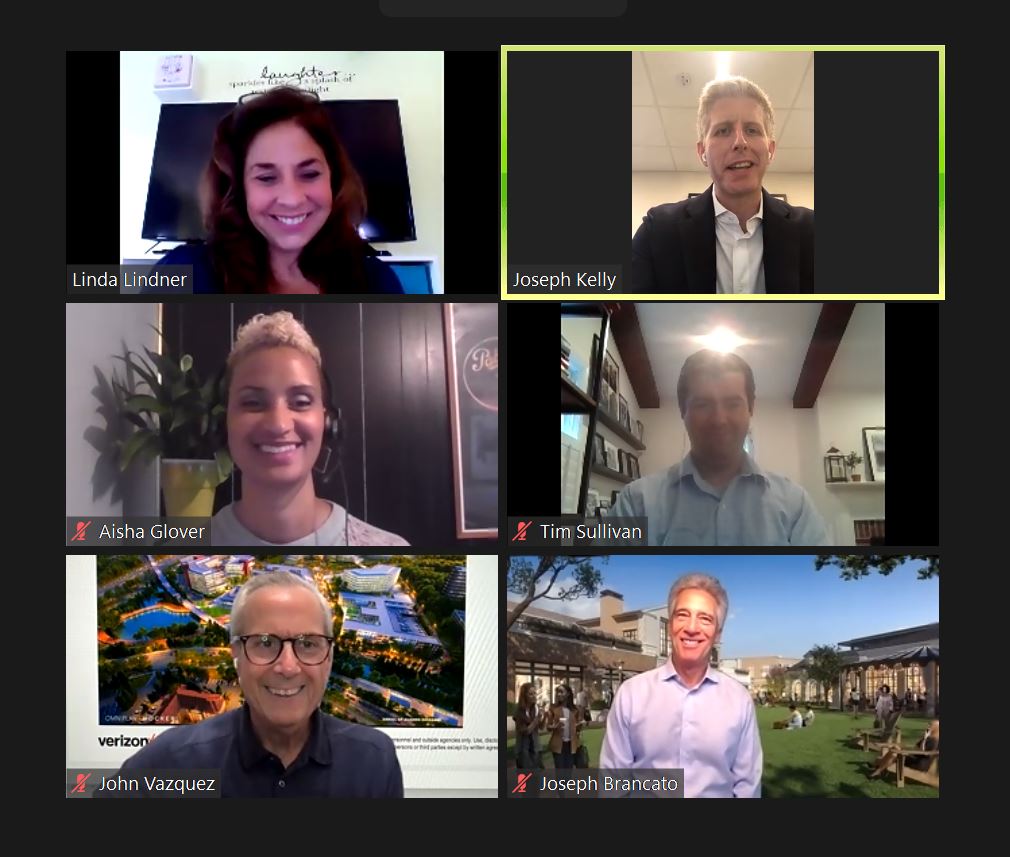
Speakers from Gensler, Verizon, Audible, and the NJEDA shared strategies
for putting underutilized office parks, malls, and other stranded assets back to productive use  

TRENTON, N.J. (June 24, 2021) – Industry executives and leaders from New Jersey State government on Tuesday shared their insights at a panel focused on helping communities return stranded assets such as vacant or underutilized office parks and shopping malls to productive use.

Speakers included executives at Gensler, Verizon, and Audible as well as leaders in Governor Phil Murphy’s administration and the New Jersey Economic Development Authority (NJEDA). They discussed strategic uses for these properties as well as state programs supporting redevelopment of stranded assets, including the NJEDA’s 21st Century Redevelopment Program.

A recording of the event is available here.

“Governor Phil Murphy’s economic development strategy is centered around equitable and inclusive investment in our communities, and this vision is ever more important as the state recovers from the COVID-19 pandemic,” said Joseph Kelley, Deputy Chief of Staff to New Jersey Governor Murphy. “Repositioning stranded assets represents a strategic opportunity to drive investment that elevates our communities and improves quality of live for New Jersey families.”

“As we look ahead to a post-pandemic future, malls are a market segment ripe for repositioning into a number of mixed uses. There is an opportunity to rethink these underutilized assets and develop pedestrian orientated communities in New Jersey,” said Gensler Co-Chairman Joseph Brancato. “There is tremendous value in putting together complementary uses that energize the district and provide measurable impact for both the public and private sectors.”

“We owe a standard of care to our communities to ensure vacant or underutilized assets are additive to society based on sustainable redevelopment of spaces for new needs, including creating open spaces, meeting places and trees,” said John Vazquez, SVP Global Real Estate and Global Supply Chain at Verizon.

“The COVID-19 pandemic has changed our economy and our world forever. As we navigate our new normal, it is critical that we help communities find ways to reactivate properties that have become outdated or underutilized,” said NJEDA Chief Executive Officer Tim Sullivan. “The panel discussion on revitalizing stranded assets provided important inspiration for leaders looking to return vacant or underused properties in their communities to productive use. The NJEDA looks forward to helping communities take the projects this event inspires from concept to reality.”

“The return to public life in the aftermath of COVID-19 presents a rare opportunity for businesses and communities to re-imagine what is possible in our public spaces,” said Aisha Glover, Vice President of Urban Innovation at Audible. “Reinvigorating stranded assets is essential for creating new spaces that better serve our communities and I’m hopeful that discussions like these will inspire equitable change.”

In recent years, a number of demographic and economic trends have resulted in suburban offices and shopping malls across New Jersey emptying out, leaving communities stuck with the costs of maintaining infrastructure and roads around these facilities and a lack of resources to do so. The COVID-19 pandemic has further exacerbated these trends and their negative impact on communities that are home to these stranded assets.

Tuesday’s discussion opened with an overview of Governor Murphy’s economic development goals and State programs that are available to help communities repurpose stranded assets. Sullivan presented on the 21st Century Redevelopment Program, an NJEDA grant program that provides grants of up to $50,000 to help municipalities, counties, and redevelopment agencies develop plans to repurpose vacant properties into productive economic assets. The NJEDA is currently accepting applications for the 21st Century Redevelopment Program at https://www.njeda.gov/21stcentury.

Sullivan also discussed the New Jersey Economic Recovery Act of 2020 (ERA), which creates a suite of programs, including tax credits to incentivize job creation, new construction, and revitalization of brownfields and historic properties; financial resources for small businesses; support for new supermarkets and healthy food retailers in food desert communities; new funding opportunities for early-stage companies in New Jersey; and support for the growing film and digital media industry.

Following the presentation on New Jersey’s State programs, Gensler Co-Chairman Joseph Brancato discussed examples of Gensler projects that reimagine stranded assets, including Rosedale Center Mall in Roseville, MN, One Westside Pavilion in Los Angeles, CA, and the upcoming mixed-use development, M Station at Morristown in NJ. Verizon SVP John Vazquez and Audible Vice President of Urban Innovation Aisha Glover also discussed projects they had worked on that transformed vacant or underutilized properties into community assets.

The event concluded with an open panel discussion and audience Q&A moderated by NJBIZ Managing Editor Linda Lindner.

A recording of the presentations and panel discussion is available here.

The NJEDA is currently accepting applications for the 21st Century Redevelopment Program as well as multiple programs created under the ERA. Learn more and apply at https://www.njeda.gov.

About the New Jersey Economic Development Authority

The New Jersey Economic Development Authority (NJEDA) serves as the State’s principal agency for driving economic growth. The NJEDA is committed to making New Jersey a national model for inclusive and sustainable economic development by focusing on key strategies to help build strong and dynamic communities, create good jobs for New Jersey residents, and provide pathways to a stronger and fairer economy. Through partnerships with a diverse range of stakeholders, the NJEDA creates and implements initiatives to enhance the economic vitality and quality of life in the State and strengthen New Jersey’s long-term economic competitiveness.

About Gensler

Gensler is a global architecture, design, and planning firm with 49 locations across Asia, Europe, Australia, the Middle East, and the Americas. Founded in 1965, the firm serves more than 3,500 active clients in virtually every industry. Gensler designers strive to make the places people live, work, and play more inspiring, more resilient, and more impactful.

To learn more about NJEDA resources for businesses call NJEDA Customer Care at 609-858-6767 or visit https://www.njeda.gov and follow @NewJerseyEDA on FacebookTwitter, Instagram, and LinkedIn.

###

La nueva fase de fondos por $10 millones se suma a la fase inicial de $14 millones
que apoya la compra de 1.5 millones de comidas a más de 340 restaurantes

TRENTON, N.J. (24 de junio de 2021) – La Autoridad para el desarrollo económico de New Jersey (NJEDA, por sus siglas en inglés) anunció hoy que abrirá las aplicaciones para una nueva tanda de fondos del programa Apoya y Sirve a NJ (Sustain and Serve NJ) la próxima semana. El programa Apoya y Sirve a NJ de la NJEDA proporciona a las entidades elegibles subsidios de $100,000 a $2 millones para apoyar la compra de comidas a restaurantes de New Jersey que han sido afectados negativamente por la pandemia de COVID-19. La NJEDA otorgará fondos por hasta $10 millones en total durante la Fase 2 del programa. Las aplicaciones abrirán el 28 de junio de 2021 y cerrarán el 18 de julio de 2021. La aplicación estará disponible en https://business.nj.gov/covid/eligibility-for-sustain-and-serve.

Los fondos para la Fase 2 del programa Apoya y Sirve a NJ se proporcionarán como parte de un conjunto de programas por $235 millones de ayuda ante la COVID sancionado por la Legislatura de New Jersey esta primavera y promulgado por el Gobernador Phil Murphy a comienzos de esta semana para ayudar a los pequeños negocios afectados por la pandemia.

Durante la primera fase de los subsidios de Apoya y Sirve a NJ anunciada en febrero, la NJEDA otorgó más de $14 millones a 28 organizaciones en todo el estado, lo que generará la compra de más de 1.5 millón de comidas a más de 340 restaurantes participantes. 

“Los restaurantes son el corazón de las comunidades locales, y su éxito es absolutamente fundamental para que nuestra economía se recupere de la pandemia de COVID-19”, expresó el Director Ejecutivo de la NJEDA, Tim Sullivan. “La segunda fase del programa Apoya y Sirve a NJ ampliará aún más el enorme impacto que el programa ya ha tenido en los restaurantes en el Estado Jardín. Gracias a las medidas tomadas por el Gobernador Phil Murphy y la Legislatura de New Jersey, este programa ahora podrá ayudar incluso a más restaurantes a mantener sus puertas abiertas y a que sus empleados reciban su paga a medida que se recuperan del impacto económico y sanitario de la COVID-19”.

Esta última fase de Apoya y Sirve a NJ aportará hasta $10 millones en fondos del estado disponibles para organizaciones con y sin fines de lucro en New Jersey. Las organizaciones elegibles recibirán subsidios de entre $100,000 y $2 millones para realizar compras de comidas a granel a restaurantes de New jersey. Luego, las entidades distribuirán las comidas sin costo.

La NJEDA dará un seminario web informativo el 30 de junio de 2021 a las 11:00 a.m. con sugerencias y consejos para que los posibles solicitantes presenten su aplicación. El seminario web también incluirá una guía de la aplicación. Se puede acceder al seminario web aquí: http://www.tinyurl.com/SustainandServe2. Habrá disponible una grabación del seminario web aquí https://business.nj.gov/covid/eligibility-for-sustain-and-serve.

El programa está disponible para entidades, incluidas organizaciones sin fines de lucro 501(c), que estén legalmente registradas para desempeñar actividades comerciales en New Jersey y estén debidamente registradas en el Departamento de Trabajo de New Jersey (NJDOL, por sus siglas en inglés) y en la División Fiscal de New Jersey. Los solicitantes de subsidios deberán demostrar compras a granel anteriores de 3,000 o más comidas valuadas en $50,000 o más a restaurantes de New Jersey desde el 9 de marzo de 2020. Los requisitos completos de elegibilidad se pueden encontrar en https://business.nj.gov/covid/eligibility-for-sustain-and-serve. Los beneficiarios actuales del programa Apoya y Sirve a NJ son elegibles para solicitar fondos adicionales.

Si bien los restaurantes no pueden presentar una aplicación directamente para el subsidio a través de Apoya y Sirve a NJ, aquellos que estén interesados en proporcionar comidas a través del programa pueden elegir que su información se publique de forma pública en el Centro de información comercial durante la COVID-19 de NJ en https://forms.business.nj.gov/ssnj/restaurants/; o bien pueden completar el formulario de restaurante interesado en Apoya y Sirve a NJ en https://forms.business.nj.gov/ssnj/restaurants/interest/. Los restaurantes también pueden comunicarse con una entidad que ofrezca un programa establecido de compra y distribución de comidas a granel para consultar sobre una posible participación. Se puede encontrar una lista de los beneficiarios actuales de Apoya y Sirve a NJ aquí. Los posibles solicitantes de subsidios podrán consultar este registro y comunicarse con los restaurantes acerca de la participación en el programa Apoya y Sirve a NJ, sin embargo, la inclusión en esta lista no es un aval de la Autoridad para el desarrollo económico de New Jersey con respecto a la elegibilidad para Apoya y Sirve a NJ.

Acerca de la Autoridad para el desarrollo económico de New Jersey

La Autoridad para el desarrollo económico de New Jersey (NJEDA) es la agencia principal del Estado para impulsar el desarrollo económico. La NJEDA tiene el compromiso de hacer del Estado de New Jersey un modelo nacional para el desarrollo económico inclusivo y sostenible al centrarse en estrategias claves para ayudar a construir comunidades fuertes y dinámicas, crear buenos trabajos para los residentes de New Jersey y ofrecer oportunidades para una economía más sólida y justa. Mediante asociaciones con diversas partes interesadas, la NJEDA crea e implementa iniciativas para mejorar la vitalidad económica y la calidad de vida en el Estado y para fortalecer la competitividad económica a largo plazo de New Jersey.

Para obtener más información acerca de los recursos de la NJEDA para empresas, llame a la línea de atención al cliente de NJEDA al 609-858-6767 o visite https://www.njeda.gov y siga a @NewJerseyEDA en Facebook, Twitter, Instagram y LinkedIn.

###

New $10 Million Funding Phase Builds on Initial $14 Million that
is Supporting the Purchase of 1.5 Million Meals from 340+ Restaurants

TRENTON, N.J. (June 23, 2021) – The New Jersey Economic Development Authority (NJEDA) today announced that it will open applications for a new round of Sustain and Serve NJ funding next week. The NJEDA’s Sustain and Serve NJ program provides eligible entities with grants of between $100,000 to $2 million to support the purchase of meals from New Jersey-based restaurants that have been negatively impacted by COVID-19. The NJEDA will award up to $10 million in total funding through Phase 2 of the program. Applications will open June 28, 2021 and close July 18, 2021. The application will be available at https://business.nj.gov/covid/eligibility-for-sustain-and-serve.

The funding for Phase 2 of Sustain and Serve NJ will be provided as part of a $235 million suite of COVID relief passed by the New Jersey Legislature this spring and signed into law by Governor Phil Murphy earlier this week to help small businesses affected by the pandemic.

Through the first phase of Sustain and Serve NJ grants announced in February, the NJEDA awarded more than $14 million to 28 organizations across the state, which will result in the purchase of more than 1.5 million meals from more than 340 participating restaurants. 

“Restaurants are the heartbeat of local communities and their success is absolutely essential to our economic recovery from the COVID-19 pandemic,” said NJEDA Chief Executive Officer Tim Sullivan. “The second phase of Sustain and Serve NJ will expand upon the enormous impact that the program has already had on restaurants in the Garden State. Thanks to action taken by Governor Phil Murphy and the New Jersey Legislature, this program will now be able to help even more restaurants keep their doors open and their employees paid as they recover from the economic and health impact of COVID-19.”

This latest phase of Sustain and Serve NJ will make up to $10 million in state funding available to for-profit and non-profit organizations in New Jersey. Eligible organizations will receive grants of between $100,000 and $2 million for bulk purchases of meals from New Jersey-based restaurants. The entities will then distribute the meals at no cost.

The NJEDA will hold an informational webinar on June 30, 2021 at 11:00 a.m. for potential applicants to learn tips and advice for applying. The webinar will also include a walk-through of the application. The webinar can be accessed here: http://www.tinyurl.com/SustainandServe2. A recording of the webinar will be available at https://business.nj.gov/covid/eligibility-for-sustain-and-serve.

The program is open to entities that are legally registered to do business in New Jersey and are in good standing with the NJDOL and the New Jersey Division of Taxation, including 501(c) non-profit organizations. Grant applicants will be required to demonstrate prior bulk purchases of 3,000 or more meals valued at $50,000 or more from New Jersey-based restaurants since March 9, 2020. Complete eligibility requirements can be found at https://business.nj.gov/covid. Current grantees of the Sustain and Serve NJ program are eligible to apply for additional funds.

While restaurants may not directly apply for Sustain and Serve NJ grants, those interested in providing meals through the program may opt to have their information posted publicly on the NJ COVID-19 Business Information Hub at https://forms.business.nj.gov/ssnj/restaurants/ or by completing the Sustain and Serve NJ Restaurant Interest Form available at https://forms.business.nj.gov/ssnj/restaurants/interest/. Restaurants may also contact an entity with an established bulk meal purchasing and distribution program to discuss potential participation. A list of current Sustain and Serve NJ grantees can be found here. Potential grant applicants may choose to refer to this registry and contact restaurants about participating in the Sustain and Serve NJ program, though inclusion on the list is not an endorsement from the NJEDA as to eligibility for Sustain and Serve NJ.

About the New Jersey Economic Development Authority

The New Jersey Economic Development Authority (NJEDA) serves as the State’s principal agency for driving economic growth. The NJEDA is committed to making New Jersey a national model for inclusive and sustainable economic development by focusing on key strategies to help build strong and dynamic communities, create good jobs for New Jersey residents, and provide pathways to a stronger and fairer economy. Through partnerships with a diverse range of stakeholders, the NJEDA creates and implements initiatives to enhance the economic vitality and quality of life in the State and strengthen New Jersey’s long-term economic competitiveness.

To learn more about NJEDA resources for businesses call NJEDA Customer Care at 609-858-6767 or visit https://www.njeda.gov and follow @NewJerseyEDA on Facebook, Twitter, Instagram, and LinkedIn.

###
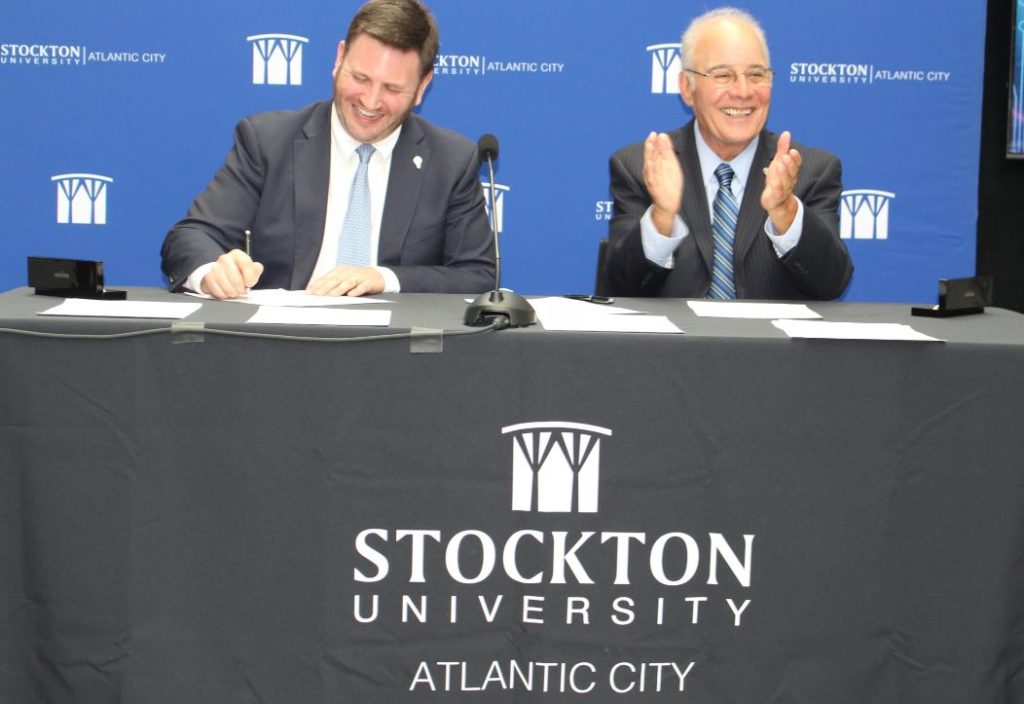
NJEDA Chief Economic Growth Officer Brian Sabina and Stockton University President Dr. Harvey Kesselman sign an MOU enabling the NJEDA to provide $200,000 in funding plus staff resources to Stockton University for its esports initiative.
Photo credit: Stockton University

TRENTON, N.J. (June 22, 2021) – The New Jersey Economic Development Authority (NJEDA) and Stockton University signed a memorandum of understanding (MOU) today enabling the NJEDA to provide $200,000 in funding plus staff resources to Stockton University for its esports initiative, which includes Stockton’s establishment of an Esports Innovation Center at the university’s Atlantic City campus. The Center is expected to help to advance the goal of establishing Atlantic City as a hub for the rapidly growing esports industry.  

“Esports presents a rare chance to cultivate an entirely new industry that will create good paying, skilled jobs, along with an opportunity to build industry leadership,” said New Jersey Lieutenant Governor Sheila Y. Oliver. “With a renowned higher education partner like Stockton University, and our unparalleled pool of technology talent I am confident that New Jersey is well-equipped to support the rapidly-growing esports industry and the economic potential it can offer our residents and small businesses.”

The esports industry has swiftly grown in popularity in the United States, with total revenues in North America projected to reach $250 million this year and a viewing audience of 57 million people. By 2025, the industry is expected to reach $9 billion globally.

The esports industry can help diversify New Jersey’s tourism and entertainment sector and be a source of new high-quality, high-wage jobs, such as software engineers, product developers, and content provision/event production roles. The industry is large and rapidly growing, with total esports employment in the US nearly doubling from Q2 2019 to Q2 2020.

“Creating new innovation-focused spaces and centers of knowledge where industry stakeholders can collaborate and gain expertise is an important element of catalyzing the State’s innovation economy,” said NJEDA Chief Economic Growth Officer Brian Sabina. “The NJEDA is proud to support this important project, and we look forward to working with Dr. Kesselman and the team at Stockton University to build New Jersey’s leadership in this emerging and exciting industry.”

Thanks to New Jersey’s strong technology infrastructure and innovation ecosystem, the esports industry has already taken root in the state, and the Esports Innovation Center will build on that momentum to establish New Jersey, and Atlantic City, as the epicenter of esports growth. This Center will also be a huge step forward in creating the most diverse innovation ecosystem in the country and will help to close the racial and gender wage and employment gaps.  

“The new Esports Innovation Center will work with Stockton and industry partners to position Atlantic City and New Jersey as esports leaders and help shape the future of the esports landscape,” said Stockton University President Dr. Harvey Kesselman. “Esports industry partners will have the ability to become members of the Esports Innovation Center and join in the center’s research, events, and activities.”

Among other activities, the Center will focus on catalyzing collaborative technology innovation, supporting workforce development within the esports industry, positioning New Jersey and Atlantic City as an esports leader through events and thought leadership, identifying and promoting best practices for regulating wagering on esports and ensuring integrity in competitions, and promoting diversity and inclusion, as well as healthy gaming practices, as essential components of esports culture.

The Esports Innovation Center will also work with the Division of Gaming Enforcement and independent bodies that govern integrity in competitions to position New Jersey as a national leader in regulation and integrity practices for esports and will promote diversity and inclusion, as well as healthy gaming practices, in the esports industry.

Supporting the Esports Innovation Center is part of Governor Murphy’s commitment to building a stronger, fairer New Jersey economy that creates opportunities for all New Jersey residents, and NJEDA’s wider strategic effort to grow New Jersey’s innovation, sports wagering, and fintech ecosystems. In addition to the MOU with Stockton University, the NJEDA concurrently approved a separate agreement with New Jersey City University (NJCU) to support the Sports Wagering and Financial Technology Workforce Development and Innovation Center at NJCU. This Center will provide an incubator for the sports wagering and fintech industries and act as a connector between industry, academia, and relevant State agencies to grow and support innovation in sports wagering technology and fintech.

More information about the Esports Innovation Center and Stockton University’s other esports programs is available at https://sites.google.com/stockton.edu/stockton-esports/home.

About the New Jersey Economic Development Authority

The New Jersey Economic Development Authority (NJEDA) serves as the State’s principal agency for driving economic growth. The NJEDA is committed to making New Jersey a national model for inclusive and sustainable economic development by focusing on key strategies to help build strong and dynamic communities, create good jobs for New Jersey residents, and provide pathways to a stronger and fairer economy. Through partnerships with a diverse range of stakeholders, the NJEDA creates and implements initiatives to enhance the economic vitality and quality of life in the State and strengthen New Jersey’s long-term economic competitiveness.

To learn more about NJEDA resources for businesses call NJEDA Customer Care at 609-858-6767 or visit https://www.njeda.gov and follow @NewJerseyEDA on FacebookTwitter, Instagram, and LinkedIn.

###