George.jpg Vimal.jpg

Led by George George Kottayil (left) and Vimal Kavuru (right), Grace Therapeutics develops drug-delivery technologies for people suffering from rare and orphan diseases. 

North Brunswick, N.J. (May 24, 2018) – A quest for an optimal location for development of drug-delivery technologies for people suffering from rare and orphan diseases brought Grace Therapeutics to the New Jersey Economic Development Authority’s (EDA’s) Commercialization Center for Innovative Technologies (CCIT) in 2014.

Co-founders George Kottayil and Vimal Kavuru have experience launching, growing, and successfully exiting multi-million-dollar pharmaceutical companies.

With that strategic insight, the entrepreneurs were first attracted to CCIT, New Jersey’s leading life sciences incubator, for several reasons, including its quick application-to-move-in time and its ready-to-use lab space. Then they discovered the added bonuses of locating at CCIT – its amenities, array of resources, and proximity to universities. CCIT offers 27 wet labs, the most of any incubator in New Jersey. The 46,000-square-foot CCIT includes both small and large labs, as well as offices, and is located in the heart of the State’s research corridor. 

“It took less than three months from the time we applied to the time we had a fully-functional lab,” Kottayil, Grace Therapeutics’ Chief Executive Officer (CEO), said. “We have been impressed with CCIT and its staff from day one and have continued to reap the benefits of locating here.”

Grace Therapeutics develops novel drug-delivery technologies that Kottayil and Kavuru say will dramatically improve the clinical outcomes of drugs previously approved for use in humans. The company focuses on therapies for rare and orphan diseases, conditions that affect fewer than 200,000 people nationwide.

The company expects to submit its first New Drug Application later this year. Known as GTX-104, the injectable drug is designed to help people with Subarachnoid Hemorrhage (SAH). Caused by a ruptured brain aneurysm, SAH is a rare and life-threatening medical emergency in which bleeding occurs in the subarachnoid space between the brain and the skull. An estimated 70,000 patients are affected by SAH each year. GTX-104 is one of three products in Grace Therapeutics’ pipeline that are in the late stages of development.

Grace Therapeutics has also benefited from having Rutgers University nearby. Kavuru pointed to the company’s ability to use the university’s Chemistry Department and its biotechnology lab, including analytical instruments, and to seek advice from knowledgeable professors.

“New Jersey’s pharmaceutical landscape has shifted in recent years, presenting new opportunities for smaller companies to emerge onto the scene,” EDA CEO Tim Sullivan said. “By providing affordable incubation space and access to critical resources, we are ensuring that growing companies like Grace Therapeutics have the tools they need to compete on a global scale.”

Kavuru, a registered pharmacist and Grace Therapeutics’ Chairman, has more than 30 years of experience in the pharmaceutical sector with a successful track record of business leadership and creating niche life science/pharmaceutical companies. He recently joined CCIT’s Advisory Board, which enables tenants to seek guidance on a wide range of topics. The Board is comprised of professionals from the many types of organizations that are involved with growing companies, such as the ones housed at CCIT. Accountants, lawyers, trade organizations, large corporations, universities, consultants, hospitals, and even CCIT graduates, are represented on the Board.

@NJEDATech asked Kottayil about his company’s experience at CCIT and its plans for the future:

Why did you choose to grow Grace Therapeutics in New Jersey?
New Jersey provides the ideal environment to start and grow early stage pharmaceutical ventures. The state offers access to high quality research and development structure, capital and qualified personnel — an essential ingredient for a company and an idea to take root. Plus, the resources provided by the EDA through incubators like CCIT vastly improve the chance of success for companies like ours.

What do you consider Grace Therapeutics’ biggest success to date?
In less than four years, Grace Therapeutics has advanced three proprietary late-stage “first-in-class” drug products from bench to clinic. This was made possible not just by good science, but also access to resources provided by the state.

Aside from submitting an NDA for GTX-104, what’s on the horizon for your company?
Two of our products will soon enter Phase 3 clinical studies: GTX-101 for the treatment of Postherpetic Neuralgia (PHN), a complication from shingles that leaves a burning pain long after the rashes and burns are gone. GTX-102  for the treatment of Ataxia Telangiectasia (AT), a rare genetic disease that affects children causing progressive loss of muscle control, immune system problems and a high rate of cancer. Equally as exciting, we have two novel orphan drug products in our pipeline that we envision to be the first treatment options in their respective therapeutic spaces.

Applications for CCIT are currently being accepted for new tenants. Interested emerging companies can contact EDA Program Manager Lenzie Harcum at lharcum@njeda.com or (732) 839-1880.

To learn about the multitude of resources available to help technology and life sciences companies thrive, visit https://www.njeda.gov/tls and follow @NJEDATech on Facebook, Twitter and LinkedIn.

###


Astor1.jpg
CFO Andy Astor (pictured above) says program “was an excellent bridge to our goal of achieving cash flow break-even in 2018”

TRENTON, N.J. (May 10, 2018) – With support from the New Jersey Economic Development Authority (EDA), medical device maker Nephros, Inc. has developed and commercialized water-filtration systems designed to decrease the incidence of infectious diseases in hospitals and dialysis clinics. More than 500 facilities in the United States currently use the South Orange-based company’s innovative technology.

Founded in 1997, the company, whose name means “kidney” in Greek, originally focused on creating blood-purification technologies for patients with end-stage renal disease (ESRD). Nephros’ original proprietary hemodiafiltration (HDF) system is used in conjunction with standard hemodialysis machines to provide HDF therapy to ESRD patients.

In recent years, the company has shifted its short-term focus to developing water filters for infection control in medical facilities, specifically designed for use at sinks, showers and ice machines. Nephros executives indicate that even potable water has the potential to contain microbiological contaminants that can negatively impact immunocompromised patients.  Since pivoting its focal point to infection control in 2015, the number of hospitals using Nephros’ products has swelled from 50 to over 500.

The company has seen significant growth in recent months, aided by its participation in the New Jersey Technology Business Tax Certificate Transfer (NOL) Program. Last year was the first time Nephros participated in the program.

Momentum from cash infused through the NOL Program supported the acceleration of Nephros’ hiring plan and the lease and build-out of the company’s new 8,000-square-foot facility in South Orange.  It also helped attract new investors, from whom Nephros obtained nearly $3 million in recent weeks. Since January 2017, the company has grown from nine to 14 employees. Last year, Nephros’ sales were approximately $3.8 million, up 65 percent over 2016.

“To see New Jersey companies like Nephros flourish as a result of our NOL Program reinforces the kind of impact that smart, targeted investments in growing companies can have for New Jersey’s economy,” EDA Chief Executive Officer Tim Sullivan said. “It also underscores why Governor Murphy is committed to fostering the development of the innovation economy.”

The NOL Program enables eligible technology and life sciences companies to sell New Jersey net operating losses (NOLs) and unused research and development tax credits to unrelated profitable corporations for cash, which can be used for working capital or to fund research. The NOL Program is administered by the EDA and the New Jersey Division of Taxation within the State’s Department of Treasury.

Unprofitable technology and life sciences companies have until June 30 to apply to participate in the 2018 NOL Program. The application and a list of benefits and requirements can be found at https://www.njeda.gov/nol.

“The NOL Program allowed us to sell not only our current NOLs, but also those we sustained in previous years,” explained Nephros Chief Financial Officer Andy Astor. “The NOL Program was an excellent bridge to our goal of achieving cash flow break-even in 2018.” Astor added that the program provided the funding needed for operational self-sufficiency, without diluting the company’s investors or adding debt to its balance sheet.

@NJEDATech spoke to Astor about Nephros’ experience in New Jersey and its plans for the future:

Why did Nephros choose to grow in New Jersey?
Nephros was originally a spin-out from Columbia University, just across the Hudson River. The company moved to New Jersey in 2008 to draw on the extensive biotechnology and medical device talent base in the state, and to take advantage of New Jersey’s somewhat lower operational cost levels. Over the past couple of years, Nephros has grown substantially, and we continue to find New Jersey a reliable provider of talent at rational cost levels.

How did you benefit from the funding provided through the NOL Program?
The NOL Program was a huge benefit to Nephros. It took the place of a fundraising round for us, providing the operating capital we need for the foreseeable future. Without it, we would have needed to bring in additional capital by either diluting our existing investors or adding debt to our balance sheet.

What do you consider Nephros’ biggest success to date?
I would say our pivot over the past two to three years to a medical water filtration company. We used the advance filter technology we developed in our dialysis business to build filters for the infection control market within hospitals and are seeing 50 to 100 percent annual growth in that business. And I’ll mention again that the EDA’s NOL Program was instrumental in enabling that change.

What’s on the horizon for your company?
Interestingly, with the success of our filter business, we are able to return some of our focus to the dialysis business, with a next-generation HDF product. Stay tuned for more on that front.
 

The EDA offers a multitude of resources to help technology and life sciences companies grow and thrive in New Jersey. To learn about these resources, visit https://www.njeda.gov/tls and follow @NJEDATech on Facebook, Twitter and LinkedIn.

###

CariiDelawareCrossing.jpg

Carii Co-founders  Wun and Denise Hayman‐Loa meet with Delaware Crossing Investor Group's Benjamin Novak at today's New Jersey Founders & Funders.

North Brunswick, N.J. (May 9, 2018) – Entrepreneurs from two-dozen emerging technology and life sciences companies received personalized feedback on their pitches and products today from potential investors as the New Jersey Economic Development Authority (EDA) hosted its latest New Jersey Founders & Funders event.

The afternoon-long event connected the entrepreneurs with angel and venture capital investors in 10-minute, one-on-one, “speed dating” sessions to discuss strategy, business models and funding opportunities. Since 2014, executives from more than 250 startup companies have participated in New Jersey Founders & Funders events.

“As we aim to restore New Jersey to its place of leadership in innovation, we fully recognize the importance of nurturing technology and life sciences companies at their earliest stages,” EDA Chief Executive Officer Tim Sullivan said. “We hope the synergy generated by today’s meetings spur ongoing conversations between investors and entrepreneurs as they establish and expand their companies in the Garden State.”

Eighteen angel and venture capital investors from around the Mid-Atlantic Region attended today’s event. Participants included Delaware Crossing Investor Group, which has offices in Pennsylvania and New Jersey, as well as Windham Venture Partners, located in New York, and New Brunswick-based Tech Council Ventures. Last year, the EDA invested up to $7.5 million into Tech Council Ventures II, Tech Council Ventures’ latest fund.  
Investors met with a variety of technology and life sciences companies, including:

Reflik, located in Somerset, creates and maintains a talent acquisition and recruitment platform that utilizes its extensive network of recruiters and industry professionals to create efficiency for human resource professionals looking to find top candidates in less time. MGM Resorts, Canon, and Marsh & McLennan are among the company’s customers. Last year, Reflik became the first company approved for a loan through the EDA’s NJ CoVest Fund, which is designed to fill the funding gap that occurs between product development and commercial expansion.

Plumeria Therapeutics is a clinical-stage biopharmaceutical company that develops non-opioid pain drugs to treat complex neuroinflammatory diseases. Plumeria is currently focused on pain management for diabetic neuropathy patients. The company was co-founded by Thomas P. Richardson, PhD, MBA, who has extensive experience in research and development. Richardson has worked at life sciences startups, Rutgers University, and BioNJ. Co-Founder Lei Yu is a geneticist and Rutgers professor with 30 years of experience in academia studying pain and sensory processes.

Salem County-based Carii is an internet company that offers a robust and flexible platform for engaging community members with multiple communication methods and layers of privacy and control. Husband-and-wife Co-founders Wun and Denise Hayman‐Loa noted that the platform is secure enough for financial services and law firms, but still unique in its ability to link public and private communities. It is available on the web and iOS and Android devices.

Today’s event was held at the EDA’s Biotechnology Development Center (BDC), located on the 50-acre Technology Centre of New Jersey research park in North Brunswick. The BDC offers suites of intermediate lab and office space from 3,400 to 10,000 square feet for emerging life sciences companies, including those that have outgrown incubator space and other early stage companies looking to expand. Life sciences companies interested in touring the BDC should contact EDA Program Manager Lenzie Harcum at lharcum@njeda.com or (732) 839-1880.
 

To learn about the various resources available to support the technology industry, visit https://www.njeda.gov/tls and follow @NJEDATech on Twitter and LinkedIn.

###

The New Jersey Economic Development Authority's next public Board Meeting will be held on Friday, May 11, 2018 at 10 a.m. at the EDA offices at 36 West State Street, Trenton. A copy of the proposed agenda can be found prior to the meeting at www.njeda.gov/Board. Following the Board Meeting, minutes and the full agenda will also be available at www.njeda.gov/Board.

$60 Million Program Allows Eligible Companies to Sell Net Operating Losses for Cash

TRENTON (May 1, 2018) – Technology and life sciences companies in the Garden State seeking to raise non-dilutive capital can now apply to the State’s 2018 Technology Business Tax Certificate Transfer (NOL) Program. The New Jersey Economic Development Authority (EDA) today announced that applications are being accepted online through June 30, 2018 at https://www.njeda.gov/nol.

Heralded as a lifeline for unprofitable companies, the NOL Program enables eligible technology and life-sciences companies to sell New Jersey net operating losses and unused research and development (R&D) tax credits to unrelated profitable corporations for cash, which can be used for working capital or to fund research. The EDA and the New Jersey Department of Treasury’s Division of Taxation administer the program.

“Creating a stronger innovation economy in New Jersey means creating a pathway for early-stage technology and life sciences companies to continue research or operations before they reach the point of profitability,” EDA Chief Executive Officer (CEO) Tim Sullivan said. “The NOL Program is helping to cultivate the growth of this vital sector and spur the creation of even more New Jersey success stories.”

Sullivan pointed to several of the program’s benefits:
 

* Emerging companies can use the funding they receive as working capital, and the businesses to which they sell are able to lower their tax burden;

* The funding is non-dilutive, meaning that entrepreneurs do not have to give up equity in their companies 
   to receive the money;

* The average historical award is over $1 million;

* Nearly 90 percent of applicants successfully receive funding;

* On average, funding is received within six months of applying.

Since the program was established in 1999, more than 525 businesses have been approved for awards totaling over $950 million. Last year, 39 companies were approved to share more than $46 million.

ContraVir Pharmaceuticals CEO James Sapirstein was among those who utilized the NOL Program to grow his biotechnology company in Edison. ContraVir, which participated in the NOL Program for the third time in 2017, is developing a cure for Hepatitis B through a combination of anti-viral compounds. The money obtained through the NOL Program helped ContraVir fund specific research programs, as well as manufacturing and productions operations, including a Phase 1 trial of a proprietary compound, and the hiring of two new employees to work on that trial.

“We, as a State, have high paying jobs that we want to keep here and the NOL Program absolutely contributes to that growth,” Sapirstein said. “This is literally one of the best programs offered by the State of New Jersey.”
Last year was the first time that Atlantic City-based Impactivate Networks participated in the NOL Program. Impactivate Networks is an information technology company that maintains and operates the one-hundred digital displays along the Atlantic City Boardwalk, informing visitors of upcoming events and providing advertisers access to millions of Boardwalk visitors via full motion video and sound.

“We heard about the NOL Program when we attended the New Jersey Founders & Funders last year and learned more about it through discussions with members of the EDA’s Technology and Life Sciences team,” said Michael Binder, President and CEO of Impactivate Networks. “The funding we received has proven invaluable as we continue to build out our network and promote even more events and businesses in the Atlantic City area.”                                            

Princeton-based Arable Labs was another new participant to the NOL Program in 2017. The company’s proprietary smart technology offers farmers real-time, continuous visibility and predictive analytics of more than 40 metrics, such as weather, readiness for harvesting, and plant health. This data enables the farmers to make informed, vital decisions at their fingertips via a laptop, tablet or smart phone. 

Arable Labs Founder and CEO Adam Wolf said, “For a startup, cash is king, and we have experienced direct financial impact from the program.”

Companies must apply online by June 30, 2018 in order to participate. To sell net operating losses or R&D tax credits generated in 2017, companies must file their corporate business tax returns with the NJ Division of Taxation by June 30, 2018. Applicants can expect to hear by the end of August if their applications are approved.

For more information on the NOL Program, including frequently asked questions, a complete list of eligibility requirements, and program details, please visit https://www.njeda.gov/nol.

Questions about the NOL program may be submitted to nol@njeda.com. 

The EDA offers a multitude of resources to help technology and life sciences companies grow and thrive in New Jersey. To learn about these resources, visit https://www.njeda.gov/tls and follow @NJEDATech on Facebook, Twitter and LinkedIn.
###

A meeting of the Capital City Redevelopment Corporation (CCRC) Board has been scheduled for Friday, April 20, 2018 at 10:00 am in the EDA Board Room, 36 West State Street, Trenton, NJ.


A copy of the proposed agenda can be found at http://web.njeda.com/ccrc/page.aspx?id=2461

TRENTON, N.J. (April 11, 2018) – Hundreds of entrepreneurs, investors, and industry leaders will convene tomorrow (April 12) at the New Jersey Technology Council’s (Tech Council’s) 21st Annual Venture Conference. The afternoon-long program will highlight many of the State’s most promising companies and includes a pitch competition and networking opportunities.

Since 1996, the Tech Council has worked to support New Jersey’s entrepreneurs by providing business development, education, networking, and recognition opportunities to its more than 900-member roster. The New Jersey Economic Development Authority (EDA) is a charter sponsor of the Tech Council and a sponsor of the Venture Conference. EDA Vice President, Technology & Life Sciences Investments Kathleen Coviello sits on the Tech Council’s Board of Directors. 

“For more than two decades, the EDA has partnered with the Tech Council to spur innovation in the Garden State,” Tech Council President and Chief Executive Officer James Barrood said. “Countless technology companies have benefited from EDA funding and expertise throughout the years.”

Coviello will join three other female panelists, all of whom are investors, at tomorrow’s Venture Conference to talk about best practices for raising capital. These panelists include Edison Partners Partner Kelly Ford, Jumpstart New Jersey Angel Network (Jumpstart NJ) Board Member Gina Tedesco and Touchdown Ventures Director Deborah Zajac. Dynamk Capital LLC Co-Founder & Managing Director Daniella Kranjac will moderate the panel.

@NJEDATech asked each of the panelists for the one piece of advice they most often offer entrepreneurs:

“Access to funding is vital for any emerging technology company, which is why I always suggest that entrepreneurs explore the many financial resources the EDA offers to help them succeed,” Coviello said. “It’s also why the EDA routinely invests in venture funds that support growing technology-related businesses.”

Last year, the EDA invested in two New Jersey-based venture capital funds that will deploy EDA capital on a 1:3 basis in New Jersey companies. A $1 million investment supported Newark Venture Partners’ $23 million early stage venture fund, providing capital, company building services and housing support to innovative tech startups; and an up to $7.5 million investment will support Tech Council Ventures, which will make early stage venture capital investments. Tech Council Ventures has committed to invest up to 50 percent of their fund in New Jersey companies. The EDA is also a limited partner in the Tech Council’s NJTC Venture Fund, which has helped create over 1,000 jobs in New Jersey since its inception in 2001.

Edison Partners’ Ford offered this advice: “There’s lots of available capital out there, so it’s important to expect more than just a check. Take the time to meet and nurture relationships with potential investors well in advance of any fundraising effort, so that you can get a feel for how their people and programs can add tangible value to your business — from initial investment and over time.”

In January 2015, the EDA Board approved a $2.5 million limited partnership investment in Edison Partners’ fund Edison VIII. The $276 million fund has invested in 20 growth-stage technology businesses across three industry sectors: financial technology, healthcare information technology, and enterprise solutions (focused mainly on mobile, security and business operations software). The EDA previously invested in four other Edison Partners funds. 

When she meets with companies, Jumpstart NJ’s Tedesco always suggests: “Do your diligence! Just as entrepreneurs research their customers to find product market fit, they need to research potential investors as well. A successful financing strategy is based on understanding the entire investor landscape and identifying all financing alternatives that match the type and stage of their business. A fundable venture for a given investor depends on their specific investment thesis, which includes the prospect of a profitable exit. The mirror image of product market fit is business investor fit. Strategic alignment between investors and entrepreneurs is key to achieving success for all.”

The EDA collaborated with the Tech Council to create JumpStart New Jersey Angel Network in 2002 as a way to connect early-stage technology companies with access to much-needed capital. Since its inception, JumpStart has grown to be one of the largest angel-investing networks in the Mid-Atlantic region.

Touchdown Ventures’ Zajac’s words of advice include: "Corporations are participating in funding startups more often, and at times, earlier. If there is a compelling strategic fit, consider corporate venture capital as an option. Aim to secure the right champion early for both commercial engagement and investment."

Representatives from Touchdown Ventures have attended five of the EDA’s New Jersey Founders & Funders events. Held semi-annually at the EDA’s Commercialization Center for Innovative Technologies in North Brunswick, the event enables early-stage businesses to meet with potential investors in 10-minute, one-on-one “speed dating” sessions to discuss strategy, business models and funding opportunities. Zajac was also on hand for the EDA’s first-ever New Jersey Founders & Funders All-Stars event in December.
 

The EDA offers a multitude of resources to help technology grow and thrive in New Jersey. To learn about these resources, visit https://www.njeda.gov/tls and follow @NJEDATech on Facebook, Twitter and LinkedIn.
 

###
 

Complements Earlier Funding Round Facilitated by EDA Networking Program

Gridless Power

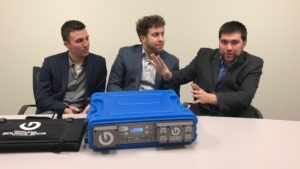
Under the director of company President Patrick Murphy, Chief Executive Officer Jason Halpern, and Chief Operating Officer Andrew Leonard, Gridless Power designs, manufactures, and markets portable rechargeable batteries that provide vital energy to areas around the world.

TRENTON, N.J. (April 10, 2018) – Funding approved today by the New Jersey Economic Development Authority (EDA) will help Collingswood-based Gridless Power Corporation further its mission to design, manufacture, and market portable rechargeable batteries that provide vital energy to areas around the world, often in extreme conditions.

The EDA approved a $250,000 loan through the NJ Covest Fund for the renewable energy company. Launched last year, the NJ Covest Fund is designed to help emerging technology companies bridge the funding gap between product development and commercialization and furthers the EDA’s ability to support businesses throughout their growth lifecycle. The Covest Fund loan is complementary to the company’s earlier round of A-1 financing. Several of the Angel investors that participated in this financing were introduced to Gridless by the EDA following the company’s participation in a NJ Founders and Funders event at the EDA’s Commercialization Center for Innovative Technologies (CCIT) in North Brunswick.

“The NJ Covest Fund was created to ensure burgeoning companies have access to the capital that will improve their odds of making it to the next stage,” EDA CEO Tim Sullivan said. “Continually assessing and responding to the needs of technology businesses in all phases of growth will help to cultivate a robust and resilient innovation economy in New Jersey.”

Gridless batteries have powered emergency gear in Africa during the Ebola Crisis and were used by UNICEF after the Nepal earthquakes. More recently, Gridless technology was utilized after the Amtrak crash outside of Philadelphia and in Puerto Rico to power hurricane recovery efforts.

“When crisis strikes, those on the front lines turn to our innovative batteries and battery systems,” said Patrick Murphy, Co-Founder and President of Gridless Power. “Our technology is helping critical care providers all over the world rethink where power can go. The funding approved today will enable us to hire additional employees, further the design of our products, and reach more customers around the world.”
Gridless Power employs four people in New Jersey and plans to more than double in size over the next two years.

After graduating college in 2010, the primary challenge facing Murphy and his Gridless Power co-founder Jason Halpern was getting portable power to Halpern’s family farm. Soon after that, the company expanded its scope and began creating solar storage systems for the U.S. military.

When Superstorm Sandy hit New Jersey in 2012, emergency personnel conducting search-and-rescue operations turned to Gridless Power’s batteries to keep their energy and communications systems running. Since then, the company has expanded to support a variety of users, including construction projects, concerts, medical professionals, the Department of Homeland Security, and the cities of New York and Philadelphia. Gridless Power added event management to the industries its products support.

According to the company, a single charge from its proprietary Lithium Iron Phosphate Core7K battery – via solar energy, or a wall or car charge – can help power everyday appliances, including up to six months of talk and data on a cell phone, two months of active tablet, laptop or two-way radio communications, and eight hours of lighting for work sites.

The NJ CoVest Fund provides funding to New Jersey-based early-stage technology companies in the form of convertible notes with warrants, requiring a negative pledge and springing lien on protected intellectual property. With a total funding pool of $3 million, eligible technology companies can receive investments ranging from $100,000 to $250,000. NJ CoVest funds feature three percent interest and 10-year maturity, with no payments due for the first seven years.

Held semi-annually at CCIT, NJ Founders and Funders events enable early-stage businesses to meet with potential investors in 10-minute, one-on-one “speed dating” sessions to discuss strategy, business models and funding opportunities.

EDA Board meetings are typically held at 10 a.m. on the second Tuesday of each month at 36 West State Street in Trenton. The Board meeting schedule, as well as Board agendas and minutes, are available at www.njeda.gov. All Board actions will take effect at the expiration of the statutory period for the Governor’s review and consideration of the meeting minutes.

The EDA offers a multitude of resources to help technology grow and thrive. To learn about these resources, visit https://www.njeda.gov/tls and follow @NJEDATech on Facebook, Twitter and LinkedIn.
###

CCIT-exterior.jpg

From CCIT (pictured above), Sunnylife Pharma helps drug-discovery companies worldwide reduce research and development costs by assisting with an array of pre-clinical research chemistry-related services.
 

North Brunswick, N.J. (April 5, 2018) – The New Jersey Economic Development Authority (EDA) recently welcomed Sunnylife Pharma Inc. as one of its newest tenants at the Commercialization Center for Innovative Technologies (CCIT) in North Brunswick. Founded by a team of former Merck scientists, Sunnylife Pharma Inc. is a contracted research services organization focused on the unmet medical needs of cancer patients, as well as people suffering from cardiovascular and metabolic diseases.

Sunnylife Pharma helps drug-discovery companies worldwide reduce research and development costs by assisting with an array of pre-clinical research chemistry-related services.

“Creating a culture of innovation is a centerpiece of Governor Murphy’s vision for a stronger and fairer economy, and nurturing emerging companies like Sunnylife Pharma is central to executing on that vision,” EDA Chief Executive Officer (CEO) Tim Sullivan said. “Removing barriers to commercialization and profitability for entrepreneurs with novel ideas will pave the way to strengthen economic opportunity in this high growth sector.”

As New Jersey’s leading life sciences incubator, CCIT’s collaborative environment enables Sunnylife Pharma executives and scientists to network with members of other drug discovery-companies such as Aucta Pharmaceuticals, Quixgen, and Grace Therapeutics, as well as research organization such as Kamat Pharmatech and API Pharma Tech. Like other CCIT tenants, Sunnylife Pharma will have access to offices, conference rooms, support staff, small business development resources and the ability to routinely seek advice from professional firms within the life sciences community. 

“I discovered CCIT based on recommendations from several former colleagues and found the staff to be very welcoming and the facilities well-suited to our needs,” Sunnylife Co-Founder and CEO Xibin Liao said. “Furthermore, we find many advantages in CCIT’s location near major cities, universities, and pharmaceutical companies.” 

CCIT also offers tenants assistance in finding outside funding sources. For the past two years, representatives from the National Institute of Health (NIH) and other federal agencies have presented to CCIT tenants and other members of New Jersey’s life sciences community about federal funding opportunities.

Sunnylife has repeatedly received funding from NIH to further its research and drug development. Last year, the company participated in NIH’s Innovation-Corps, an invitation-only eight-week entrepreneurial program for teams from biotech companies and other small, medically-focused companies.

@NJEDATech spoke to Liao about his company’s experience in New Jersey and its plans for the future:

Why did you decide to grow Sunny Life Pharma in New Jersey?
New Jersey is an exciting place for biotechnology companies, as it has pioneered the way for many large corporations that have achieved notable success in the field. With many of the world's major biopharmaceutical companies calling New Jersey home, the state is bursting with opportunity for businesses like ours.

What do you consider Sunny Life Pharma’s biggest success to date?
We pride ourselves on our very strong chemistry team, which allows us to provide excellent services for biotechnology companies across the nation. In addition, the quality and speed of our work regularly meets and exceeds our customers' expectations.

What’s on the horizon for Sunny Life Pharma? 
We are continually aspiring to improve the scope and quality of our work. This will, in turn, allow us to provide services to even more biopharmaceutical companies.
 

The EDA offers a multitude of resources to help technology and life sciences grow and thrive in New Jersey. To learn about these resources, visit https://www.njeda.gov/tls and follow @NJEDATech on Facebook, Twitter and LinkedIn.

###


The New Jersey Economic Development Authority meeting originally scheduled for 10:00 am, Tuesday, April 10, 2018 at EDA Offices, 36 West State Street, Trenton has been changed to 2:00 pm. The agenda can be found 48 hours prior to the meeting at our website: www.njeda.gov/Board.