Artboard-1-(1).jpg

Enfrentar la pandemia por el nuevo coronavirus ha creado cientos de nuevos desafíos para las pequeñas empresas de nuestro estado. New Jersey Economic Development Authority (La Autoridad para el desarrollo económico de New Jersey, o NJEDA por sus siglas en inglés) ofrece consultoría, apoyo del personal y recursos GRATIS para ayudarlo/a a superar las dificultades que está afrontando y prepararse para un futuro sostenible y exitoso. Esperamos que aproveche esta oportunidad única de crecimiento para su empresa y que cree estrategias rentables durante esta pandemia.


Regístrese hoy para recibir asesoramiento y apoyo del personal gratis


Este programa gratuito proporcionará hasta 25 horas de asesoramiento y apoyo individualizado del personal a cargo de asesores expertos que podrán ayudarlo/a a desarrollar e implementar nuevos procesos para fortalecer y permitir el crecimiento de su empresa a la vez que cumple con las medidas de protección actuales del estado y las mejores prácticas de salud pública. Nuestro equipo de expertos lo/a ayudarán a obtener subsidios y préstamos, reducir costos, mejorar su contabilidad y diseñar estrategias comerciales de largo plazo.


Siga leyendo y regístrese hoy


El programa está disponible para empresas con cinco o menos empleados y una oficina o una tienda en las Zonas de oportunidad de New Jersey. Recibió este correo electrónico porque su empresa está ubicada en una Zona de oportunidad elegible. El espacio es limitado y las empresas se seleccionarán por orden de registro, así que asegúrese de registrarse lo antes posible.


¡Haga clic aquí para iniciar el proceso de registro!


En NJEDA sabemos que ha sido un año difícil para las empresas. Esperamos poder trabajar con usted para abordar sus desafíos actuales y ayudarlo/a a prepararse para un futuro más estable y exitoso. Comuníquese con BusinessConsulting@njeda.com si tiene preguntas sobre este programa u otro recurso de apoyo de NJEDA para las pequeñas empresas afectadas por el coronavirus.


cid:image002.png@01D68C42.94638A90cid:image003.png@01D68C42.94638A90


A telephonic meeting of the New Jersey Economic Development Authority is scheduled for 10:00 AM, Wednesday, September 9, 2020.
 
The Members will convene to via conference call only.  Members of the public may participate in the meeting by calling in on the conference line.  Members of the public will have an opportunity to speak during the public comment segment of the meeting. The following conference number is being provided:
 
CONFERENCE NAME:  NJEDA BOARD MEETING (September 9, 2020)
PARTICIPANT DIAL-IN NUMBER:  877-692-8955
PARTICIPANT ACCESS CODE: 4204420
 
Members of the public are encouraged to call in prior to the time the meeting is scheduled to begin to avoid any delays.
 
The agenda can be found 48 hours prior to the meeting on our website: www.njeda.gov

COVID-19 Outbreak
New Jersey Economic Development Authority (NJEDA)
New Jersey Small and Micro Business PPE Access Program

Notice of Funding Availability: Application become available beginning 9:00 am on Wednesday, August 19, 2020

Para ver esta información en español, haga clic aquí

Overview

On March 9, 2020, Governor Phil Murphy issued Executive Order 103, declaring a State of Emergency and a Public Health Emergency to ramp up New Jersey’s efforts to contain the spread of COVID-19. In the following months, New Jersey (and the country) saw an unprecedented spike in the demand for COVID-19 PPE and safeguarding materials, largely driven by the healthcare sector. With much of the economy shut down, market supply for PPE was scarce, but over time began to meet the needs of health care and emergency service workers. However, as more parts of the economy have reopened, the required demand for PPE needed to protect employees and customers has surged and there is concern that shortages may return.

On August 11, 2020, the New Jersey Economic Development Authority (NJEDA) approved the creation of the NJ Small and Micro Business PPE Access Program, which was developed in response to the need for readily available, competitively priced, and equitably distributed PPE to accelerate economic recovery in New Jersey.

More than one third of all New Jersey workers are employed by organizations of 100 employees or fewer. Many of these companies do not have the reach or the resources to obtain goods outside of their normal retail buying channels, particularly in times of significant supply/demand imbalances. PPE falls squarely into the category of a good that was not essential to many of these organizations before the COVID-19 outbreak but is critical today.

Under normal conditions changes in a business marketplace are met with changes on the part of the supply chain; a new demand will stimulate new sources of supply. While normalcy will return to the PPE marketplace over time, many businesses, employees, and customers cannot wait for that slow natural rebalancing to occur. They compete each day against much larger, more powerful market participants.

Small businesses or organizations in historically underserved communities are particularly vulnerable to being crowded out of essential goods when tight market conditions occur. The State’s commitment to building a stronger and fairer New Jersey makes attention to the needs of this community and in this setting all the more pressing. Leaving these organizations to fend for themselves exposes them to inconsistent sources of supply as well as to potential price gouging and quality issues.  All of this poses a risk to the State’s recovery and its economy, in particular employment by New Jersey small businesses.

Purpose

The NJ Small and Micro Business PPE Access Program has been designed to have a rapid and widespread impact on the availability of PPE in New Jersey, especially ahead of the upcoming flu season.  By approving qualified Designated Vendors to establish special e-commerce websites that will sell discounted PPE to New Jersey small businesses and organizations, the program will make it easier and more affordable for local organizations to access high-quality and affordable PPE. Specifically, the program will:
 

  1. Facilitate the State’s economic recovery by ensuring that small and micro businesses and non-profit organizations – the customers – can access affordably priced PPE and other safeguarding equipment to protect their employees as they return to work and continue to operate in a COVID-19 environment;
  2. Ensure small and micro businesses and non-profit organizations have the information they need to select the appropriate PPE needed for their context;
  3. Ensure that businesses in historically underserved communities are particularly able to access affordable PPE; and
  4. Support the State’s small businesses and manufacturing sector by providing an offsetting subsidy for purchases of PPE that has been (i) manufactured or assembled at a manufacturing facility in New Jersey or (ii) purchased from a small wholesaler located in a historically underserved community (i.e., one of New Jersey's 715 Opportunity Zone Eligible census tracts).

Eligible Uses  

Funding may be used to subsidize up to 20% of Designated Vendors’ purchase of PPE that was:
 

  • Manufactured or undergone material assembly (but more than mere repackaging) at a facility located within the State of New Jersey, or
  • Sourced from a small wholesaler with fewer than 25 full time equivalent employees located in one of New Jersey's 715 Opportunity Zone Eligible census tracts

For the manufacturing-based subsidy, “assembly” means material assembly (more than mere repackaging) within the State of New Jersey.  The manufacturing company that is selling the PPE does not have to be headquartered in New Jersey, but they must have a physical manufacturing and or assembly facility in the State.

For the wholesale-based subsidy, the wholesalers must have less than 25 FTE as reported on their most recent tax filing.  The small wholesale company that is selling the PPE does not have to be headquartered in New Jersey, but they must have a physical location that is fully or partially located with an Opportunity Zone Eligible census tract. 

NJEDA may request additional documentation from the Designated Vendor to confirm that the above criteria were met. As a part of our work on the pandemic, NJEDA has identified many manufacturers in the State that are now making or assembling PPE.  We will make the names and contact details of these companies available to the Designated Vendors.

Grant Amounts

A $3.5 million grant pool is available to subsidize Designated Vendors’ purchases of PPE made or assembled in New Jersey or purchased from small wholesalers in Opportunity Zone Eligible Census tracts. This grant pool is available to Designated Vendors on a first-come, first-served basis based on date and time of firm purchase orders submitted to NJEDA.

There is no minimum or maximum size of grants to individual Designated Vendors but use of the grant funds will be contingent upon prior approval from NJEDA when the proposed PPE purchase (i) is 30% or more above prevailing wholesale market prices or (ii) will require use of $250,000 or more of grant proceeds. NJEDA will review such request to ensure the proposed purchase is reasonable and, if approved, will reserve funds for such purpose for the earlier of ten business days after pre-approval or December 1st. The Designated Vendor will be required to provide evidence of the prevailing market prices with each purchase for which the Designated Vendor will claim grant funds.
 

Eligible Applicants

To be eligible to receive this funding, an applicant must be a Designated Vendor of the New Jersey Small and Micro Business PPE Access Program. Under the Program, any entity that wishes to participate and that (i) meets the prescribed eligibility criteria and (ii) agrees to the performance requirements of the Program may become a NJ PPE Access Designated Vendor. These eligibility criteria and performance requirements are as follows, and the application to become a Designated Vendor may be accessed here.

Eligibility Criteria

To be designated as a NJ PPE Access Designated Vendor, applicants must meet the following minimum eligibility criteria (as of August 11, 2020):
 

  1. Been engaged in one of the following:
    1. (i) direct consumer-facing or small business online distribution (selling through an unrelated company’s online marketplace does not meet this criterion) or (ii) wholesale sourcing of COVID-19 PPE, each for not less than two years, or
    2. if the applicant company is under two years old, have a Senior Executive (CEO, COO, or other similar level executive) that has such experience on behalf of other companies for not less than four years;
  2. Have revenues for the most recently completed fiscal year of not less than $5 million;
  3. Be registered to do business in NJ and have at least one commercial facility in the State, such as an office, a retail store, a warehouse, a manufacturing facility, etc.; and
  4. Be able operationally, technologically and financially to meet the performance requirements laid out in the section below.

In addition, all applicants must pass NJEDA’s standard debarment and legal review process, provide a tax clearance certificate, and be in good standing with the New Jersey Department of Labor and Workforce Development. 

Performance Requirements

To be designated as a NJ PPE Access Designated Vendor, applicants must also demonstrate an ability to meet these performance requirements:
 

  1. Designate a NJ PPE Access Program project manager with experience in running projects of similar scope and scale and having the authority to report on the performance of and coordinate requested changes to the online platform;
  2. Create and support a dedicated website that:
    1. Has a unique URL that clearly identifies the site as part of the NJ PPE Access Program;
    2. Contains co-branding and text (to be provided by NJEDA Staff) that identifies the site as participating in the NJ PPE Access Program;
    3. Offers the site in English and Spanish; and
    4. Is designed so that visitors can learn about, purchase, pay for and have delivered a selection of PPE via a user-friendly and intuitive online platform (e.g., that utilizes pictures for products, has clear and transparent pricing, is mobile-friendly, provides clear totals in check-out process);
  3. Offer on the Vendor’s NJ PPE Access Site at least seven of the nine Required product categories listed below (five out of the nine for Designated Vendors having under $10 million in revenues):

    Required:

    • Cloth face masks
    • 3-ply surgical face mask
    • N95 and K95 masks
    • Face shields and/or goggles
    • Gloves
    • Sanitizing gels
    • Isolation gowns
    • Screening devices, e.g., touchless thermometers
    • Disinfecting supplies

    Encouraged:

    • Workplace safeguarding equipment, e.g., plexiglass panels and dividers
    • Signage, marking devices and other social distancing tools;


  4. Ensure that all PPE offered on the site is authentic (e.g., of the quality it proports to be) and meets the performance standards or minimum specifications proscribed by applicable federal and New Jersey health authorities, e.g., FDA, CDC, NJ DOH;
  5. Provide NJEDA with a description/plan of how they intend to limit choices for any given product type to make it easier for a small business customer to quickly make choices; Designated Vendors will be expected to commit to executing any plans in good faith;
  6. Provide a discount of not less than 10% (compared to the online retailer’s main retail channel) for the PPE to all customers, such discount to be applied in the checkout process and identified as the “NJ Small Business PPE Access Program Discount;”
  7. Ensure that customers with limited or no access to credit can utilize the site, e.g., by offering payments by debit card or gift card as an option; 
  8. Agree to coordinate with the NJEDA to develop a technical approach to offer certain businesses additional subsidies on their PPE purchases to be funded out of NJEDA grant funding (see below for additional details) in a potential second phase of the Program;
  9. Present to NJEDA an internal working/demonstration version of the proposed solution within two weeks of the execution of the NJ PPE Access Participation and Subsidy Agreement and launch a fully operational site within two weeks thereafter;
  10. Ensure that users opting to purchase merchandise from a Designated Vendor’s non-Program website or catalog are made aware that they are leaving the Vendor’s NJ PPE Access Site and that the benefits of the Program are not available for the purchase of such non-Program merchandise;
  11. Provide NJEDA with a description/plan of how they intend to engage with NJ-based small businesses in historically underserved communities as part of this program, including but not limited to: potentially sourcing from such businesses and/or conducting any specific promotional outreach regarding availability of this program; Designated Vendors will be expected to commit to executing any plans in good faith;
  12. Provide NJEDA with a description/plan for identifying and purchasing PPE from companies that manufacture or assemble in final form (repackaging excluded) PPE in New Jersey; Designated Vendors will be expected to commit to executing any plans in good faith;
  13. Provide NJEDA with a weekly report on key performance metrics for their NJ PPE Access Site, including but not limited to:
    1. Total sales by volume and transaction numbers
    2. Total sales and outreach efforts to historically underserved communities
    3. Total sales to businesses with fewer than 10 and 25 full-time equivalent (“FTE”) employees (may be implemented in the potential Phase 2 of the program)
    4. Comparable market pricing or product pricing indices
    5. Total amount of discounts provided; and
    6. Total amount of subsidies using NJEDA advanced grant funding provided (part of the potential Phase 2 of the program)
  14. Provide a complete accounting of the site’s activity no later than 90 days following the termination of the NJ PPE Access Participant Subsidy and Agreement;
  15. Maintain and support the Vendor’s NJ PPE Access Site for a period of at least 12 months (or such shorter time as required to support small businesses through the COVID-19 Public Health Emergency); and
  16. Remove the site and all NJEDA and NJ “The Road Back” branding at earlier of the end of the Program or the termination of the Designated Vendor’s participation therein.

Funding Disbursement

Disbursements to Designated Vendors from the $3.5 million grant pool will be made on a first come, first served basis. Vendors will receive their subsidy up to 30 days after receipt of acceptable documentation of PPE purchase from a qualifying manufacturer or small wholesaler in NJ as well as the prevailing market prices.

To comply with state and federal expenditure requirements, the Designated Vendor must document that the PPE purchased is reasonably anticipated, at the time of PPE purchase, to be bought and used by purchasers before December 30, 2020. The Designated Vendor must submit request for NJEDA disbursement no later than November 30, 2020 to enable enough time for disbursement. Designated Vendors will be notified once the grant pool has been depleted.

Application Process

The application to become a Designated Vendor is in two parts: a Program Application (available online here) and a Legal Questionnaire, to be completed following the submittal of the Program Application. Applications will be reviewed on a rolling basis as they are received, and the application period will end on November 30, 2020. Applicants will be evaluated against eligibility criteria and asked to confirm their ability and willingness to meet certain vendor performance requirements (as described above). Applicants will be notified of the outcome by email, with an opportunity to provide additional or clarifying information, if necessary.

Once approved, Designated Vendors will be asked to sign the NJ PPE Access Program and Subsidy Agreement and present a demonstration version of their NJ PPE Access e-commerce site within two weeks. As the objective of the grant pool is to subsidize local spending, the full $3.5 million subsidy will be made available to Designated Vendors on a first-come, first-served basis based on date and time of firm purchase orders submitted to NJEDA.

Fees

No fees will be collected by the Authority for this program.

Additional Information

Additional information on the New Jersey Small and Micro Business PPE Access Program and this grant may be found at: https://covid19.nj.gov/pages/about-the-nj-small-and-micro-business-ppe-access-program


Study will support Authority’s commitment to setting a new standard for diversity and inclusion

TRENTON, N.J. (August 11, 2020) – As part of its commitment to setting a new standard for diversity and inclusion, the New Jersey Economic Development Authority (NJEDA) announced today plans to contract with Rutgers University to conduct a disparity study of the Authority’s contractual awards related to the New Jersey Wind Port. The study will analyze whether there is a disparity between the number of qualified minority-, women-, veteran- and/or LGBTQ-owned businesses (MWVLOBs) that are ready, willing, and able to contract with the NJEDA and perform services relevant to development of the Wind Port and the number of vendors and contractors that have historically received contracts for similar work. The study will also recommend programmatic remedies to address any identified disparity or underutilization of MWVLOBs.
 
“The New Jersey Wind Port will not only protect our environment by growing our green energy sector, but will also benefit New Jersey businesses and workers by creating thousands of jobs and attracting millions of dollars of investment to the state,” said NJEDA Chief Executive Officer Tim Sullivan. “Ensuring that the opportunities this project creates are distributed equitably is crucial to achieving our goal of building a stronger, fairer New Jersey economy. The disparity study we are conducting with Rutgers will be a vital tool for us as we continue our efforts to set a new standard for diversity and inclusion during construction of the Wind Port and once the project becomes operational.”
 
The New Jersey Wind Port is a first-in-the-nation infrastructure investment that will provide a location for essential staging, assembly, and manufacturing activities related to offshore wind projects on the East Coast. It has the potential to create up to 1,500 manufacturing, assembly, and operations jobs, as well as hundreds of construction jobs in New Jersey; and manufacturing and marshalling projects supported by the Wind Port will drive economic growth throughout the state. 
 
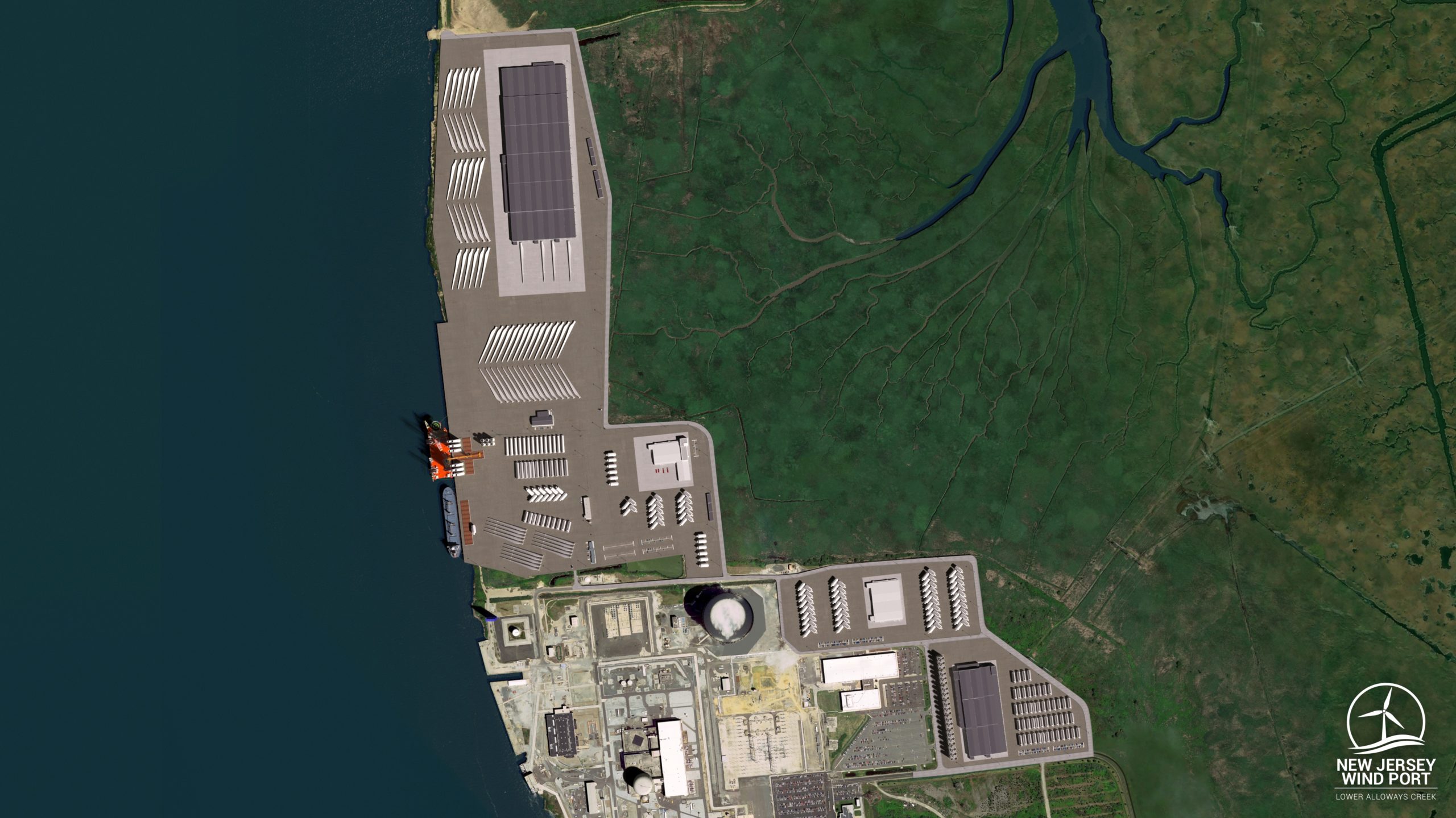
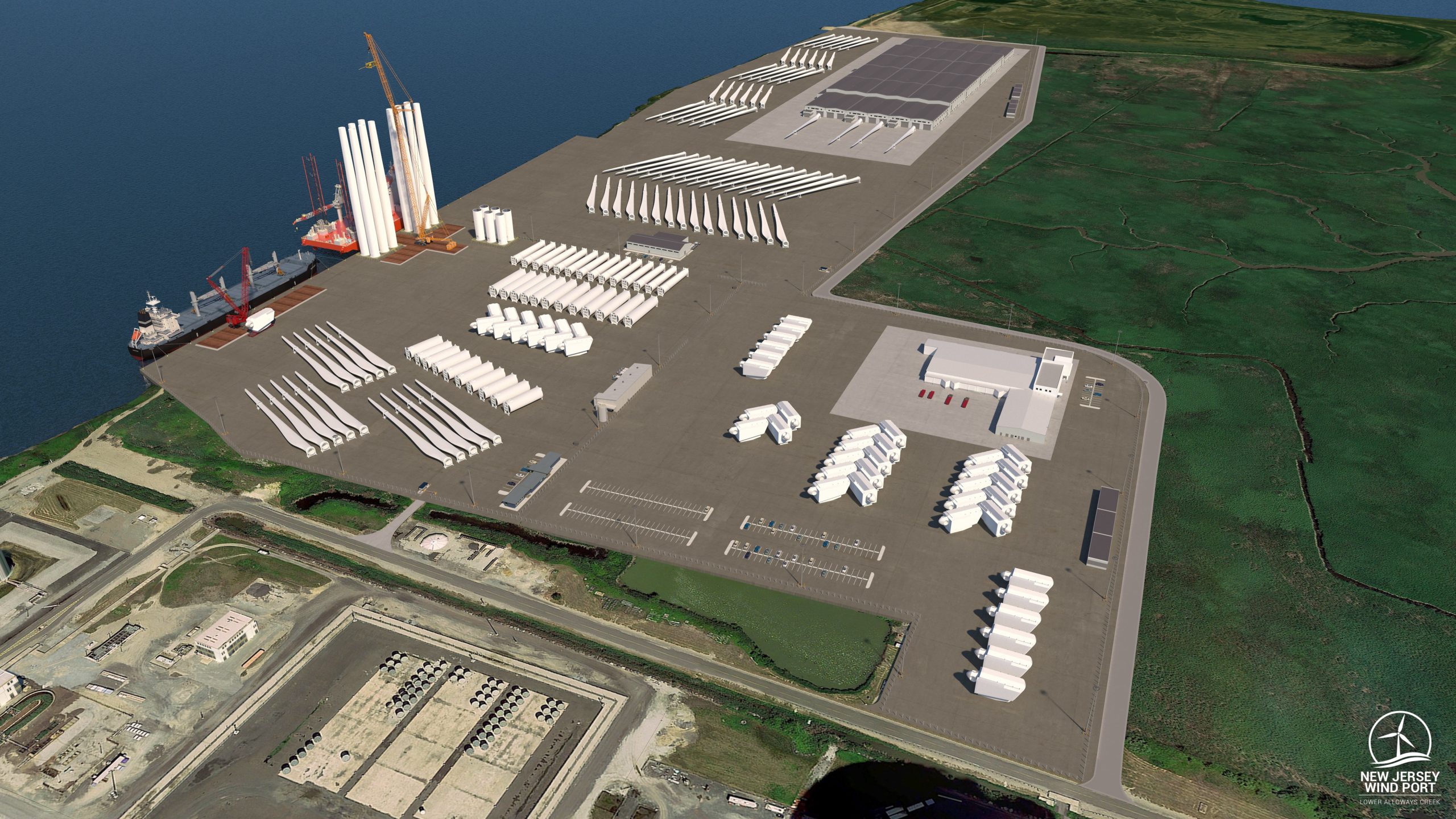
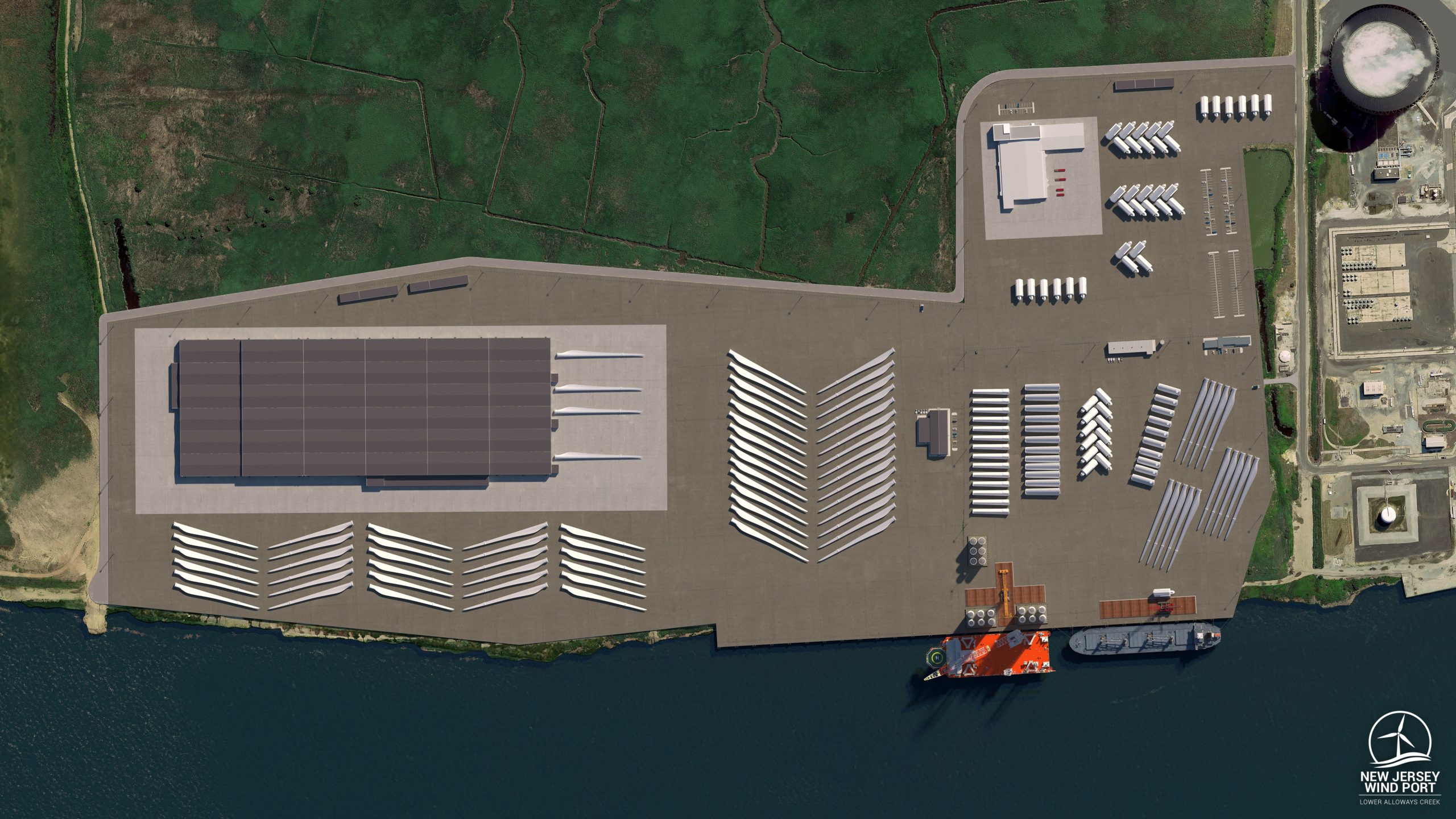
The Wind Port will be located on the eastern shore of the Delaware River in Lower Alloways Creek, Salem County; approximately seven-and-a-half miles southwest of the City of Salem. Construction is planned in two phases, beginning in 2021. Phase 1 will develop a 30-acre site to accommodate marshalling activities and a 25-acre component manufacturing site. Phase 2 adds another 150 acres to accommodate expanded marshalling activities and extensive manufacturing facilities for turbine components such as blades and nacelles.
 
“Projects on the scale of the New Jersey Wind Port present crucial opportunities for businesses to grow and gain experience working on government contracts. Unfortunately, in the past, minority-, women-, and LGBTQ-owned businesses have been excluded from these opportunities, both intentionally and by simple oversight,” said NJEDA Chief Diversity and Inclusion Officer Michelle Bodden. “This disparity study is an important step in the right direction that will not only help ensure the opportunities the Wind Port creates are available to all interested and qualified firms, but will also pave the way for more inclusive and diverse hiring in future projects.”
 
The disparity study will focus on contracts related to the development of the Wind Port. The Rutgers research team’s final report will include analysis of the number of MWVLOBs that are ready, willing, and able to do business and contract with the NJEDA in each Market Sector and an assessment of the NJEDA’s historic utilization of these businesses in similar contracts. The disparity study will also identify barriers to MWVLOB participation in NJEDA contracts and recommend programs to reduce or eliminate these barriers as well as additional tools and practices the NJEDA could use to encourage MWVLOB participation in contracts, financial assistance, and other support programs.
 
“Despite being one of the most diverse states in the nation, inequality continues to persist in New Jersey, especially in access to opportunities. Rutgers is proud to work with the NJEDA to begin dismantling these historic inequalities by identifying any existing disparities related to the New Jersey Wind Port project and recommending programs and policies to address both the immediate problem and the underlying causes,” said Kevin Lyons, Ph.D., Director of the Public Private Community Partnership Program at Rutgers Business School. “The Wind Port is an amazing opportunity for New Jersey to build a clean energy future while creating opportunities for businesses, and we look forward to helping the NJEDA complete the project in a way that distributes these economic benefits equitably.”
 
More information about the New Jersey Wind Port is available at https://www.nj.gov/windport/.
 
 To read Governor Murphy's full economic plan, please visit: https://nj.gov/economicplan
 
About the New Jersey Economic Development Authority

The New Jersey Economic Development Authority (NJEDA) serves as the State’s principal agency for driving economic growth. The NJEDA is committed to making New Jersey a national model for inclusive and sustainable economic development by focusing on key strategies to help build strong and dynamic communities, create good jobs for New Jersey residents, and provide pathways to a stronger and fairer economy. Through partnerships with a diverse range of stakeholders, the NJEDA creates and implements initiatives to enhance the economic vitality and quality of life in the State and strengthen New Jersey’s long-term economic competitiveness.
 
To learn more about NJEDA resources for businesses call NJEDA Customer Care at 609-858-6767 or visit https://www.njeda.gov and follow @NewJerseyEDA on Facebook, Twitter, and LinkedIn.

Please be advised that a telephonic meeting of the New Jersey Economic Development Authority is scheduled for 10:00 AM, Tuesday, August 11, 2020.
 
The Members will convene to via conference call only.  Members of the public may participate in the meeting by calling in on the conference line.  Members of the public will have an opportunity to speak during the public comment segment of the meeting. The following conference number is being provided:
 
CONFERENCE NAME: NJEDA BOARD MEETING (August 11, 2020)
PARTICIPANT DIAL-IN NUMBER: 877-692-8955
PARTICIPANT ACCESS CODE: 4204420

Members of the public are encouraged to call in prior to the time the meeting is scheduled to begin to avoid any delays. 

A telephonic meeting of the Commission of Science, Innovation and Technology (CSIT) Board has been scheduled for Friday, July 17, 2020 at 10:00 am.

CSIT BOARD MEETING
+1 551-220-2262 United States, Jersey City (Toll)
Conference ID: 954 817 444#
Link to join via Microsoft Teams


A copy of the proposed agenda can be found at www.njeda.gov/csit

Please be advised that a telephonic meeting of the New Jersey Economic Development Authority is scheduled for 10:00 AM, Tuesday, July 14, 2020.
 
The Members will convene to via conference call only.  Members of the public may participate in the meeting by calling in on the conference line.  Members of the public will have an opportunity to speak during the public comment segment of the meeting. The following conference number is being provided:
 
CONFERENCE NAME: NJEDA BOARD MEETING (July 14, 2020)
PARTICIPANT DIAL-IN NUMBER: 877-692-8955
PARTICIPANT ACCESS CODE: 4204420

Members of the public are encouraged to call in prior to the time the meeting is scheduled to begin to avoid any delays. 


Please be advised that the NJEDA’s Trenton headquarters (36 West State Street) will be closed the week of July 6, 2020.
 
As a result of the closing, mail receipt by the NJEDA may be temporarily delayed. Customers and vendors are recommended, to the extent possible, to communicate with staff via email. For any questions, please contact NJEDA Customer Care at customercare@njeda.com.

NJCC.jpg
Under the leadership of NJCC President Wayne Meyer, New Jersey Community Capital has approved $2.57 million in COVID-19 Relief Funding. From left: Michelle E. Richardson, Executive Director of Hudson Economic Development Corporation, Kent Pipes, Founder of the Affordable Homes Group/ Salt & Light Company, and NJCC President Wayne Meyer.


CDFI has Already Approved $2.57 million in COVID-19 Relief Funding

TRENTON, N.J. (June 17, 2020) – New Jersey Community Capital has been taking a holistic approach to neighborhood revitalization and economic development in underserved communities for decades. The Community Development Financial Institution (CDFI)’s comprehensive strategy is now also benefiting small businesses and non-profits impacted by COVID-19. Since the pandemic began, NJCC has approved $2.57 million to nearly five-dozen small businesses and non-profits. More than half of the funds have already disbursed with support from the New Jersey Economic Development Authority (NJEDA). 

CDFIs like NJCC support their community in various ways, lend to other smaller-scale CDFIs to allow them to offer loan products within their communities, and support cities and counties with their lending efforts. Non-profit CDFI lenders are distinguished from other financial institutions by their community development mission and flexibility to determine the best use of limited government and private resources in their community. To be federally designated as a CDFI, a financial institution must certify that at least 60 percent of its financing activities are targeted to low- and moderate-income (LMI) populations or underserved communities.

NJCC is one of six CDFIs participating in the NJEDA’s CDFI Loan Loss Reserve Fund. This fund allows the NJEDA to partner with New Jersey-based CDFIs that want to offer their own working capital loan product to small businesses affected by the COVID-19 outbreak. Through the program, the NJEDA will take a first-loss position on COVID-19-related loans that provide low-interest working capital to microbusinesses that have been negatively impacted by the outbreak.

Additionally, NJCC is one of five New Jersey-based CDFIs to each receive $250,000 through the NJEDA’s Emergency Grant Program. Through the program, NJEDA is providing the CDFIs with grant funding to help them scale their operations due to the high demand for assistance from business owners. Of the $250,000 provided by the NJEDA, $125,000 will be going to help NJCC cover the $750 loan origination fee on each GSRF loans that is not being collected from borrowers.  The other $125,000 from the NJEDA is supporting interest rate buy-down (IRB) during the six-month, no payment period on GSRF loans not covered by other IRB grant funds.

“Creating an equitable and inclusive path to recovery is a fundamental part of our plan to move the state’s economy past the COVID-19 pandemic,” said NJEDA Chief Executive Officer Tim Sullivan. “Through our relationships with CDFIs like NJCC, we are able to amplify the reach of state, federal, and private resources to communities throughout New Jersey.”

NJCC has managed to leverage funding from its partnerships with its bank, impact investing, and philanthropic relationships, to create a $15 million working capital loan fund called the Garden State Relief Fund (GSRF) following the onset of the COVID-19 outbreak. The GSRF provides flexible and quick access to low-interest capital for small businesses and non-profits impacted by the pandemic. Under the program, New Jersey entities with between three and 75 employees are eligible for low-interest loans of between $10,000 and $75,000, with terms of up to 36 months. NJCC has created a simple two-step application process that can be done all online. 

To date, NJCC has approved 57 loans totaling approximately $2.57 million in funding (90 percent small businesses and 10 percent non-profits), with more than half of the funding already being distributed. Of these, over 40 percent are women and/or minority-owned businesses.

“NJCC has an extensive history of providing critical capital to underserved communities impacted most during times of economic challenge,” said NJCC President Wayne Meyer. “Through our Garden State Relief Fund, we are striving to provide small businesses and non-profits with quick, fair, and far-reaching opportunities for relief, stability, and growth.”

NJCC’s staff is currently processing over 400 GSRF loan applications. 

More than $1 million of the $2.57 million GSRF funding has specifically been approved for entities in Cumberland, Gloucester, Salem, and Western Atlantic counties. NJCC launched its THRIVE South Jersey Initiative in 2016 to deploy flexible, affordable capital and technical assistance within these counties, in order to generate quality jobs and improve economic opportunities. A $1 million NJEDA loan in 2016 was used to boost the $13 million loan fund, supporting small businesses and workforce development programs in the region.
Businesses in the designated THRIVE South Jersey Initiative counties are eligible for zero-percent interest loans through the GSRF thanks to the generous support of the Pascale Sykes Foundation, which focuses on empowering working low-income families, so they can collectively strengthen their relationships, establish stability and reach their dreams.

More information about the Garden State Relief Fund, as well as the application, can be found at https://www.newjerseycommunitycapital.org/initiatives/garden-state-relief-fund or by following @NJCLF on Twitter.

NJCC’s traditional services include revolving loan funds and related investment products, real estate development/foreclosure mitigation, homeownership counseling and mortgage products, capacity building, and technical assistance. Since it was founded in 1987, NJCC has invested over $630 million in New Jersey communities. Actions by the CDFI have also resulted in the creation and/or preservation of 12,000 jobs, the development of 5.7 million square feet of real estate, 10,500 housing units, and educational opportunities for over 25,000 students. 

About the New Jersey Economic Development Authority
The New Jersey Economic Development Authority (NJEDA) serves as the State’s principal agency for driving economic growth. The NJEDA is committed to making New Jersey a national model for inclusive and sustainable economic development by focusing on key strategies to help build strong and dynamic communities, create good jobs for New Jersey residents, and provide pathways to a stronger and fairer economy. Through partnerships with a diverse range of stakeholders, the NJEDA creates and implements initiatives to enhance the economic vitality and quality of life in the State and strengthen New Jersey’s long-term economic competitiveness.
 
To learn more about NJEDA resources for businesses call NJEDA Customer Care at 609-858-6767 or visit https://www.njeda.gov and follow @NewJerseyEDA on Facebook, Twitter, and LinkedIn.

###

$300-400 Million Green Infrastructure Project Will Be The Biggest Investment in Salem County in a Generation and Has The Potential to Create Up to 1,500 jobs and $500 Million in Economic Activity

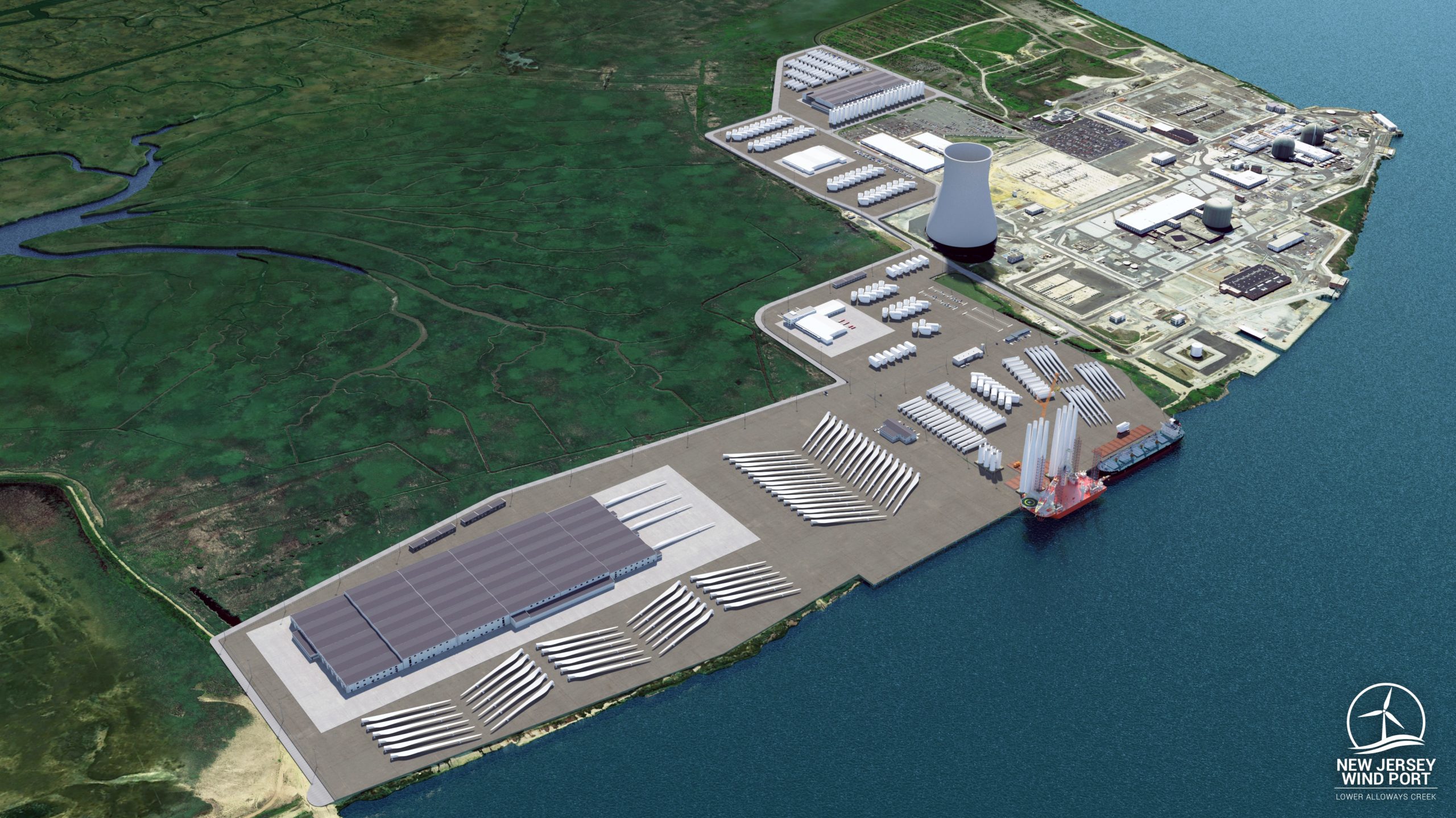
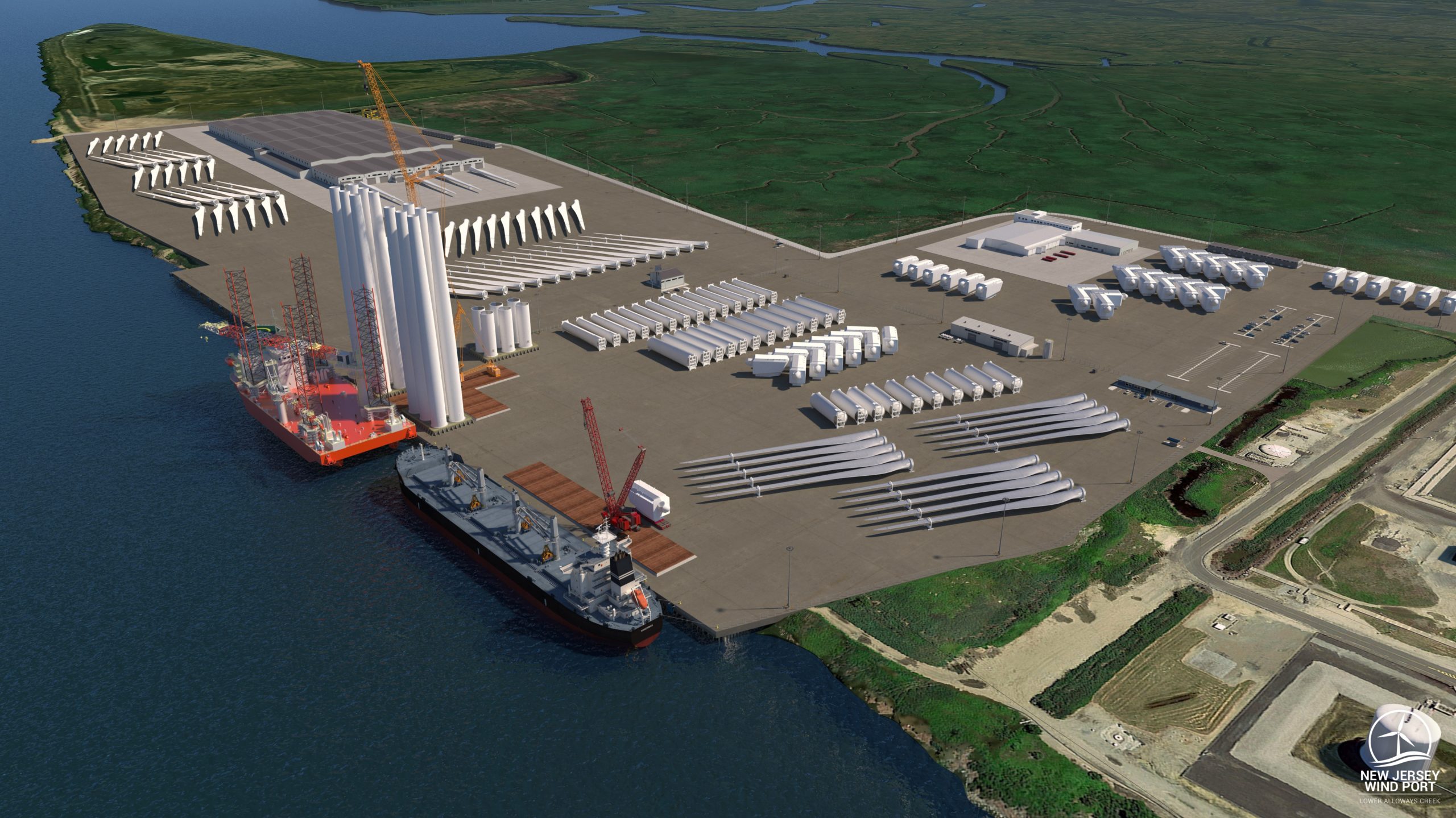
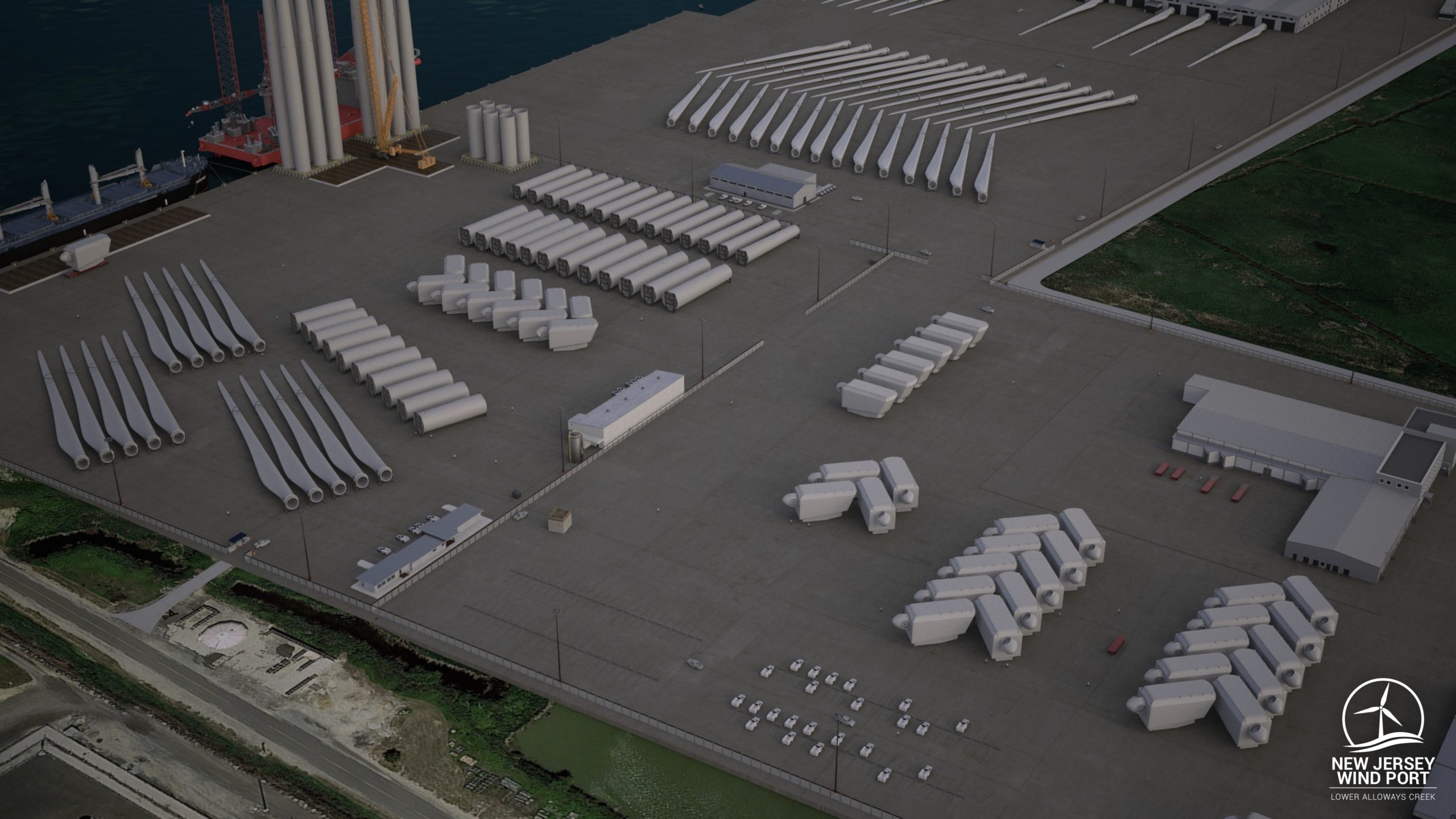
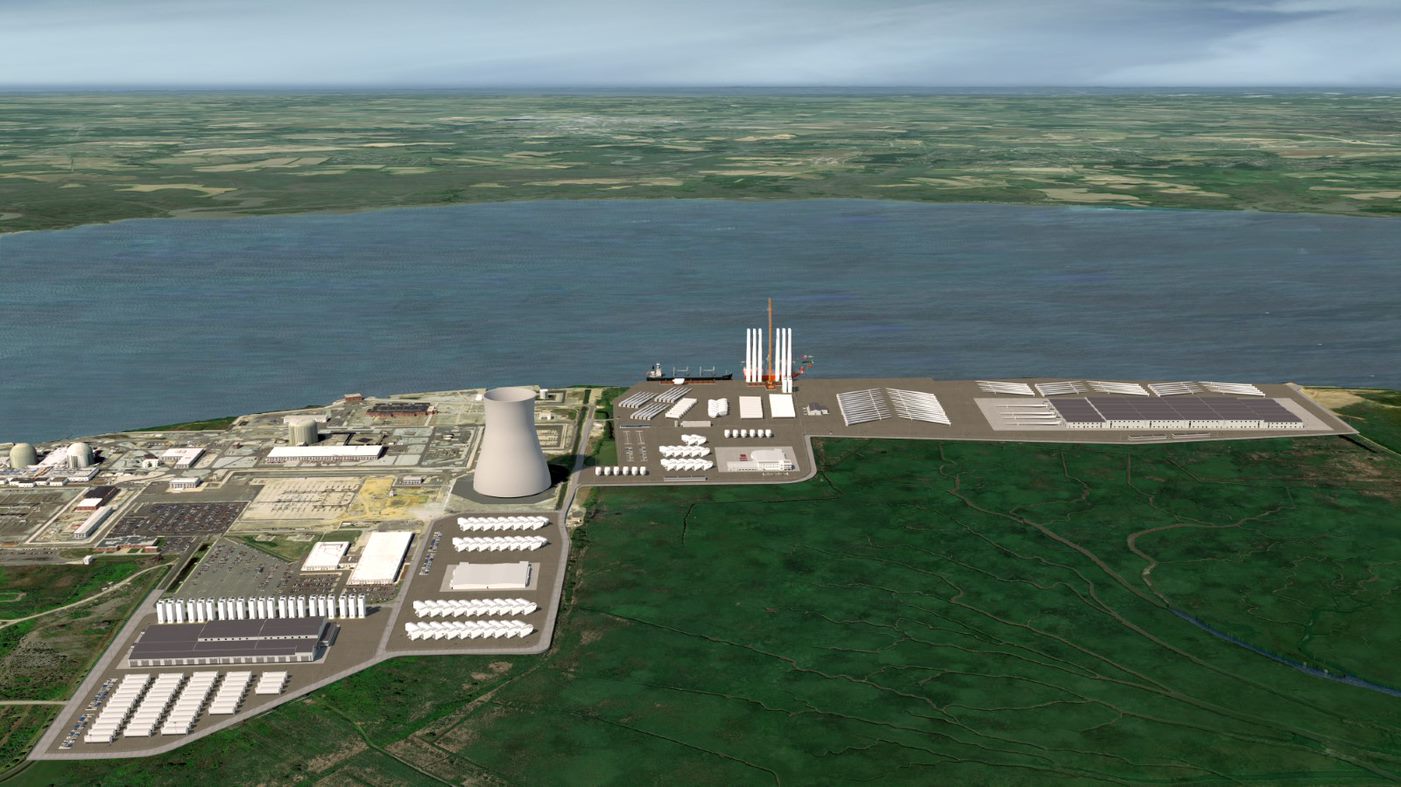
(Photo Gallery Below)

TRENTON – Governor Phil Murphy today announced plans to develop the New Jersey Wind Port, a first-in-the-nation infrastructure investment that will provide a location for essential staging, assembly, and manufacturing activities related to offshore wind projects on the East Coast. The Wind Port has the potential to create up to 1,500 manufacturing, assembly, and operations jobs, as well as hundreds of construction jobs in New Jersey. Manufacturing and marshalling projects supported by the Wind Port will drive economic growth in Salem County, in South Jersey, and throughout the state. The State is committed to using union labor to construct the Wind Port and intends to set a new standard for inclusion of minority and women workers and business owners. Construction is targeted to begin in 2021.

“Offshore wind is a once-in-a-generation opportunity to not only protect our environment but also greatly expand our state economy in a way that has immediate impacts and paves the way for long-term growth,” said Governor Murphy. “The New Jersey Wind Port will create thousands of high-quality jobs, bring millions of investment dollars to our state, and establish New Jersey as the national capital of offshore wind. This is a vital step forward in achieving our goal of reaching 7,500 megawatts of offshore wind power by 2035 and 100 percent clean energy by 2050.”

Construction is planned in two phases, beginning in 2021. Phase 1 will develop a 30-acre site to accommodate marshalling activities and a 25-acre component manufacturing site. Phase 2 adds another 150+ acres to accommodate expanded marshalling activities and extensive manufacturing facilities for turbine components like blades and nacelles. The State currently estimates the Wind Port will cost between $300-400 million at full build. The New Jersey Economic Development Authority (NJEDA) is leading development and is currently considering a range of public, private, and public-private partnership (P3) financing options.

“Expanding New Jersey’s offshore wind industry is vital to Governor Murphy’s vision for a stronger and fairer New Jersey economy. The New Jersey Wind Port will tap into one of the fastest-growing industries in the world, creating high-quality jobs for New Jersey residents and bringing millions of dollars into our communities with a particularly strong impact on communities in South Jersey,” said NJEDA Chief Executive Officer Tim Sullivan. “This will be especially important as we work to get people back to work and jumpstart economic growth in the aftermath of the COVID-19 crisis.”

“The New Jersey Wind Port will be an incredible project that benefits the entire state, but it will be particularly important for South Jersey,” said Senate President Steve Sweeney. “Creating thousands of jobs in a region that has been overlooked in the past is crucial to addressing our current economic challenges and laying the foundation for future economic growth.”

“I am incredibly proud to work with Governor Murphy, Senator Sweeney, and many other partners in the offshore wind industry to bring the New Jersey Wind Port to Salem,” said Assemblyman John J. Burzichelli. “Bringing thousands of high-quality jobs and millions of dollars in contract opportunities for small businesses to South Jersey is just what we need as we recover from the brutal economic impact of COVID-19 on our region of the state.”

Offshore wind is a central component of the State’s plan to achieve 100 percent clean energy by 2050. As part of that plan, New Jersey has committed to producing 7,500 megawatts of offshore wind energy by 2035. Studies by the New Jersey Board of Public Utilities (NJBPU), US Department of Energy, and offshore wind project developers have highlighted the need for new port facilities designed specifically to meet the offshore wind industry’s unique needs.

For example, wind turbines must be partially assembled at a port and then shipped out to the ocean vertically, with components as tall as 500 feet. When fully constructed on the ocean, the turbines selected for New Jersey’s first offshore wind project will be more than 850 feet tall. Given the height of the turbines, offshore wind marshalling ports must be located outside of all vertical restrictions, such as bridges, and must have wharfs that can accommodate up to 800 tons, or more than two fully loaded Boeing 777s. Most existing port infrastructure along the East Coast is unable to accommodate this work.

When launched, the New Jersey Wind Port will provide a major economic boost to Salem County located in South Jersey, as well as the state economy. The offshore wind projects slated for development along the East Coast over the next decade are expected to require more than $100 billion of capital investment, creating an opportunity for significant economic growth. New Jersey’s location at the heart of the East Coast wind belt, commitment to supporting offshore wind, and diverse and highly skilled workforce put the state in a strong position to capitalize on this opportunity.

The New Jersey Wind Port will be located in Lower Alloways Creek Township, on an artificial island on the eastern shores of the Delaware River, southwest of the City of Salem. The site was selected after a 22-month assessment process, including engagement with industry, government, and environmental stakeholders. The site is more than five miles from the nearest New Jersey residential area, can be built to meet the offshore wind industry’s needs, and has ample space to grow operations over time.

The NJEDA is leading development on behalf of the state and is working closely with the landowner, PSEG (Public Service Enterprise Group). The site is next to PSEG’s Hope Creek Nuclear Generation Station, and the company has partnered with the NJEDA to complete preparatory work to accelerate the project’s construction.

According to current projections, the New Jersey Wind Port has the potential to create jobs for workers in a variety of industries, including construction, manufacturing, port operations, and engineering. The State is committed to using union labor to build the port and setting a new standard for equitable access to opportunity and inclusion of minority and women workers. Most jobs at the port will not require four-year college degrees and workforce development efforts are being prepared to ensure these opportunities are accessible to Salem County residents. For example, the recently announced WIND Institute will serve as a center for education, research, innovation, and workforce training related to the development of offshore wind in New Jersey and the region.

“As a major component of our Energy Master Plan, offshore wind will be a pillar of achieving the Governor’s goal of 100% clean energy.  The New Jersey Wind Port will be a critical project and can ensure our communities are able to access the full economic and environmental benefits of this growing renewable energy industry,” said New Jersey Board of Public Utilities President Joseph L. Fiordaliso. “This port will serve as a hub for all offshore wind projects along the East Coast, and further cements New Jersey’s position as a leader in offshore wind development, creating jobs and supply chain, and lowering the future costs of offshore wind.

“Another element of Governor Murphy’s plan to reach 100% clean energy by 2050, the New Jersey Wind Port will be a model for economic development that responsibly cultivates New Jersey’s clean energy economy,” said New Jersey Department of Environmental Protection Commissioner Catherine R. McCabe. “In the months to come, DEP will conduct a thorough assessment of the project to ensure that it meets the highest standards for protection of our coastal and other important environmental resources. In the face of climate risks like our state’s rapidly rising sea levels, projects like this demonstrate how New Jersey can both adapt to climate change and fight its impacts by building resilient infrastructure that also supports the very industries that will reduce greenhouse gas emissions and diminish further global warming.”

“The New Jersey Wind Port represents a significant step in New Jersey’s progress as a hub for the growing clean energy economy, creating new jobs and enabling new economic development,” said PSEG Chairman, President and CEO Ralph Izzo. “Achieving a clean energy future is vital for New Jersey’s environment and economy. From the New Jersey Wind Port to the state’s target of 7,500 megawatts of offshore wind by 2035, we applaud Governor Murphy’s leadership in bringing the environmental and economic benefits to all of the people of the state. PSEG is New Jersey’s leading source of clean energy, and – from offshore wind and solar to preserving nuclear energy and energy efficiency – we are proud to play a central role in advancing the state’s clean energy future.”

“By providing a location that can accommodate the industry’s manufacturing and marshalling needs, the New Jersey Wind Port will make New Jersey an international leader in offshore wind and a hub of the East Coast wind industry,” said Liz Burdock, President and CEO of the Business Network for Offshore Wind. “This is a concrete step toward an offshore wind supply chain born in the USA.”

“On behalf of the Building Trades, I want to thank Governor Murphy and his administration for making this project a reality,” said Dan Cosner, Business Manager of IBEW Local 351 and President of Southern NJ Building Trades Council. “This project announcement could not have come at a better time considering the uncertainly of the future of construction due to the Covid-19 and recent economic downturn in the economy. These jobs that will be created for the Building Trades and for the Wind Industry after the facility is built will allow South Jersey to continue to thrive while also helping with meeting the Governor’s goals of the energy master plan. Once again on behalf of the South Jersey Building Trades and IBEW Local 351 thank you to everyone who made this possible!”

To learn more about the New Jersey Wind Port, please visit: https://nj.gov/windport
To read Governor Murphy’s full economic plan, please visit: https://nj.gov/economicplan

New Jersey Wind Port Photo Gallery