NJCC.jpg
Under the leadership of NJCC President Wayne Meyer, New Jersey Community Capital has approved $2.57 million in COVID-19 Relief Funding. From left: Michelle E. Richardson, Executive Director of Hudson Economic Development Corporation, Kent Pipes, Founder of the Affordable Homes Group/ Salt & Light Company, and NJCC President Wayne Meyer.


CDFI has Already Approved $2.57 million in COVID-19 Relief Funding

TRENTON, N.J. (June 17, 2020) – New Jersey Community Capital has been taking a holistic approach to neighborhood revitalization and economic development in underserved communities for decades. The Community Development Financial Institution (CDFI)’s comprehensive strategy is now also benefiting small businesses and non-profits impacted by COVID-19. Since the pandemic began, NJCC has approved $2.57 million to nearly five-dozen small businesses and non-profits. More than half of the funds have already disbursed with support from the New Jersey Economic Development Authority (NJEDA). 

CDFIs like NJCC support their community in various ways, lend to other smaller-scale CDFIs to allow them to offer loan products within their communities, and support cities and counties with their lending efforts. Non-profit CDFI lenders are distinguished from other financial institutions by their community development mission and flexibility to determine the best use of limited government and private resources in their community. To be federally designated as a CDFI, a financial institution must certify that at least 60 percent of its financing activities are targeted to low- and moderate-income (LMI) populations or underserved communities.

NJCC is one of six CDFIs participating in the NJEDA’s CDFI Loan Loss Reserve Fund. This fund allows the NJEDA to partner with New Jersey-based CDFIs that want to offer their own working capital loan product to small businesses affected by the COVID-19 outbreak. Through the program, the NJEDA will take a first-loss position on COVID-19-related loans that provide low-interest working capital to microbusinesses that have been negatively impacted by the outbreak.

Additionally, NJCC is one of five New Jersey-based CDFIs to each receive $250,000 through the NJEDA’s Emergency Grant Program. Through the program, NJEDA is providing the CDFIs with grant funding to help them scale their operations due to the high demand for assistance from business owners. Of the $250,000 provided by the NJEDA, $125,000 will be going to help NJCC cover the $750 loan origination fee on each GSRF loans that is not being collected from borrowers.  The other $125,000 from the NJEDA is supporting interest rate buy-down (IRB) during the six-month, no payment period on GSRF loans not covered by other IRB grant funds.

“Creating an equitable and inclusive path to recovery is a fundamental part of our plan to move the state’s economy past the COVID-19 pandemic,” said NJEDA Chief Executive Officer Tim Sullivan. “Through our relationships with CDFIs like NJCC, we are able to amplify the reach of state, federal, and private resources to communities throughout New Jersey.”

NJCC has managed to leverage funding from its partnerships with its bank, impact investing, and philanthropic relationships, to create a $15 million working capital loan fund called the Garden State Relief Fund (GSRF) following the onset of the COVID-19 outbreak. The GSRF provides flexible and quick access to low-interest capital for small businesses and non-profits impacted by the pandemic. Under the program, New Jersey entities with between three and 75 employees are eligible for low-interest loans of between $10,000 and $75,000, with terms of up to 36 months. NJCC has created a simple two-step application process that can be done all online. 

To date, NJCC has approved 57 loans totaling approximately $2.57 million in funding (90 percent small businesses and 10 percent non-profits), with more than half of the funding already being distributed. Of these, over 40 percent are women and/or minority-owned businesses.

“NJCC has an extensive history of providing critical capital to underserved communities impacted most during times of economic challenge,” said NJCC President Wayne Meyer. “Through our Garden State Relief Fund, we are striving to provide small businesses and non-profits with quick, fair, and far-reaching opportunities for relief, stability, and growth.”

NJCC’s staff is currently processing over 400 GSRF loan applications. 

More than $1 million of the $2.57 million GSRF funding has specifically been approved for entities in Cumberland, Gloucester, Salem, and Western Atlantic counties. NJCC launched its THRIVE South Jersey Initiative in 2016 to deploy flexible, affordable capital and technical assistance within these counties, in order to generate quality jobs and improve economic opportunities. A $1 million NJEDA loan in 2016 was used to boost the $13 million loan fund, supporting small businesses and workforce development programs in the region.
Businesses in the designated THRIVE South Jersey Initiative counties are eligible for zero-percent interest loans through the GSRF thanks to the generous support of the Pascale Sykes Foundation, which focuses on empowering working low-income families, so they can collectively strengthen their relationships, establish stability and reach their dreams.

More information about the Garden State Relief Fund, as well as the application, can be found at https://www.newjerseycommunitycapital.org/initiatives/garden-state-relief-fund or by following @NJCLF on Twitter.

NJCC’s traditional services include revolving loan funds and related investment products, real estate development/foreclosure mitigation, homeownership counseling and mortgage products, capacity building, and technical assistance. Since it was founded in 1987, NJCC has invested over $630 million in New Jersey communities. Actions by the CDFI have also resulted in the creation and/or preservation of 12,000 jobs, the development of 5.7 million square feet of real estate, 10,500 housing units, and educational opportunities for over 25,000 students. 

About the New Jersey Economic Development Authority
The New Jersey Economic Development Authority (NJEDA) serves as the State’s principal agency for driving economic growth. The NJEDA is committed to making New Jersey a national model for inclusive and sustainable economic development by focusing on key strategies to help build strong and dynamic communities, create good jobs for New Jersey residents, and provide pathways to a stronger and fairer economy. Through partnerships with a diverse range of stakeholders, the NJEDA creates and implements initiatives to enhance the economic vitality and quality of life in the State and strengthen New Jersey’s long-term economic competitiveness.
 
To learn more about NJEDA resources for businesses call NJEDA Customer Care at 609-858-6767 or visit https://www.njeda.gov and follow @NewJerseyEDA on Facebook, Twitter, and LinkedIn.

###

$300-400 Million Green Infrastructure Project Will Be The Biggest Investment in Salem County in a Generation and Has The Potential to Create Up to 1,500 jobs and $500 Million in Economic Activity

(Photo Gallery Below)

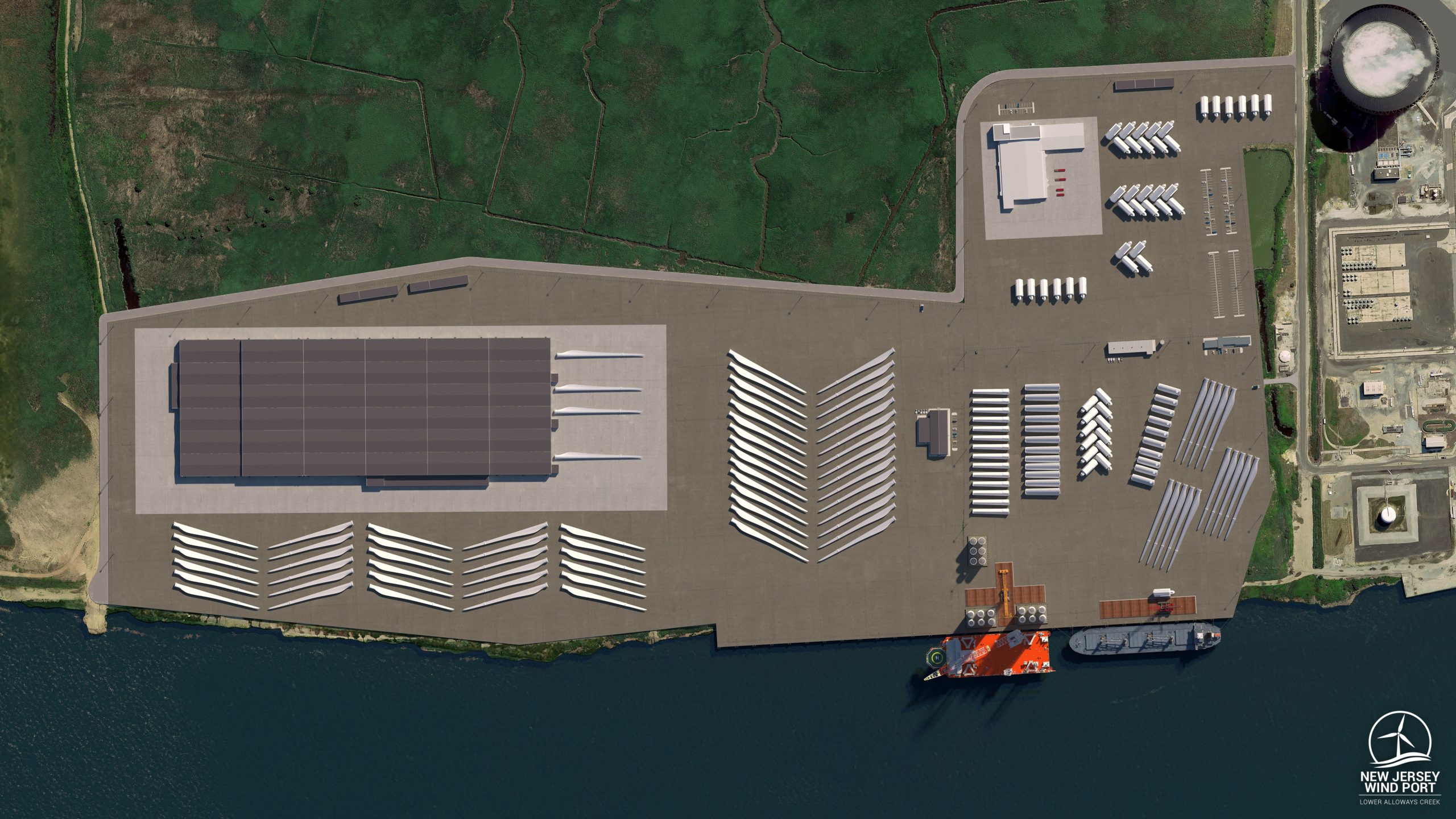
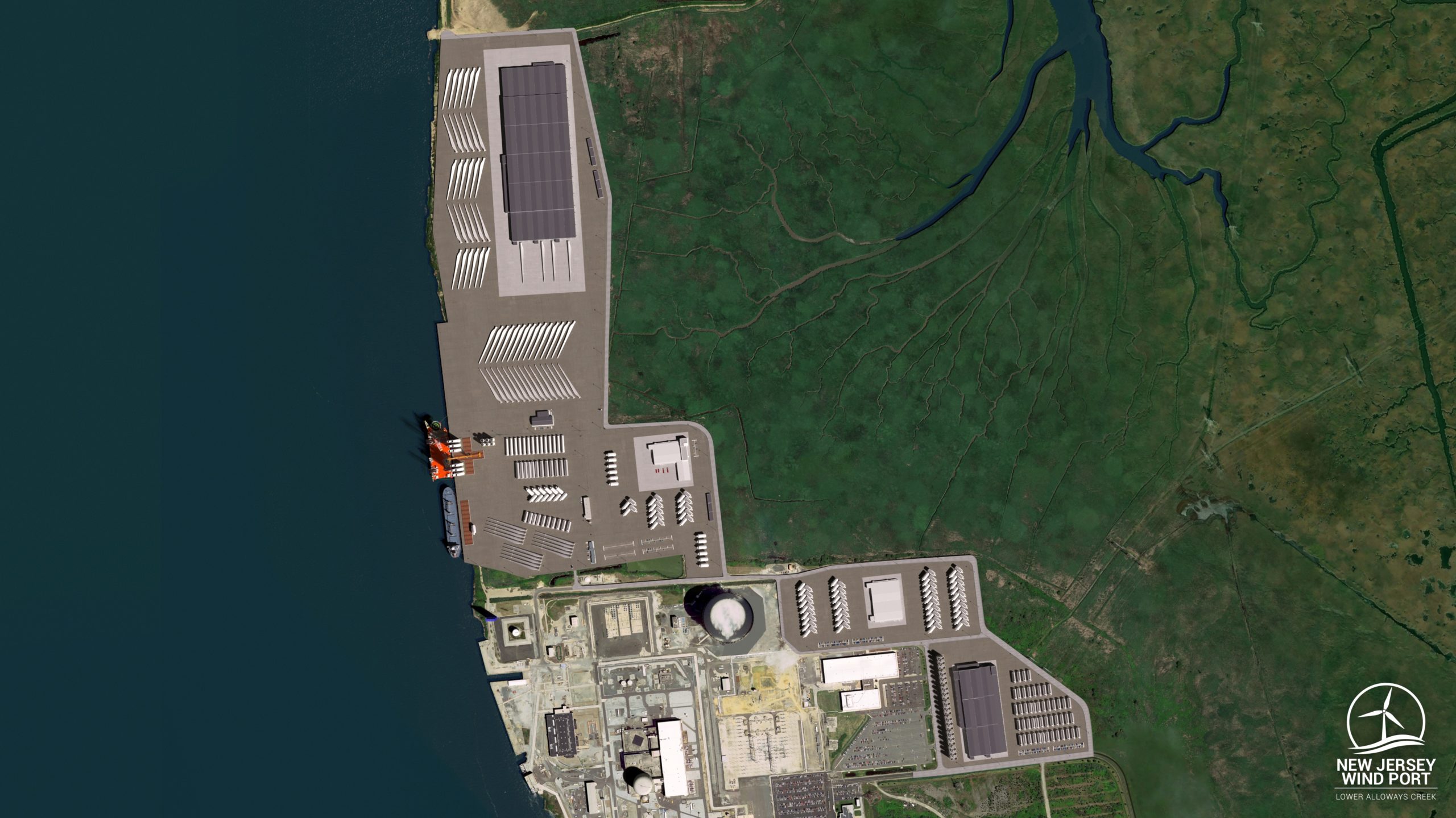
TRENTON – Governor Phil Murphy today announced plans to develop the New Jersey Wind Port, a first-in-the-nation infrastructure investment that will provide a location for essential staging, assembly, and manufacturing activities related to offshore wind projects on the East Coast. The Wind Port has the potential to create up to 1,500 manufacturing, assembly, and operations jobs, as well as hundreds of construction jobs in New Jersey. Manufacturing and marshalling projects supported by the Wind Port will drive economic growth in Salem County, in South Jersey, and throughout the state. The State is committed to using union labor to construct the Wind Port and intends to set a new standard for inclusion of minority and women workers and business owners. Construction is targeted to begin in 2021.

“Offshore wind is a once-in-a-generation opportunity to not only protect our environment but also greatly expand our state economy in a way that has immediate impacts and paves the way for long-term growth,” said Governor Murphy. “The New Jersey Wind Port will create thousands of high-quality jobs, bring millions of investment dollars to our state, and establish New Jersey as the national capital of offshore wind. This is a vital step forward in achieving our goal of reaching 7,500 megawatts of offshore wind power by 2035 and 100 percent clean energy by 2050.”

Construction is planned in two phases, beginning in 2021. Phase 1 will develop a 30-acre site to accommodate marshalling activities and a 25-acre component manufacturing site. Phase 2 adds another 150+ acres to accommodate expanded marshalling activities and extensive manufacturing facilities for turbine components like blades and nacelles. The State currently estimates the Wind Port will cost between $300-400 million at full build. The New Jersey Economic Development Authority (NJEDA) is leading development and is currently considering a range of public, private, and public-private partnership (P3) financing options.

“Expanding New Jersey’s offshore wind industry is vital to Governor Murphy’s vision for a stronger and fairer New Jersey economy. The New Jersey Wind Port will tap into one of the fastest-growing industries in the world, creating high-quality jobs for New Jersey residents and bringing millions of dollars into our communities with a particularly strong impact on communities in South Jersey,” said NJEDA Chief Executive Officer Tim Sullivan. “This will be especially important as we work to get people back to work and jumpstart economic growth in the aftermath of the COVID-19 crisis.”

“The New Jersey Wind Port will be an incredible project that benefits the entire state, but it will be particularly important for South Jersey,” said Senate President Steve Sweeney. “Creating thousands of jobs in a region that has been overlooked in the past is crucial to addressing our current economic challenges and laying the foundation for future economic growth.”

“I am incredibly proud to work with Governor Murphy, Senator Sweeney, and many other partners in the offshore wind industry to bring the New Jersey Wind Port to Salem,” said Assemblyman John J. Burzichelli. “Bringing thousands of high-quality jobs and millions of dollars in contract opportunities for small businesses to South Jersey is just what we need as we recover from the brutal economic impact of COVID-19 on our region of the state.”

Offshore wind is a central component of the State’s plan to achieve 100 percent clean energy by 2050. As part of that plan, New Jersey has committed to producing 7,500 megawatts of offshore wind energy by 2035. Studies by the New Jersey Board of Public Utilities (NJBPU), US Department of Energy, and offshore wind project developers have highlighted the need for new port facilities designed specifically to meet the offshore wind industry’s unique needs.

For example, wind turbines must be partially assembled at a port and then shipped out to the ocean vertically, with components as tall as 500 feet. When fully constructed on the ocean, the turbines selected for New Jersey’s first offshore wind project will be more than 850 feet tall. Given the height of the turbines, offshore wind marshalling ports must be located outside of all vertical restrictions, such as bridges, and must have wharfs that can accommodate up to 800 tons, or more than two fully loaded Boeing 777s. Most existing port infrastructure along the East Coast is unable to accommodate this work.

When launched, the New Jersey Wind Port will provide a major economic boost to Salem County located in South Jersey, as well as the state economy. The offshore wind projects slated for development along the East Coast over the next decade are expected to require more than $100 billion of capital investment, creating an opportunity for significant economic growth. New Jersey’s location at the heart of the East Coast wind belt, commitment to supporting offshore wind, and diverse and highly skilled workforce put the state in a strong position to capitalize on this opportunity.

The New Jersey Wind Port will be located in Lower Alloways Creek Township, on an artificial island on the eastern shores of the Delaware River, southwest of the City of Salem. The site was selected after a 22-month assessment process, including engagement with industry, government, and environmental stakeholders. The site is more than five miles from the nearest New Jersey residential area, can be built to meet the offshore wind industry’s needs, and has ample space to grow operations over time.

The NJEDA is leading development on behalf of the state and is working closely with the landowner, PSEG (Public Service Enterprise Group). The site is next to PSEG’s Hope Creek Nuclear Generation Station, and the company has partnered with the NJEDA to complete preparatory work to accelerate the project’s construction.

According to current projections, the New Jersey Wind Port has the potential to create jobs for workers in a variety of industries, including construction, manufacturing, port operations, and engineering. The State is committed to using union labor to build the port and setting a new standard for equitable access to opportunity and inclusion of minority and women workers. Most jobs at the port will not require four-year college degrees and workforce development efforts are being prepared to ensure these opportunities are accessible to Salem County residents. For example, the recently announced WIND Institute will serve as a center for education, research, innovation, and workforce training related to the development of offshore wind in New Jersey and the region.

“As a major component of our Energy Master Plan, offshore wind will be a pillar of achieving the Governor’s goal of 100% clean energy.  The New Jersey Wind Port will be a critical project and can ensure our communities are able to access the full economic and environmental benefits of this growing renewable energy industry,” said New Jersey Board of Public Utilities President Joseph L. Fiordaliso. “This port will serve as a hub for all offshore wind projects along the East Coast, and further cements New Jersey’s position as a leader in offshore wind development, creating jobs and supply chain, and lowering the future costs of offshore wind.

“Another element of Governor Murphy’s plan to reach 100% clean energy by 2050, the New Jersey Wind Port will be a model for economic development that responsibly cultivates New Jersey’s clean energy economy,” said New Jersey Department of Environmental Protection Commissioner Catherine R. McCabe. “In the months to come, DEP will conduct a thorough assessment of the project to ensure that it meets the highest standards for protection of our coastal and other important environmental resources. In the face of climate risks like our state’s rapidly rising sea levels, projects like this demonstrate how New Jersey can both adapt to climate change and fight its impacts by building resilient infrastructure that also supports the very industries that will reduce greenhouse gas emissions and diminish further global warming.”

“The New Jersey Wind Port represents a significant step in New Jersey’s progress as a hub for the growing clean energy economy, creating new jobs and enabling new economic development,” said PSEG Chairman, President and CEO Ralph Izzo. “Achieving a clean energy future is vital for New Jersey’s environment and economy. From the New Jersey Wind Port to the state’s target of 7,500 megawatts of offshore wind by 2035, we applaud Governor Murphy’s leadership in bringing the environmental and economic benefits to all of the people of the state. PSEG is New Jersey’s leading source of clean energy, and – from offshore wind and solar to preserving nuclear energy and energy efficiency – we are proud to play a central role in advancing the state’s clean energy future.”

“By providing a location that can accommodate the industry’s manufacturing and marshalling needs, the New Jersey Wind Port will make New Jersey an international leader in offshore wind and a hub of the East Coast wind industry,” said Liz Burdock, President and CEO of the Business Network for Offshore Wind. “This is a concrete step toward an offshore wind supply chain born in the USA.”

“On behalf of the Building Trades, I want to thank Governor Murphy and his administration for making this project a reality,” said Dan Cosner, Business Manager of IBEW Local 351 and President of Southern NJ Building Trades Council. “This project announcement could not have come at a better time considering the uncertainly of the future of construction due to the Covid-19 and recent economic downturn in the economy. These jobs that will be created for the Building Trades and for the Wind Industry after the facility is built will allow South Jersey to continue to thrive while also helping with meeting the Governor’s goals of the energy master plan. Once again on behalf of the South Jersey Building Trades and IBEW Local 351 thank you to everyone who made this possible!”

To learn more about the New Jersey Wind Port, please visit: https://nj.gov/windport
To read Governor Murphy’s full economic plan, please visit: https://nj.gov/economicplan

New Jersey Wind Port Photo Gallery


TRENTON (June 15, 2020) – For nearly two years, the Research with New Jersey portal has offered researchers, academics, entrepreneurs and innovators access to vital research happening at New Jersey’s world-class universities. In the wake of the COVID-19 pandemic, Research with NJ has become an invaluable source of information for scientists and companies working to combat the global public health crisis. The free, online portal can be accessed at www.researchwithnj.com.

Launched by Governor Phil Murphy in 2018, Research with NJ is a collaborative effort by the New Jersey Economic Development Authority (NJEDA) and the Office of the Secretary of Higher Education (OSHE) to forge stronger connections between New Jersey’s research universities and industry.  The portal includes input from five public and private New Jersey universities – Montclair State University, New Jersey Institute of Technology, Princeton University, Rowan University, and Rutgers—the State University of New Jersey.

Research with NJ showcases New Jersey’s experts in science, technology, engineering and mathematics (STEM), including their professional backgrounds, publications, and achievements. It also provides information about available laboratory facilities throughout the Garden State. The portal is structured and branded in such a way to encourage collaboration between entrepreneurs, businesses, and New Jersey’s academic research institutions. In total, Research with NJ includes nearly 1,600 faculty profiles and more than 33,800 published articles from New Jersey universities. 

Topics range across a broad spectrum of disciplines, such as biology, chemistry, mathematics, psychology, sociology, and others.

To help scientists and innovators in their quest to combat COVID-19, Research with NJ now offers direct access to Coronavirus-related research being conducted at these universities, a banner on the site that directs users to subject matter related to more than 40-COVID-19-specific terms,  and help identifying relevant COVID-19 news.

Users also have access to news releases showcasing COVID-related research happening in the Garden State, such as at Rutgers University, where researchers received the U.S. Food and Drug Administration approval for the first-ever saliva swab COVID-19 rapid test,  NJIT’s Makerspace creating life-saving face shields, and Princeton University’s study announced last month that uncovered the silent transmission of the pandemic.

“Two of New Jersey’s greatest assets are its world-class research universities and its highly talented workforce,” said NJEDA Chief Executive Officer Tim Sullivan. “We encourage academics, scientists, and innovators worldwide to leverage tools offered through Research with New Jersey as they collaborate to support front line workers and strive to develop life-saving COVID therapies.”

The portal has over 20,000 pages of COVID-19-specific research output, 1,261 grant projects, and more than 180 news articles highlighting the impact New Jersey universities have had in the fight against the Coronavirus.

“Researchers at New Jersey’s universities have been on the forefront of breakthrough discoveries that are guiding our state – and our nation – through these unprecedented times,” said Dr. Zakiya Smith Ellis, New Jersey Secretary of Higher Education. “The Research with NJ portal not only provides insight into these innovative approaches and also highlights other high-caliber research underway at universities throughout our state.” 

Research with NJ was developed under the leadership of an Advisory Board consisting of the participating research universities and industry representatives from the New Jersey Business & Industry Association, Choose New Jersey, BioNJ, the HealthCare Institute of New Jersey, the R&D Council of New Jersey, and the New Jersey Tech Council. The Advisory Board provides oversight and recommendations to ensure the portal’s sustainability and success.

Comprehensive information about New Jersey’s coronavirus response is available at https://cv.business.nj.gov.

About the New Jersey Economic Development Authority
The New Jersey Economic Development Authority (NJEDA) serves as the State’s principal agency for driving economic growth. The NJEDA is committed to making New Jersey a national model for inclusive and sustainable economic development by focusing on key strategies to help build strong and dynamic communities, create good jobs for New Jersey residents, and provide pathways to a stronger and fairer economy. Through partnerships with a diverse range of stakeholders, the NJEDA creates and implements initiatives to enhance the economic vitality and quality of life in the State and strengthen New Jersey’s long-term economic competitiveness.
 
To learn more about NJEDA resources for businesses call NJEDA Customer Care at 609-858-6767 or visit https://www.njeda.gov and follow @NewJerseyEDA on Facebook, Twitter, and LinkedIn.

###

TRENTON, N.J. (June 15, 2020) – The New Jersey Economic Development Authority (NJEDA) announced today that it is working with the Office of Governor Phil Murphy and labor and industry leaders to gather new and innovative perspectives on facilitating sufficient and affordable access to Personal Protective Equipment (PPE) and safeguarding materials for small businesses and non-profit organizations as they begin to reopen in aftermath of the COVID-19 outbreak.

The NJEDA issued a Request for Information (RFI) today to seek information, ideas, and solutions  on how to ensure the state’s small businesses and non-profits have economical and equitable access to the appropriate personal protective equipment and safeguarding tools that they will need to reopen and operate safely. The RFI includes a special concern that PPE be available to organizations run by and for women, minorities and people of color, veterans, and other historically disadvantaged communities.

“Preventing a major recurrence of the COVID-19 virus outbreak is our top priority as we recover from this unprecedented public health crisis,” said Governor Phil Murphy. “The health and safety of each and every member of our workforce must be protected, and that can only happen if employers can access essential goods easily, fairly, and at a reasonable cost.”

In particular, the NJEDA is seeking guidance on how to accelerate market-based solutions to meet the need for PPE, including an understanding of the support necessary from the State government, or other interested parties such as corporations or philanthropies, that could best reinforce those efforts.

In May 2020, Governor Murphy established both the Restart and Recovery Commission and Restart and Recovery Advisory Council. One of the most universal and pressing concerns these groups have identified is small businesses’ and not-for-profit organizations’ need for PPE to protect their employees as they continue to reopen and operate in a post-COVID-19 environment.

“Safely reopening the economy and protecting workers and customers must take precedence over the speed at which we do so,” said Richard Trumka, President, American Federation of Labor and Congress of Industrial Organizations (AFL-CIO). “Jeopardizing the lives of hardworking Americans is not an option.” 

“The issue of access to PPE must be addressed head on to ensure a coordinated, transparent process for procurement and distribution of essential goods,” said Tony Coscia, Partner and Executive Committee Member, Windels Marx Lane & Mittendorf, LLP. “Seeking innovative ideas on how the State can support efficient, affordable, and equitable procurement and distribution of PPE products is a prudent and much-needed step in the process of reopening New Jersey’s economy.”

Trumka and Coscia serve as Co-Chairs of Governor Murphy’s Restart and Recovery Commission Economics and Fiscal Policy Working Group.

Entities that could respond to the RFI may include: PPE manufacturers and suppliers, technology companies, medical or office equipment retailers or wholesalers, existing or new buying cooperatives or consortia, non-profit organizations, industry or trade groups, and post-secondary educational institutions. Respondents can offer ideas for full solutions for sourcing and distribution of PPE or could address one aspect of the need, such as technological solutions or small business insights.

“Controlling the spread of COVID-19 is the only way to ensure a successful economic recovery, and easy access to PPE is crucial to ensuring businesses can operate while protecting employees and customers,” said NJEDA Chief Executive Officer (CEO) Tim Sullivan, who serves as Co-Chair of Governor Murphy’s Restart and Recovery Advisory Council. “The Murphy administration is committed to ensuring that all small businesses and organizations, especially those owned by women, minorities and people of color, veterans, and other vulnerable communities have equal access to the PPE they need to restart and grow in the new economic landscape COVID-19 has created.”

The Restart and Recovery Advisory Council brings together leaders from diverse industry groups and community organizations throughout New Jersey to advise state leadership on economic matters impacted by COVID-19.

Businesses that are able to produce or source larger-scale wholesale PPE orders are encouraged to visit the State’s PPE Supplier Registry. Wholesale vendors with PPE inventory such as surgical or other protective masks, hospital gowns, hand sanitizer, or COVID-19 test kits can submit details on available supplies and hospitals, medical organizations, and private businesses can purchase. To date, more than 1,450 businesses have registered on the database, offering more than 3,800 products. The database is updated several times per week, and is easily filtered and sorted by product type, size, payment terms, location of supplier, and several other criteria. Suppliers who wish to be included in the Registry should fill out the PPE Supplier Registry intake form.

All questions concerning the RFI must be submitted in writing no later than 11:59PM EDT, on Tuesday, June 23rd, 2020, via e-mail to: SmallBusinessPPE@njeda.com. Answers to questions submitted will be publicly posted on the Authority’s website on or about Wednesday, June 24th, 2020.
 
Final responses to the RFI must be submitted in writing no later than 11:59PM EDT, on Friday, June 26th, 2020  via e-mail to: SmallBusinessPPE@njeda.com. The subject line of the e-mail should state: “RFI Response-2020-RFI-OET-Covid19-PPE-107.”
 
Information for COVID-19-impacted business is available on the State’s business portal: https://cv.business.nj.gov. Comprehensive information about New Jersey’s response to the novel coronavirus outbreak is available here: https://covid19.nj.gov/.
 
About the New Jersey Economic Development Authority

The New Jersey Economic Development Authority (NJEDA) serves as the State’s principal agency for driving economic growth. The NJEDA is committed to making New Jersey a national model for inclusive and sustainable economic development by focusing on key strategies to help build strong and dynamic communities, create good jobs for New Jersey residents, and provide pathways to a stronger and fairer economy. Through partnerships with a diverse range of stakeholders, the NJEDA creates and implements initiatives to enhance the economic vitality and quality of life in the State and strengthen New Jersey’s long-term economic competitiveness.
 
To learn more about NJEDA resources for businesses call NJEDA Customer Care at 609-858-6767 or visit https://www.njeda.gov and follow @NewJerseyEDA on Facebook, Twitter, and LinkedIn.

TRENTON (June 10, 2020) The New Jersey Economic Development Authority (NJEDA) is partnering with Essex County to award $10 million in grants to Essex County businesses through Phase 2 of the Authority’s Small Business Emergency Assistance Grant Program. Essex County is providing the funds and they will be distributed only to businesses located in Essex County. Business owners can apply for funding at https://forms.business.nj.gov/grant-2/.  

“Small businesses form the backbone of our local economy and non-profit organizations provide a vital safety net of social services for our residents. Both have been heavily impacted by the Coronavirus and both need our help to be able to economically survive,” DiVincenzo said. “Through our partnership with the NJEDA, we are making grants available to help small businesses and non-profits weather this unprecedented storm. The first phase of grants awarded by the State were a tremendous boost for businesses. There is still a grave need and the additional funds being provided by Essex and the state will help reach a greater number of businesses and non-profits,” he added.
 
Essex County is contributing $10 million of federal CARES Act funding to be awarded to Essex County-based businesses and nonprofits through Phase 2 of the NJEDA’s Small Business Emergency Assistance Grant Program. Businesses can use grant funding to replace revenues interrupted by the COVID-19 pandemic, but not for capital expenses, such as construction.
 
The NJEDA’s Small Business Emergency Assistance Grant Program uses funding from the federal Coronavirus Relief Fund to support small businesses and non-profits throughout New Jersey. During Phase 2 of the program, the NJEDA will use five million dollars of federal funding to fund waitlisted applications from Phase 1 of the Grant Program, with the remaining $45 million allocated to Phase 2 applicants on a first come, first serve basis. The application is available at https://forms.business.nj.gov/grant-2/.
 
“Partnering with Essex County will expand our reach as we advance this next round of support for business owners and their employees during this unprecedented time,” said NJEDA CEO Tim Sullivan. “The COVID-19 outbreak has brought many underlying inequities to light, and the NJEDA is dedicated to awarding grant funding in a manner that bears out Governor Phil Murphy’s vision for a stronger and fairer state economy.”
 
The NJEDA launched the first round of the Small Business Emergency Assistance Grant Program on April 3 with $5 million in NJEDA funds.  This phase provided grants up to $5,000 to a precisely targeted subset of businesses that had been hit particularly hard by the Coronavirus outbreak. Phase 2 of the program provides grants up to $10,000 to a significantly expanded variety of businesses and nonprofits with up to 25 full-time employees, including sole proprietorships and home-based businesses, which were excluded from Phase 1. To ensure equitable access for businesses in economically disadvantaged communities, $15 million of Phase 2 funding is reserved for businesses in census tracts that were eligible to be designated as Opportunity Zones.
  
Comprehensive information about New Jersey’s coronavirus response is available at https://cv.business.nj.gov.

About the New Jersey Economic Development Authority
The New Jersey Economic Development Authority (NJEDA) serves as the State’s principal agency for driving economic growth. The NJEDA is committed to making New Jersey a national model for inclusive and sustainable economic development by focusing on key strategies to help build strong and dynamic communities, create good jobs for New Jersey residents, and provide pathways to a stronger and fairer economy. Through partnerships with a diverse range of stakeholders, the NJEDA creates and implements initiatives to enhance the economic vitality and quality of life in the State and strengthen New Jersey’s long-term economic competitiveness.
 
To learn more about NJEDA resources for businesses call NJEDA Customer Care at 609-858-6767 or visit https://www.njeda.gov and follow @NewJerseyEDA on Facebook, Twitter, and LinkedIn.

 

###


Expanded program provides loans up to $50,000 to businesses with ten or fewer employees

TRENTON, N.J. (June 9, 2020) – The New Jersey Economic Development Authority (NJEDA) today announced an expansion of its Micro Business Loan Program to assist New Jersey small businesses, many of which are facing business interruption as a result of COVID-19. The expanded program will provide financing up to $50,000 for micro businesses and nonprofits with ten or fewer employees and no greater than $1.5 million in annual revenues. More information about the enhanced program is available at www.njeda.gov/microbusinessloan. 
 
“Micro businesses are a vital component of New Jersey’s economy, providing unique services and employment opportunities, but because of their size, many of these businesses have had a particularly difficult time responding to the challenges COVID-19 poses,” said NJEDA Chief Executive Officer Tim Sullivan. “The expanded program will ensure more businesses have access to the resources they need to survive the current crisis and return to full strength soon.”
 
The NJEDA launched the Micro Business Loan Program in November 2019. The expanded program will provide financing up to $50,000 to businesses for inventory, equipment, and working capital. Loans will have a standard ten-year term. Interest rates will be set at 2 percent with no interest and no payment due for the first three years. Businesses that receive financing under the enhanced program and are still in operation 12 months after the closing date of the loan will have ten percent of the approved loan amount forgiven.
 
The expanded Micro Business Loan Program is open to for-profit businesses with a business location in New Jersey, as well as home-based businesses and not-for-profit organizations that have been in operation for at least two years. Startup businesses, defined under the program as business in operation between six months and one year, may also be eligible for the program, but will be required to provide a business plan and five-year projections at application. To ensure resources are available to the micro businesses that the program is designed to serve, eligibility will be limited to businesses that have annual revenues of no greater than $1.5 million in the most current fiscal year and no more than 10 full-time employees at the date of application, with no employee minimum, and a demonstrated ability to service the proposed debt..
 
In addition to meeting these eligibility requirements, the Chief Executive Officer, President, or owner(s) of the applicant business will be required to certify that the business will make its best effort not to furlough or lay off any individuals through the end of the declared emergency and public health emergency related to COVID-19. Companies that have already furloughed or laid off workers as a result of COVID-19 must make a best effort pledge to re-hire those same workers as soon as possible.
 
The NJEDA will capitalize the program with $10 million. Of the $10 million in total funding available, $3.5 million will be set aside to support eligible entities located in New Jersey Opportunity Zone-eligible census tracts.
 
The application for the expanded Micro Business Loan Program is currently in development, and is expected to be available soon. Recognizing the extraordinary economic circumstances that make this program necessary, the NJEDA will waive all fees for three months from the date the application is opened.
 
Comprehensive information about New Jersey’s coronavirus response is available at https://cv.business.nj.gov.
 
 
To read Governor Murphy's full economic plan, please visit: https://nj.gov/economicplan
 
About the New Jersey Economic Development Authority
The New Jersey Economic Development Authority (NJEDA) serves as the State’s principal agency for driving economic growth. The NJEDA is committed to making New Jersey a national model for inclusive and sustainable economic development by focusing on key strategies to help build strong and dynamic communities, create good jobs for New Jersey residents, and provide pathways to a stronger and fairer economy. Through partnerships with a diverse range of stakeholders, the NJEDA creates and implements initiatives to enhance the economic vitality and quality of life in the State and strengthen New Jersey’s long-term economic competitiveness.
 
To learn more about NJEDA resources for businesses call NJEDA Customer Care at 609-858-6767 or visit https://www.njeda.gov and follow @NewJerseyEDA on Facebook, Twitter, and LinkedIn.
 

###

El programa ampliado proporciona préstamos de hasta $50,000 a negocios con diez empleados o menos

TRENTON, N.J. (9 de junio de 2020). La New Jersey Economic Development Authority (NJEDA) anunció hoy la expansión del Micro Business Loan Program (Programa de Préstamos para Micronegocios) para ayudar a los pequeños negocios de New Jersey, muchos de los cuales se enfrentan a la interrupción comercial a causa de la COVID-19. El programa ampliado proporcionará un financiamiento de hasta $50,000 para micronegocios y organizaciones sin fines de lucro con diez empleados o menos e ingresos anuales inferiores a $1.5 millones. Hay más información disponible sobre el programa mejorado en www.njeda.gov/microbusinessloan. 
 
“Los micronegocios son una parte esencial de la economía de New Jersey, ya que proporcionan servicios y oportunidades de empleo únicos. Sin embargo, debido a su tamaño, muchos de estos negocios atravesaron tiempos muy difíciles por responder a los desafíos que presentó la COVID-19”, comentó el director ejecutivo de la NJEDA, Tim Sullivan. “El programa ampliado garantizará que más negocios accedan a los recursos que necesiten para superar la crisis actual y volver pronto a su máxima capacidad”.
 
La NJEDA lanzó el Micro Business Loan Program (Programa de Préstamos para Micronegocios) en noviembre de 2019. El programa ampliado les proporcionará a los negocios un financiamiento de hasta $50,000 para inventario, equipos y capital de trabajo. Los préstamos tendrán un plazo estándar de diez años. Las tasas de interés se establecerán en un 2 por ciento sin intereses y un período de gracia de tres años. Los negocios que reciban el financiamiento del programa ampliado y aún estén en funcionamiento 12 meses después de la fecha de cierre del préstamo recibirán un perdón del diez por ciento del préstamo aprobado.
 
El Micro Business Loan Program (Programa de Préstamos para Micronegocios) ampliado está disponible tanto para los negocios con fines de lucro con ubicación comercial en New Jersey como para los negocios basados en el hogar y las organizaciones sin fines de lucro que hayan estado en funcionamiento durante al menos dos años. También pueden ser elegibles para el programa los negocios emergentes (o startup), definidos según el programa como negocios que hayan estado en funcionamiento durante seis meses a un año, aunque se requerirá que proporcionen un plan comercial y proyecciones de cinco años en la solicitud. Para garantizar la disponibilidad de los recursos para los micronegocios a los que el programa intenta ayudar, solo serán elegibles los negocios con ingresos anuales inferiores a $1.5 millones correspondientes al año fiscal actual y no más de 10 empleados a tiempo completo a la fecha de la solicitud; no se establecerá un mínimo de empleados y se tendrá que demostrar la capacidad de pagar la deuda propuesta.
 
Además de cumplir con estas exigencias de elegibilidad, el director ejecutivo, el presidente o los dueños del negocio solicitante deberán certificar que el negocio hará todo lo posible para no despedir ni suspender a ninguna persona hasta el final del estado de emergencia y de emergencia de salud pública declarado en relación con la COVID-19. Las empresas que ya hayan despedido o suspendido a trabajadores a causa de la COVID-19 tendrán que comprometerse a hacer todo lo posible para volver a contratarlos cuanto antes.
 
La NJEDA financiará el programa con $10 millones. De los $10 millones totales disponibles para el financiamiento, $3.5 millones se reservarán para ayudar a las entidades elegibles ubicadas en los Opportunity Zone-eligible census tracts (distritos censales elegibles como Zonas de Oportunidades) de New Jersey.
 
La solicitud para el Micro Business Loan Program (Programa de Préstamos para Micronegocios) ampliado se encuentra actualmente en desarrollo y se espera que esté disponible pronto. En reconocimiento de las extraordinarias circunstancias económicas que hacen que este programa sea necesario, la NJEDA eximirá todos los cargos durante los tres meses posteriores a la fecha de inicio de la solicitud.
 
Hay información completa sobre la respuesta de New Jersey ante el coronavirus disponible en https://cv.business.nj.gov.
 
 
Para leer el plan económico completo del gobernador Murphy, visite https://nj.gov/economicplan.
 
Acerca de la New Jersey Economic Development Authority

The New Jersey Economic Development Authority (NJEDA) funciona como la principal agencia del Estado para impulsar el crecimiento económico. La NJEDA está comprometida a hacer de New Jersey un modelo nacional de desarrollo económico inclusivo y sostenible centrándose en las estrategias fundamentales para ayudar a desarrollar comunidades más fuertes y dinámicas, generar buenos puestos de trabajos para los residentes de New Jersey y ofrecer vías para una economía más sólida y justa.
 
Para obtener más información sobre los recursos de la NJEDA para empresas, llame a Atención al Cliente de NJEDA al 609-858-6767 o visite https://www.njeda.gov y siga a @NewJerseyEDA en Facebook, Twitter y LinkedIn.
 

###

Change Would Extend Benefits to Non-Profits Supporting Veterans, Membership-Driven Business/Industry Groups
 
TRENTON, N.J. (June 6, 2020) – The New Jersey Economic Development Authority (NJEDA) has announced that it will pursue approval from its Board on Tuesday, June 9 to allow all types of 501(c) non-profit organizations to apply for funding under the second phase of the Small Business Emergency Assistance Grant Program. Only 501(c)(3), 501(c)(4), 501(c)(7) organizations were eligible in Phase 1.

The change will allow for all 501(c) non-profits to apply for funding, including veterans organizations and business and industry groups.

The application for the $45 million program, which provides grants of up to $10,000 to small businesses and non-profits impacted by the coronavirus pandemic, will be available at 9:00 a.m. on June 9, 2020 in both English and Spanish. All 501(c) organizations are welcome to apply; approval will be conditioned on Board approval of the expansion of eligibility (as well as other eligibility requirements). A sample application that business owners can use to prepare is available in English, Spanish, and ten additional languages at https://cv.business.nj.gov.   

“Veterans in New Jersey are struggling through this crisis and we need strong veteran service organizations to be part of the recovery. I’m proud to have worked with Tim Sullivan and his team at NJEDA and veteran leaders in our community to help provide support to our veteran service organizations so they can continue delivering for those who served our nation,” said Congressman Andy Kim (NJ-03).

Under the Phase 1 of the grant program, which launched on April 3 with $5 million in NJEDA funds, only 501(c)(3), 501(c)(4), and 501(c)(7) organizations were eligible to apply for grants of up to $5,000. The program was quickly oversubscribed.  The change being proposed to the NJEDA Board on Tuesday would enable all types of 501(c) non-profit entities to apply for grants of up to $10,000. This includes 501(c)(6) organizations, the designation for membership-based business and industry groups, as well as 501(c)(19) veterans’ organizations. While this change in eligibility is contingent upon the Board’s approval, all 501(c) organizations can apply for funding along with other eligible small businesses and non-profit organizations to enable them to apply before the program becomes oversubscribed.

“Veterans services organizations provide a safety net for men and women who have sacrificed for our country as they return to their everyday lives,” said Senator Vin Gopal (D-Long Branch), who chairs the state Senate Military and Veterans Affairs Committee. “It is our duty to make sure they have they have the mental health, financial, and career resources they need to successfully make that transition.”

To support the Governor’s commitment to diversity and inclusion, one-third of funding allocated to Phase 2 will be reserved for businesses in any of the 715 census tracts that were eligible to be selected as a New Jersey Opportunity Zone. Business owners can check if their business is located in an eligible zone using the OZ Mapping Tool.

“We owe it to our military veterans to ensure continuity of the resources they need to thrive, and sometimes merely to survive,” said Assemblywoman Cleopatra Tucker (D-Essex). “Veteran-focused non-profits are sometimes the only constant in veterans’ lives, and given all they have sacrificed, we can’t let them down.”
Eligibility changes for Phase 2 included increasing the employee cap for businesses from 10 full-time employees (FTEs) to 25 FTEs and remove the NAICS code restrictions that were in place for Phase 1 to allow almost all businesses as well as certain nonprofit organizations to qualify for funding. Phase 2 also makes grants available to home-based businesses and sole proprietorships, which were ineligible during Phase 1.

“The proposed expansion of eligibility for the Small Business Emergency Grant Program will ensure the continuity of crucial resources and services that sustain our communities,” said NJEDA CEO Tim Sullivan. “We encourage all 501(c) organizations interested in pursuing grants to apply when the application goes live at 9:00 a.m. on Tuesday, June 9th.”
 
The application will be available in English and Spanish and the NJEDA has contracted for interpretation services to support speakers of ten additional languages – Arabic, Chinese (Mandarin and Cantonese), Gujarati, Hindi, Italian, Korean, Polish, Portuguese, and Tagalog. Sample applications in each of these languages are available at cv.business.nj.gov.

The outbreak of novel coronavirus has created a major public health crisis in New Jersey. To slow the spread of the virus, Governor Phil Murphy implemented a variety of containment measures, including restrictions on public gatherings and mandated closure of non-essential businesses. To mitigate the economic impacts of these public health policies, the NJEDA created the Small Business Emergency Assistance Grant Program. During Phase 1, the NJEDA has provided more than $8 million in grants to date to nearly 2,500 businesses across all 21 counties.

The NJEDA received $50 million from the federal Coronavirus Relief Fund established under the Federal Coronavirus Aid, Relief, and Economic Security (CARES) Act to support small businesses. The NJEDA will provide an additional $5 million to fund businesses that were waitlisted during Phase 1.  The NJEDA will use $45 million to fund Phase 2, which will provide grants up to $10,000 to a significantly broader range of businesses than were previously eligible.
 
Applications for Phase 2 of the Small Business Emergency Assistance Grant Program will be available on June 9, 2020. NJEDA staff will process the applications on a first-come, first-served basis. There will be no application fee.
 
As part of the application, the business’s Chief Executive Officer or equivalent officer must certify that the company was in operation on February 15, 2020, has been negatively impacted by the COVID-19 outbreak, and will make a best effort not to furlough or lay off any employees. To comply with duplication of benefits provisions within the Stafford Act, all applicants will also be required to fill out an affidavit identifying all funding previously received related to COVID-19, including Small Business Administration loans and grants, forgivable portions of Payroll Protection loans, and Economic Injury Disaster grants.
 
Comprehensive information about New Jersey’s coronavirus response is available at https://cv.business.nj.gov.
 
 About the New Jersey Economic Development Authority

The New Jersey Economic Development Authority (NJEDA) serves as the State’s principal agency for driving economic growth. The NJEDA is committed to making New Jersey a national model for inclusive and sustainable economic development by focusing on key strategies to help build strong and dynamic communities, create good jobs for New Jersey residents, and provide pathways to a stronger and fairer economy. Through partnerships with a diverse range of stakeholders, the NJEDA creates and implements initiatives to enhance the economic vitality and quality of life in the State and strengthen New Jersey’s long-term economic competitiveness.
 
To learn more about NJEDA resources for businesses call NJEDA Customer Care at 609-858-6767 or visit https://www.njeda.gov and follow @NewJerseyEDA on Facebook, Twitter, and LinkedIn.
 

COVID-19 Outbreak
New Jersey Economic Development Authority (NJEDA)
Small Business Emergency Assistance Grant Program – Phase 2
Notice of Funding Availability: Application will open at 9:00 am on Tuesday, June 9, 2020
(Revised as of June 5, 2020)

Para ver esta información en español, haga clic aquí

Overview
 
On March 9, 2020, Governor Phil Murphy issued Executive Order 103, declaring a State of Emergency and a Public Health Emergency to ramp up New Jersey’s efforts to contain the spread of COVID-19. Subsequent containment measures were implemented, including restrictions on public gatherings and mandated closure of non-essential businesses. While these measures are consistent with similar measures being taken nationally that are expected to limit the public’s exposure to COVID-19, there has been and will continue to be a significant adverse impact on our state’s economy.
 
On March 26, 2020, the New Jersey Economic Development Authority (NJEDA) approved the creation of the Small Business Emergency Assistance Grant Program – an emergency grant funding program to provide funding as efficiently and quickly as possible to certain small and medium sized enterprises, i.e., businesses and non-profits (SMEs), that needed payroll and working capital support as a result of adverse economic impacts following the March 9, 2020 declaration of a State of Emergency and a Public Health Emergency.
 
The initial phase of the grant program focused on the smallest enterprises in targeted industries that were among the most adversely impacted by the containment measures. The NJEDA utilized $5 million from its own unrestricted monies, along with $2 million in funding contributed by the Casino Reinvestment Development Authority (CRDA) in support of impacted entities in Atlantic County, to fund the original Small Business Emergency Assistance Grant Program.
 
Utilizing $45 million in additional funding from the from the Coronavirus Relief Fund, as established under the Federal Coronavirus Aid, Relief, and Economic Security (CARES) Act, the NJEDA is implementing a second phase of the Small Business Emergency Assistance Grant Program with less restrictive eligibility requirements to assist a larger number of SMEs.
 
Purpose
 
The purpose of the Small Business Emergency Assistance Program – Phase 2 is to provide short-term, immediate payroll and working capital support to additional New Jersey SMEs, with fewer than 25 full-time employees (FTEs), that have been negatively impacted during the declared state of emergency, thereby helping to stabilize their operations and minimizing any potential furloughs and/or layoffs.
 
Under the initial phase of the program, eligibility was restricted to businesses of no more than 10 FTEs. In Phase 2, the employee eligibility cap is increased to no more than 25 FTEs. Furthermore, the initial phase of the program restricted eligibility to entities that were operating under a very narrow set of industries as determined by the North American Industry Classification (NAICS) code. In Phase 2, the program is not restricted by NAICS code, with the exception of certain prohibited businesses as outlined below. In Phase 2, funding is also available to home-based businesses and sole proprietors registered within the State, both of which were ineligible under the initial phase of the program. Finally, eligibility for non-profit entities was originally limited to only 501(c)(3), 501(c)(4), and 501(c)(7) organizations. On June 9, 2020, Board approval will be sought to extend eligibility to all 501(c) organizations. All such organizations are welcome to apply; approval will be conditioned on Board approval (as well as other eligibility requirements).
 
Eligible Uses
 
Under the Small Business Emergency Assistance Grant Program – Phase 2, funding may be used for reimbursement of lost revenue as a result of business interruption caused by COVID-19 and may not be used for capital expenses, including construction.
 
Grant Amounts
 
In Phase 2, a similar methodology is utilized for calculating a grant award, with a larger potential maximum award amount of $10,000, increased from $5,000 in the initial phase of the Small Business Emergency Assistance Grant Program.
 
Specifically, eligible SMEs can now receive $1,000 per FTE up to the $10,000 maximum. A company that is a sole proprietorship or otherwise has no FTEs, would receive the minimum grant amount of $1,000. For the purpose of calculating the grant amount, the NJEDA will utilize the SME’s most recent New Jersey WR-30 filing with the New Jersey Department of Labor and Workforce Development – any implied FTE calculations will be rounded to the nearest FTE, e.g., 2.24 FTE would be counted as 2 FTE for the program, whereas 2.50 or 2.75 FTE would be counted as 3 FTE. While the calculation of FTEs is based on weeks worked and wages, as reported on the WR-30 filing, in no event will a company receive grant funding based on a number of FTEs that exceeds the number of employees employed by the company, except that if a sole proprietor or other applying entity has no FTEs, it may be eligible for the minimum grant award of $1,000. For entities like sole proprietorships, the NJEDA will work with the Division of Taxation in the Department of Treasury, to identify tax filing status.
 
The minimum grant amount, per application, is $1,000. The maximum grant amount per application is $10,000 even in cases where an SME employs over 10 FTEs.
 
Eligible Applicants
 
Under the Small Business Emergency Assistance Grant Program – Phase 2, SMEs that were approved for grant funding in the initial phase of the program with 5 or fewer FTEs, will not be eligible for additional funding, as they will have already received their maximum funding amount of up to $5,000.
 
Eligible SMEs must have a physical commercial location in the State of New Jersey (e.g., an office, a physical point of sales, a warehouse, manufacturing facility, etc.), and home-based businesses must be located in New Jersey. Any non-profit applicants must be organized as either 501(c)(3), 501(c)(4), or 501(c)(7) entities to be eligible.
 
Prohibited businesses include, but are not limited to: gambling or gaming activities; the conduct or purveyance of “adult” (i.e., pornographic, lewd, prurient, obscene or otherwise similarly disreputable) activities, services, products or materials (including nude or semi-nude performances or the sale of sexual aids or devices); any auction or bankruptcy or fire or “lost-our-lease” or “going-out-of-business” or similar sales; sales by transient merchants, Christmas tree sales or other outdoor storage; and, any activity constituting a nuisance; or any illegal purposes.
 
The CEO/equivalent officer of each eligible SME must self-certify that the firm:
 

  • Was in operation on February 15, 2020 (consistent with the federal Paycheck Protection Program implemented by the Small Business Administration);


  • Will make a best effort not to furlough or lay off any individuals from the time of application through six months after the end of the declared State of Emergency on March 9, 2020 (SMEs that have already furloughed or laid off workers from the time of application must make a best-effort pledge to re-hire those workers as soon as possible) – any material breach of its best efforts certification may result in the NJEDA seeking repayment of the grant;


  • Has been negatively impacted by the COVID-19 declared State of Emergency on March 9, 2020 (e.g., has been temporarily shut down, has been required to reduce hours, has had at least a 20 percent drop in revenue, has been materially impacted by employees who cannot work due to the outbreak, or has a supply chain that has materially been disrupted and therefore slowed firm-level production); and


  • Has a material financial need that cannot be overcome without the grant of emergency relief funds at this time (e.g., does not have significant cash reserves that can support the SME during this period of economic disruption).

 
In addition, an eligible SME must show evidence, at the time of application, that the SME is registered to do business in the State of New Jersey, is in good standing with the New Jersey Department of Labor and Workforce Development, and meets the requirement by the Division of Taxation in the Department of Treasury to ensure that the applicant does not have tax debts due to the State. Evidence may be presented in the form of a certification by the applicant subject to repayment if the certification is not correct.
 
Each eligible SME may submit one application per Employer Identification Number, i.e., SMEs with multiple Employer Identification Numbers (EINs) can submit one application per EIN; and, businesses with multiple locations but only one EIN will be limited to one application (under the sole EIN).
 
Finally, additional eligibility requirements may apply, which will be based on any applicable Federal requirements related to the Federal Coronavirus Aid, Relief, and Economic Security (CARES) Act, and may include, but not be limited to, a restriction on duplication of benefits that could exclude potential applicants that have already received Federal assistance, as well as a requirement that the applicant further demonstrate that it has had negative impacts from COVID-19.
 
Funding Disbursement
 
Funding to be fully disbursed as quickly as possible upon approval of grant application.
 
Of the total funding available, $15 million will be set aside from all contributed or donated funds to support entities that meet all other applicable eligibility criteria and have a commercial business address (or home address for home-based businesses) located (fully or partially) in a census tract that was eligible to selected as New Jersey Opportunity Zone (i.e. a New Market Tax Credit census tract). Any amount of the set aside that remains after processing all applications from entities in Opportunity Zone eligible census tracks, may be used for any other applicant.
 
Application Process
 
In expectation that the grant program will be oversubscribed, online applications will be accepted on a first-come, first-served basis, based upon the date in which the Authority receives a completed the application submission.  The NJEDA will review applications in the order in which they are received.
 
Fees
           
Due to financial hardship, no fees will be collected by the Authority for this program.
 
Additional Information
 
Additional information on the Small Business Emergency Assistance Grant Program – Phase 2 may be found at http://cv.business.nj.gov.

Brote de COVID-19
New Jersey Economic Development Authority (NJEDA)
Programa de Subvenciones de Asistencia de Emergencia para Pequeñas Empresas – Fase 2
Aviso de disponibilidad de fondos: la solicitud se abrirá a las 9:00 a.m.el martes 9 de junio de 2020
 
Visión general

El 9 de marzo de 2020, el gobernador Phil Murphy emitió la Orden ejecutiva 103, declarando un estado de emergencia y una emergencia de salud pública para intensificar los esfuerzos de Nueva Jersey para contener la propagación de COVID-19. Las medidas de contención posteriores se implementaron, incluidas las restricciones a las reuniones públicas y el cierre obligatorio de negocios no esenciales. Si bien estas medidas son consistentes con medidas similares que se están tomando a nivel nacional que se espera que limiten la exposición del público a COVID-19, ha habido y continuará teniendo un impacto adverso significativo en la economía de nuestro estado.

El 26 de marzo de 2020, la New Jersey Economic Development Authority (NJEDA) aprobó la creación del Programa de Subvenciones de Asistencia de Emergencia para Pequeñas Empresas, un programa de financiación de subvenciones de emergencia para proporcionar fondos de la manera más eficiente y rápida posible a ciertas pequeñas y medianas empresas, es decir , empresas y organizaciones sin fines de lucro (PYME), que necesitaban apoyo de nómina y capital de trabajo como resultado de impactos económicos adversos luego de la declaración del 9 de marzo de 2020 de un estado de emergencia y una emergencia de salud pública.

La fase inicial del programa de subvenciones se centró en las empresas más pequeñas en industrias específicas que se encontraban entre las más afectadas por las medidas de contención. NJEDA utilizó $ 5 millones de su propio dinero sin restricciones, junto con $ 2 millones en fondos aportados por la Autoridad de Desarrollo de Reinversión de Casino (CRDA) en apoyo de las entidades afectadas en el Condado de Atlantic, para financiar el Programa original de Subsidios de Asistencia de Emergencia para Pequeñas Empresas.
Utilizando $ 45 millones en fondos adicionales del Fondo de Ayuda Coronavirus, según lo establecido en la Ley Federal de Ayuda, Ayuda y Seguridad Económica Coronavirus (CARES), NJEDA está implementando una segunda fase del Programa de Subsidios de Asistencia de Emergencia para Pequeñas Empresas con menos restricciones requisitos de elegibilidad para ayudar a un mayor número de PYME. 
 
Propósito

El propósito del Programa de Asistencia de Emergencia para Pequeñas Empresas – Fase 2 es proporcionar nómina inmediata a corto plazo y apoyo de capital de trabajo a PYME de Nueva Jersey adicionales, con menos de 25 empleados a tiempo completo (FTE), que se han visto negativamente afectados durante el declarado estado de emergencia, ayudando así a estabilizar sus operaciones y minimizando posibles permisos y / o despidos.

En la fase inicial del programa, la elegibilidad se limitaba a empresas de no más de 10 ETC. En la Fase 2, el límite de elegibilidad de los empleados aumenta a no más de 25 ETC. Además, la fase inicial del programa restringió la elegibilidad a entidades que operaban bajo un conjunto muy limitado de industrias según lo determinado por el código de Clasificación de la Industria de América del Norte (NAICS).

En la Fase 2, el programa no está restringido por el código NAICS, con la excepción de ciertas empresas prohibidas como se describe a continuación. En la Fase 2, los fondos también están disponibles para empresas en el hogar y propietarios únicos registrados dentro del Estado, los cuales no eran elegibles para la fase inicial del programa. Finalmente, la elegibilidad para entidades sin fines de lucro se limitó originalmente a solo 501 (c) (3), 501 (c) (4) y 501 (c) (7) organizaciones. El 9 de junio de 2020, se buscará la aprobación de la Junta para extender la elegibilidad a todas las organizaciones 501 (c). Todas estas organizaciones son bienvenidas para postularse; la aprobación estará condicionada a la aprobación de la Junta (así como a otros requisitos de elegibilidad).

Usos elegibles

Bajo el Programa de Subsidios de Asistencia de Emergencia para Pequeñas Empresas – Fase 2, el financiamiento puede usarse para el reembolso de ingresos perdidos como resultado de la interrupción del negocio causada por COVID-19 y no puede usarse para gastos de capital, incluida la construcción.

Subvenciones

En la Fase 2, se utiliza una metodología similar para calcular la concesión de una subvención, con un monto máximo de adjudicación potencial mayor de $ 10,000, aumentado de $ 5,000 en la fase inicial del Programa de Subvención de Asistencia de Emergencia para Pequeñas Empresas.

Específicamente, las PYME elegibles ahora pueden recibir $ 1,000 por FTE hasta el máximo de $ 10,000. Una compañía que es una empresa unipersonal o que de otra manera no tengan ETC, recibiría el monto mínimo de la subvención de $ 1,000. Con el fin de calcular el monto de la subvención, NJEDA utilizará la presentación WR-30 de Nueva Jersey más reciente de la PYME ante el Departamento de Trabajo y Desarrollo de la Fuerza Laboral de Nueva Jersey: cualquier cálculo de ETC implícito se redondeará al ETC más cercano, por ejemplo, 2.24 ETC se contaría como 2 ETC para el programa, mientras que 2,50 o 2,75 ETC se contarían como 3 ETC. Si bien el cálculo de los ETC se basa en las semanas trabajadas y los salarios, como se informó en la presentación del WR-30, en ningún caso una empresa recibirá fondos de subvención basados ​​en una cantidad de ETC que exceda la cantidad de empleados empleados por la empresa, excepto que si un propietario único u otra entidad solicitante no tiene ETC, puede ser elegible para la subvención mínima de $ 1,000. Para entidades como empresas individuales, NJEDA trabajará con la División de Impuestos en el Departamento del Tesoro, para identificar el estado de presentación de impuestos.

El monto mínimo de la subvención, por solicitud, es de $ 1,000. El monto máximo de la subvención por solicitud es de $ 10,000 incluso en los casos en que una PYME emplea a más de 10 ETC.

Eligible Applicants

Bajo el Programa de Subvención de Asistencia de Emergencia para Pequeñas Empresas – Fase 2, las PYME que fueron aprobadas para subvenciones en la fase inicial del programa con 5 o menos ETC, no serán elegibles para recibir fondos adicionales, ya que ya han recibido su monto máximo de fondos de hasta $ 5,000.
Las PYME elegibles deben tener una ubicación comercial física en el estado de Nueva Jersey (por ejemplo, una oficina, un punto de venta físico, un almacén, una instalación de fabricación, etc.), y las empresas en el hogar deben estar ubicadas en Nueva Jersey. Todos los solicitantes sin fines de lucro deben organizarse como entidades 501 (c) (3), 501 (c) (4) o 501 (c) (7) para ser elegibles.

Los negocios prohibidos incluyen, entre otros: juegos de azar o actividades de juego; la conducta o el suministro de actividades, servicios, productos o materiales "adultos" (es decir, pornográficos, lascivos, prurientes, obscenos o de otra manera de mala reputación similares) (incluidas actuaciones desnudas o semidesnudas o la venta de dispositivos o ayudas sexuales); cualquier subasta o quiebra o incendio o "pérdida de nuestro contrato de arrendamiento" o "cierre de negocio" o ventas similares; ventas por comerciantes transitorios, ventas de árboles de Navidad u otro almacenamiento al aire libre; y, cualquier actividad que constituya una molestia; o cualquier propósito ilegal.

El CEO / funcionario equivalente de cada PYME elegible debe autocertificarse de que la empresa:

  • Estaba en funcionamiento el 15 de febrero de 2020 (de conformidad con el Programa federal de protección de cheques de pago implementado por la Administración de Pequeñas Empresas);


  • Hará todo lo posible para no suspender o despedir a ninguna persona desde el momento de la solicitud hasta seis meses después del final del Estado de Emergencia declarado el 9 de marzo de 2020 (PYME que ya han despedido o despedido a trabajadores desde el momento de la solicitud) la solicitud debe comprometerse con el mejor esfuerzo para volver a contratar a esos trabajadores lo antes posible): cualquier incumplimiento  sustancial de su certificación de mejores esfuerzos puede dar lugar a que NJEDA busque el reembolso de la subvención;


  • Se ha visto afectado negativamente por el estado de emergencia declarado por COVID-19 el 9 de marzo de 2020 (por ejemplo, se ha cerrado temporalmente, se le ha exigido que reduzca las horas, ha tenido al menos una caída del 20 por ciento en los ingresos, se ha visto materialmente afectado por empleados que no pueden trabajar debido al brote o que tienen una cadena de suministro que se ha interrumpido materialmente y, por lo tanto, ralentizó la producción a nivel de empresa); y


  • Tiene una necesidad financiera material que no puede superarse sin la concesión de fondos de ayuda de emergencia en este momento (por ejemplo, no tiene reservas de efectivo significativas que puedan apoyar a las PYME durante este período de interrupción económica).

Además, una PYME elegible debe mostrar evidencia, en el momento de la solicitud, de que la PYME está registrada para hacer negocios en el estado de Nueva Jersey, cumple con los requisitos del Departamento de Trabajo y Desarrollo de la Fuerza Laboral de Nueva Jersey y cumple con el requisito por la División de Impuestos del Departamento del Tesoro para garantizar que el solicitante no tenga deudas tributarias con el Estado. El solicitante puede presentar evidencia en forma de certificación sujeta a reembolso si la certificación no es correcta.

Cada PYME elegible puede presentar una solicitud por Número de identificación de empleador, es decir, las PYME con múltiples Números de identificación de empleador (EIN) pueden presentar una solicitud por EIN; y, las empresas con múltiples ubicaciones pero solo un EIN se limitarán a una aplicación (bajo el único EIN).
Finalmente, pueden aplicarse requisitos de elegibilidad adicionales, que se basarán en los requisitos federales aplicables relacionados con la Ley Federal de Ayuda, Alivio y Seguridad Económica de Coronavirus (CARES), y pueden incluir, entre otros, una restricción en la duplicación de beneficios eso podría excluir a los posibles solicitantes que ya han recibido asistencia federal, así como el requisito de que el solicitante demuestre además que ha tenido un impacto negativo de COVID-19.

Desembolso de fondos

Los fondos se desembolsarán en su totalidad lo más rápido posible una vez aprobada la solicitud de subvención.

Del total de fondos disponibles, $ 15 millones se apartarán de todos los fondos aportados o donados para apoyar a las entidades que cumplan con todos los demás criterios de elegibilidad aplicables y tengan una dirección comercial (o domicilio para negocios en el hogar) ubicada (total o parcialmente) en una sección del censo que era elegible para ser seleccionada como Zona de Oportunidad de Nueva Jersey (es decir, una sección del censo de Crédito Fiscal del Nuevo Mercado). Cualquier cantidad de la reserva que quede después de procesar todas las solicitudes de las entidades en las pistas del censo elegibles de Opportunity Zone, se puede usar para cualquier otro solicitante.

Proceso de solicitud

Con la expectativa de que el programa de subvención se suscribirá en exceso, las solicitudes en línea se aceptarán por orden de llegada, en función de la fecha en que la Autoridad reciba una presentación completa de la solicitud. NJEDA revisará las solicitudes en el orden en que se reciben.

Tarifa

Debido a dificultades financieras, la Autoridad no cobrará tarifas por este programa.

Información Adicional
Puede encontrar información adicional sobre el Programa de Subsidios de Asistencia de Emergencia para Pequeñas Empresas – Fase 2 en http://cv.business.nj.gov.